
In-situ/operando Infrared Spectroscopy Techniques based on Hefei Free Electron Laser (HiFEL) Facility for Energy Chemistry by Associate Professor Xiaodi Zhu
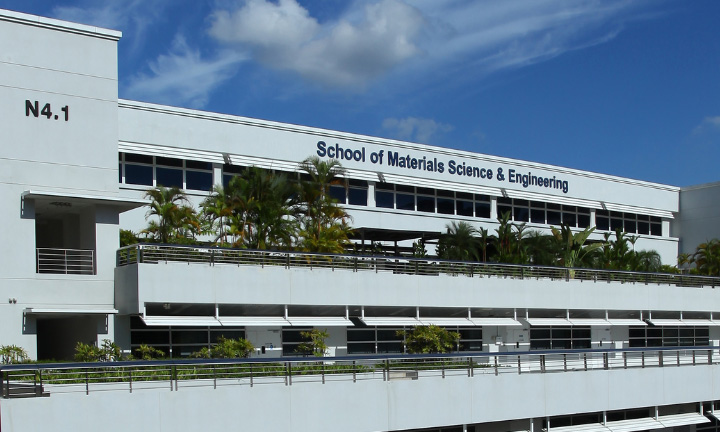
NTU MSE Seminar Hosted by Nanyang Assistant Professor Virgil Andrei
Abstract
Catalytic reactions and electrochemical processes are central to energy conversion, and operando characterization has emerged as a powerful approach to unravel the “black box” of chemical reaction mechanisms. Among various techniques, infrared (IR) spectroscopy stands out for its ability to non-destructively identify reaction intermediates and surface species via vibrational fingerprinting, thereby offering molecular-level insights into catalytic pathways. The advent of free-electron lasers (FELs) has further expanded the accessible spectral range and measurement versatility of IR spectroscopy, particularly in terms of brightness, tenability, and ultrashort pulse structure. In this talk, I will focus on in situ/operando IR spectroscopic methodologies, with an emphasis on far-infrared measurements, developed at the infrared free-electron laser facility (HiFEL) housed at the National Synchrotron Radiation Laboratory of the University of Science and Technology of China. I will present the detailed specifications and distinctive characterization capabilities of three representative experimental endstations: Reflection Absorption Infrared Spectroscopy (IRFEL-RAS), Atomic Force Microscopy Infrared Spectroscopy (AFM-IRFEL), and Sum-Frequency Generation Spectroscopy (IRFEL-SFG). Through selected case studies, I will illustrate how these techniques facilitate the elucidation of reaction mechanisms underlying surface and interfacial processes in ion batteries, electrocatalysis, and functional materials research—insights that are pivotal for the rational design of efficient, robust, and high-performance energy systems.
Biography

Associate Professor Xiaodi Zhu
National Synchrotron Radiation Laboratory
University of Science and Technology of China<
Xiaodi Zhu is an Associate Professor at the University of Science and Technology of China (USTC). She received her Ph.D. in Nuclear Science and Technology from USTC in 2018. In recent years, her research has centered on the development of operando and in-situ characterization techniques and experimental methodologies utilizing large-scale scientific facilities, including synchrotron radiation and infrared free-electron lasers, with a particular emphasis on their applications in energy chemistry. Since 2019, she has served as Principal Investigator for five research projects funded by the National Natural Science Foundation of China (NSFC), the Fundamental Research Funds for the Central Universities, the USTC Research Funds for the Double First-Class Initiative, and the USTC talent start-up funding. To date, she has published over 30 scientific papers in prestigious journals, contributed one invited book chapter, and holds eight invention patents. She has received the First-Class Mozi Outstanding Young Scholar Special Funding from USTC and has been selected as a Fellow of the 10th Young Elite Talent Support Program administered by the China Association for Science and Technology (CAST).