
Next-Generation Battery Innovation: From Multiscale Physical Insights to AI-Driven Materials Discovery by Associate Professor Jongwoo Lim
06 Aug 2026
03.30 PM - 04.30 PM
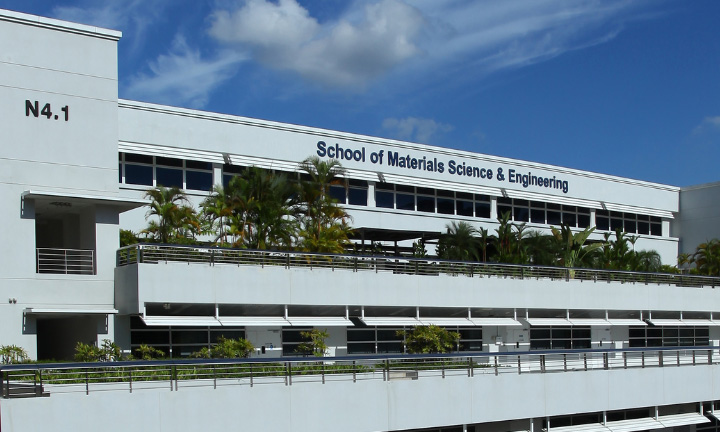
MSE Meeting Room 1 (N4.1-01-28)
Alumni, Current Students
NTU MSE Seminar Hosted by Professor Alex Yan Qingyu
Abstract
For lithium-metal batteries, we established physics-informed design principles based on molecular interactions and combined them with DFT calculations and AI-based screening to identify new liquid electrolytes across large chemical spaces. Building on this framework, we are developing a self-driving laboratory that autonomously formulates and evaluates electrolytes, linking multiscale physical understanding with data-driven and autonomous experimentation to accelerate further electrolyte discovery.
Biography
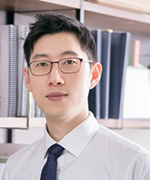
Associate Professor Jongwoo Lim
Seoul National University
Jongwoo Lim is an Associate Professor of Chemistry at Seoul National University, where he joined the faculty in 2017. His research focuses on rechargeable batteries, green hydrogen production, and electrochemical CO₂ conversion. He earned his Ph.D. from UC Berkeley in 2013 under Peidong Yang and conducted postdoctoral research at Stanford University with William Chueh. His honors include the Presidential Young Scientist Award of Korea, the Zasshikai Lectureship Award, the Su-Moon Park Award, the KCS–Wiley Young Chemist Award, and election to the Young Korean Academy of Science and Technology (Y-KAST), among others.