
Deep-Sea-Inspired Chemistry: There’s Plenty of Room for Chemistry at the Bottom by Dr Shigeru Deguchi
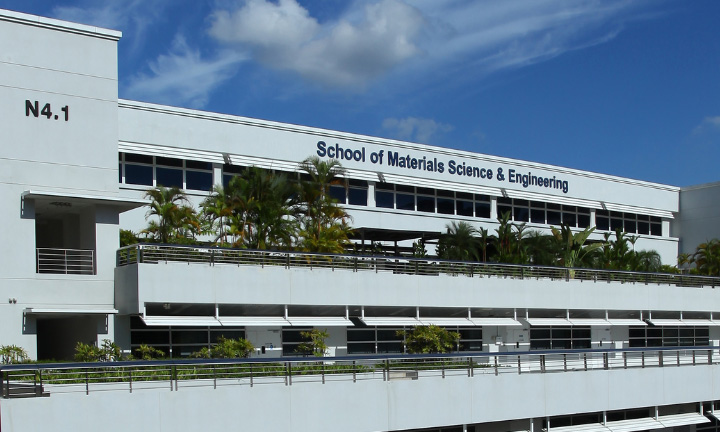
NTU MSE Seminar Hosted by Nanyang Assistant Professor Wu Ronghui
Abstract
The deep sea represents an extreme environment that differs markedly from the Earth’s surface in terms of pressure, temperature, and light. Deep-sea-inspired chemistry is an emerging framework that extracts design principles from deep-sea natural history and translates them into new paradigms in materials science and process engineering, thereby promoting a transition in ocean utilization from resource extraction to knowledge creation. In this seminar, I review several research directions developed under this concept: baroplastics, polymer materials whose order–disorder transitions are reversibly controlled by pressure; MAGIQ, a nanoemulsification process inspired by the dynamic high-temperature conditions of deep-sea hydrothermal vents; and SPOT, a highly sensitive visual assay for enzymatic activity derived from the survival strategies of deep-sea microorganisms. These examples collectively illustrate how deep-sea natural history can be translated into new strategies for materials design, reaction engineering, and sustainable innovation.
Biography

Dr Shigeru Deguchi
Principal Researcher
Japan Agency for Marine-Earth Science and Technology (JAMSTEC)
Shigeru Deguchi obtained his Ph.D. in polymer chemistry from Kyoto University in 1996. After postdoctoral research at Lund University under Prof. Björn Lindman, he joined JAMSTEC in 1999. His research focuses on “deep-sea-inspired chemistry,” which translates deep-sea natural history into new design principles for materials and processes. He has received major honors, including the Inoue Harushige Prize and the SPSJ Mitsubishi Chemical Award. He has served as Chair of the Division of Colloid and Surface Chemistry, The Chemical Society of Japan, and as a Council Member of the International Association of Colloid and Interface Scientists (IACIS). He is currently an Executive Committee Member of the Asian Society for Colloid and Surface Science (ASCSS).