
Interfacial Electrostatics in Single-Digit Nanopores: A New Frontier for Tuning Water Transport and Ion Selectivity by Assistant Professor Rahul Prasanna Misra
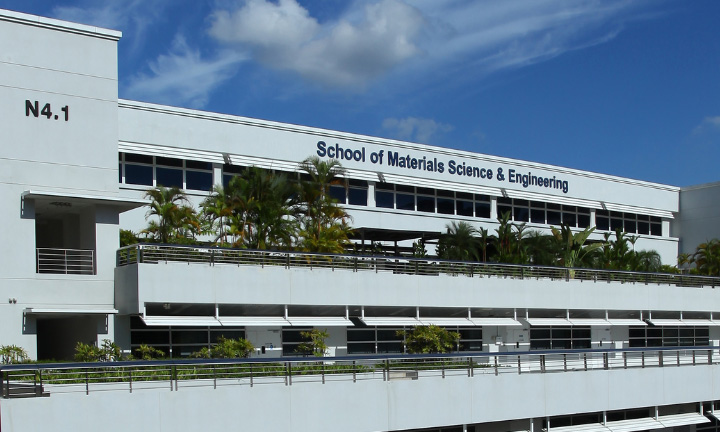
NTU MSE Seminar Hosted by Assistant Professor Shen Jie
Abstract
Fluids confined within nanoscale environments can exhibit thermophysical properties that differ significantly from their bulk counterparts. In confined systems involving polar fluids, the reduced screening of the electric fields amplify electrostatic effects which can control all aspects of interfacial thermodynamics and transport phenomena, with immense potential for tailoring water permeability, ion selectivity and chemical reactivity. In this talk, I will discuss the development of molecular models, which can accurately capture the interfacial electric fields exerted by electrolytes in both planar and confined systems, such as the interior of carbon nanotubes (CNTs). Amongst several applications, I will demonstrate how different mechanisms of diffusion and electromigration result in a breakdown of the well-known Nernst-Einstein relation inside narrow CNTs by close to three orders of magnitude and how the electronic band gap can be tailored to achieve faster water transport in metallic compared to semiconducting CNTs. Finally, I will demonstrate how pore geometry and dimensionality dictate the competition between steric and electrostatic interactions, resulting in dramatically different ion transport behaviour in zero-dimensional versus one-dimensional nanochannels. Together, these insights provide fundamental design principles for next-generation separation technologies and broader applications at the water–energy nexus.
Biography

Assistant Professor Rahul Prasanna Misra
National University of Singapore
Dr. Rahul Prasanna Misra is an Assistant Professor in the Department of Chemical and Biomolecular Engineering at the National University of Singapore (NUS), where he is supported by the Presidential Young Professorship (PYP) scheme. He received his B.Tech. degree from the Indian Institute of Technology Kharagpur, India, and his M.S. and Ph.D. degrees in Chemical Engineering from the Massachusetts Institute of Technology (MIT), USA. His doctoral research at MIT, under the supervision of Professor Daniel Blankschtein, focused on developing a multiscale framework to describe electronic polarization effects arising from electric fields generated by polar molecules, such as water, and charged species, including salt ions, at nanomaterial-water interfaces. Since joining NUS in September 2025, his research group has been developing multiscale models that integrate physics-based approaches with machine-learned algorithms to understand the thermodynamic and transport properties of confined fluids and electrolytes for water and energy applications.