
Towards a New Design Paradigm for CO2 Reduction Electrocatalysts by Professor Joel W. Ager
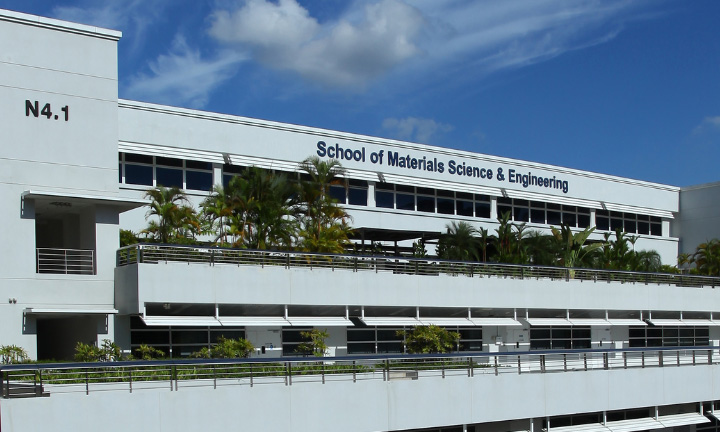
NTU MSE Seminar Hosted by Nanyang Assistant Professor Wu Dongshuang
Abstract
The conventional design of electrocatalysts for CO2 reduction (CO2R) focuses on crafting active sites that will lower the overpotential and improve selectivity to either two-electron products (CO or formate/formic acid) or to specific C2+ products such as ethylene or ethanol. These efforts are often guided by DFT calculations of the binding energies of, and kinetic barriers between, intermediate species involved in the individual proton-coupled electron transfer steps. In this context, I will show experimentally that focusing on the design and characterization of isolated active sites and their nearby microenvironment is inadequate to describe EC-CO2R processes on Cu.
First, it is now very clear that Cu electrocatalysts can have different active sites which are specific for certain products, i.e. for ethylene, ethanol, and propanol. Second, the EC-CO2R environment is highly dynamic, with the CO intermediate accelerating surface restructuring and Cu dissolution. Third, the electrocatalytic surface can be functionally heterogeneous, with some motifs functioning as intermediate reservoirs while others provide transport pathways to conversion sites.
Adapting experimental methods used to study heterogeneous catalysis for use in EC-CO2R is yielding key insights into these complex systems. For example, chemical transient kinetics measurements coupled with real-time mass spectrometry are showing that the activity of Cu-based EC-CO2R electrocatalysts is strongly associated with dynamically created reservoir motifs which store crucial C1 intermediates. Classic temperature-programmed desorption techniques from surface science are being adapted to electrocatalysis via time-resolved measurements of the adsorption/desorption of intermediates under reaction conditions. Tracking the 13C/12C isotope fractionation though the chemical network of EC-CO2R has enabled key intermediate species to be identified.
These experiments are revealing that the chemical reaction network of EC-CO2R can have many of the functionalities found in biological networks such as inhibition/activation, cascades, and substrate channeling/pre-concentration. For this reason, adapting experimental and simulation methods from systems biology may yield mechanistic insights and, prospectively, a predictive framework for the design of CO2R electrocatalysts.
Biography

Professor Joel W. Ager
Materials Science and Engineering, UC Berkeley
Berkeley Education Alliance for Research in Singapore (BEARS)
Materials and Chemical Sciences Divisions, Lawrence Berkeley National Lab
Joel W. Ager is a Senior Scientist in the Materials and Chemical Sciences Divisions of Lawrence Berkeley National Laboratory and an Adjunct Professor in the Materials Science and Engineering Department, UC Berkeley. He graduated from Harvard College in 1982 with an A.B in Chemistry and from the University of Colorado in 1986 with a PhD in Chemical Physics. His research interests include the discovery of new photoelectrochemical and electrochemical catalysts for solar to chemical energy conversion and the fundamental electronic and transport properties of semiconducting materials.