
Copolymerisation Parameters by Professor Alex van Herk
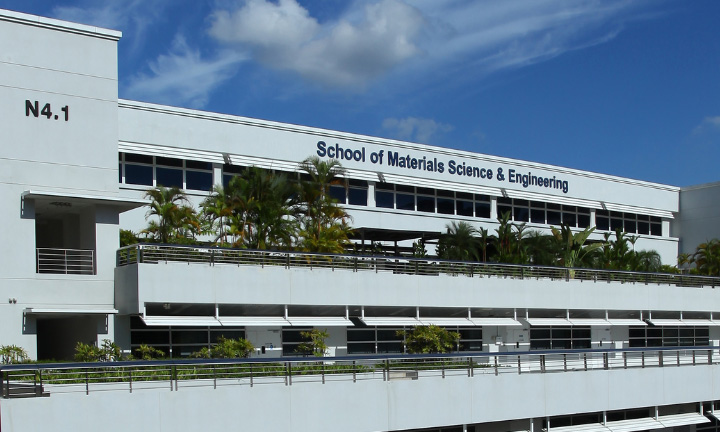
NTU MSE Seminar Hosted by Professor Lam Yeng Ming
Abstract
Copolymer reactivity ratios (r-values) play a crucial role in understanding how copolymerisation reactions evolve, particularly in terms of composition drift and the resulting copolymer composition distribution (CCD). Despite their importance, the literature reports a wide variation in r-values for identical monomer pairs. This inconsistency largely stems from the use of statistically unreliable methods for their determination. To address this issue, the International Union of Pure and Applied Chemistry (IUPAC) has recently introduced a recommended methodology that ensures more robust and consistent estimation of r-values. Building on these improved values, a novel strategy has been developed to effectively suppress composition drift and achieve narrow CCDs. This approach, known as Optimal Monomer Addition Profiles (OMAP), offers significant practical advantages. It eliminates the need for complex, full-scale kinetic modelling of the copolymerisation process. Instead, it relies only on accurate r-values and a minimal experimental effort—typically just 2–3 polymerization runs combined with straightforward offline conversion measurements. As a result, OMAP presents a highly attractive and efficient tool for industrial applications, enabling better control over copolymer composition with reduced time and resource investment.
Biography

Eindhoven University of Technology and
Nanyang Technological University Singapore
Alex van Herk (1956) is currently teaching at Eindhoven University of Technology in the department of the Built Environment and at Nanyang Technical University, department of Materials Science and Engineering in Singapore. Before, he was a Principal Scientist at the Institute of Chemical and Engineering Sciences, A*STAR in Singapore (2012-2021) and Emeritus Professor in Polymer Reaction Engineering at the Eindhoven University of Technology, the Netherlands (where he worked full-time from 1986 till 2012). His field of research is nanotechnology, water-based coatings, copolymerization and emulsion polymerization. He regularly gives trainings to industry and is editor of four books and author of 240+ papers and 10 patents. Currently his main focus is teaching on polymer recycling and coatings. One of the topics involves making existing polymers more recyclable by small modifications at the synthesis stage.