
Covalent Organic Frameworks for Next-Generation Batteries: Design and Applications by Professor Yoonseob Kim
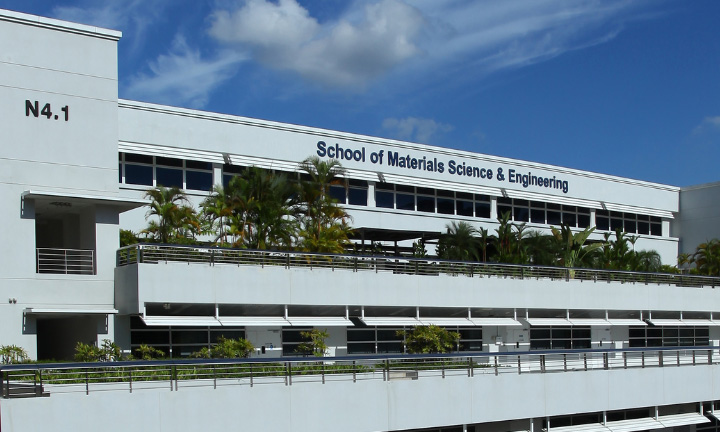
NTU MSE Seminar Hosted by Nanyang Assistant Professor Prashant Kumar
Abstract
One of the recently developed polymers with high porosity and crystallinity, called porous crystalline polymers, includes covalent organic frameworks (COFs). COFs with ionic functional groups can rapidly, selectively, and reliably transport ions, e.g., Li+, Na+, Zn2+, or Ca2+. These ionic COFs (iCOFs) are incorporated in energy devices for enhanced transport and safety, outperforming known electrolytes and enabling the next-generation batteries. A key feature of the iCOFs is that they are solid-state single-ion conductors. We developed new iCOFs, including those bearing hypervalent nodes, redox-active moieties, three-dimensional network topologies, etc. We have demonstrated that iCOF-based batteries offer significantly improved safety while showing better performance than the liquid electrolytes. The iCOFs we have developed showed the highest Li+ conductivity of 9.8 mS cm–1 at r.t. and a transference number of 0.92 (J. Am. Chem. Soc. 2023). We demonstrated that iCOF/polymer composite can be an excellent all-solid-state electrolyte for lithium metal batteries (LMBs), meeting industry standards (Adv. Energy Mater. 2024). We also demonstrated that multicomponent reactions can yield iCOF-based quasi-solid-state electrolytes (QSSEs) for LMBs (Angew. Chem. Int. Ed. 2024), and phosphonium COFs as QSSEs for zinc–air batteries (Angew. Chem. Int. Ed. 2024). Current efforts include iCOF applications in anode-free alkali (Li/Na) metal batteries, high-valent ion batteries, e.g., Ca-ion batteries, lithium–sulfur batteries, etc. Overall, iCOF’s advantageous properties enable the development of next-generation batteries (Adv. Mater. 2021; Adv. Mater. 2024).
Biography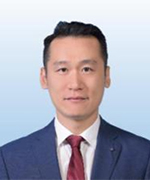
Professor Yoonseob Kim
The Hong Kong University of Science and Technology
Prof. Yoonseob Kim is an associate professor in the Department of Chemical and Biological Engineering, The Hong Kong University of Science and Technology. He studied Chemical Engineering at Hanyang University, Korea (2010) summa cum laude and received his Ph.D. from the Department of Chemical Engineering at the University of Michigan, Ann Arbor, in 2016. His Ph.D. work earned him the ProQuest Distinguished Dissertation Award, DSM Science & Technology Award, ACS, etc. Subsequently, he worked at the Department of Chemistry, Massachusetts Institute of Technology, as a postdoctoral associate from 2016 to 2019. His research group at the HKUST synthesizes sustainable polymers and porous crystalline polymers for battery applications. He has successfully managed 3 GRF, 1 CRF, and 1 ITF (Seed) grants totaling over HK$16 M. His independent works were published in J. Am. Chem. Soc., Adv. Mater., Angew. Chem., Int. Ed., Nat. Commun., Adv. Sci. etc. He has received numerous awards/recognitions in his independent career, including Early Investigator from PMSE, ACS, Rising Star from ACS Materials Au, Emerging Investigator from Nanoscale, Influential Researcher from I&EC Research, Young Scientist from World Laureate Forum etc.