
Unlocking Electrochemical Processes for Energy Abundance by Professor Yang Shao-Horn

07 Jul 2026
02.00 PM - 03.00 PM
NTU Lecture Theatre 7 (NS1-02-03)
Alumni, Current Students
NTU MSE Distinguished Speaker Series Hosted by Professor Ng Kee Woei
Abstract
Understanding and tuning charge transfer and dynamics at interfaces is key to enable efficient energy storage and transformation. We will examine how covalent and noncovalent interactions can be tuned to alter catalytic activity of reactions key to sustainable energy. For example, increasing the metal-oxygen covalency of oxides and activating surface oxygen sites can weaken covalent interactions between reaction intermediates and surface sites, and can enhance activity of water oxidation but beyond an optimal value reduces oxide stability. Beyond covalent interactions, tuning non-covalent interactions and solvation environments (such as water breaking and making ions) at the electrified interface can significantly alter the kinetic barriers and rates for proton-concerted electron transfer reactions. Examples include how such concepts can be used to greatly increase the catalytic activity of hydrogen evolution/oxidation as well as the activity and selectivity of carbon dioxide reduction to methanol.
Biography
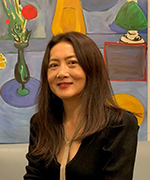
Department of Chemistry
Massachusetts Institute of Technology
Yang Shao-Horn is Professor of Mechanical Engineering, Materials Science and Engineering and Chemistry at MIT. She is a Highly Cited Researcher in Chemistry and Materials Science with 470+ publications in the topics of physical chemistry, electrochemistry, electrocatalysis, materials, batteries and fuel/electrolytic cells.
Professor Shao-Horn is a member of the National Academy of Engineering, and Fellow of the Electrochemical Society, the National Academy of Inventors, and the International Society of Electrochemistry. Professor Shao-Horn has advised 160+ students and postdocs at MIT who are now pursuing successful careers in academia (55+) including faculty positions at MIT, Cornell, and Yale, national labs, and private sectors.