
The Development of Photo-Responsive Adsorbents for Circular Chemical Engineering by Professor Cher Hon (Sam) Lau
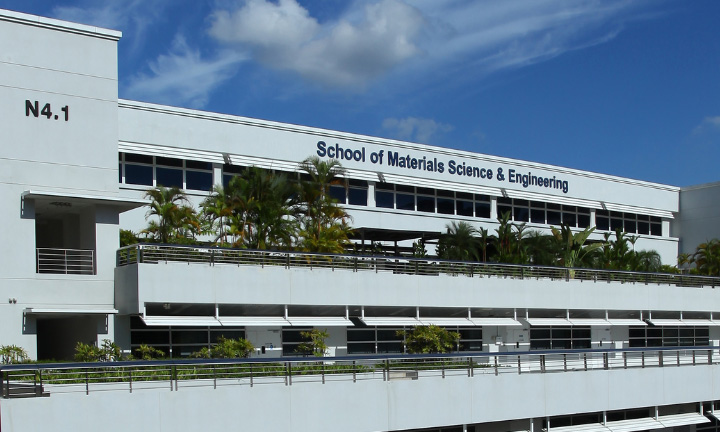
NTU MSE Seminar Hosted by Professor Lee Pooi See
Abstract
Global challenges in climate change, resource scarcity and water pollution demand smarter materials that can capture, convert and recover valuable resources from waste streams sustainably. Our group develops photo-responsive porous materials, including metal-organic frameworks (MOFs), hypercrosslinked polymers (HCPs) and covalent organic frameworks (COFs), whose structures can be switched, activated or tuned by light to perform targeted chemical separations and transformations. In this seminar, I will share with you the full development pipeline of our research in this area. We use computational simulations to understand how molecules interact with porous material surfaces at the atomic scale, guiding the rational design of next-generation adsorbents before they are synthesised. These computational insights inform the development of materials tested across four application domains: (1) carbon capture from industrial flue gases; (2) recovery of critical metals and active pharmaceutical ingredients (APIs) from industrial wastewater; (3) solvent recovery to support circular manufacturing; and (4) photocatalytic conversion of water and air into hydrogen peroxide — a green oxidant with broad industrial utility — and photocatalytic water treatment to remove pharmaceutical contaminants. For each application, we quantify real-world impact through life cycle assessment (LCA), ensuring that the environmental benefits of our materials are rigorously evidenced rather than assumed. Together, these activities advance a vision of circular chemical engineering: industrial processes that recover rather than discard, and that harness sunlight to drive chemistry that currently depends on fossil energy.
Biography
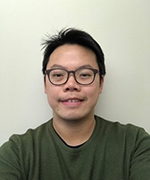
Professor Cher Hon (Sam) Lau
EPSRC Fellow and Personal Chair in Circular Chemical Engineering,
Institute for Materials and Processes
School of Engineering, University of Edinburgh