
Intercalation Phase Engineering of Transition Metal Dichalcogenides by Professor Zhiyuan Zeng
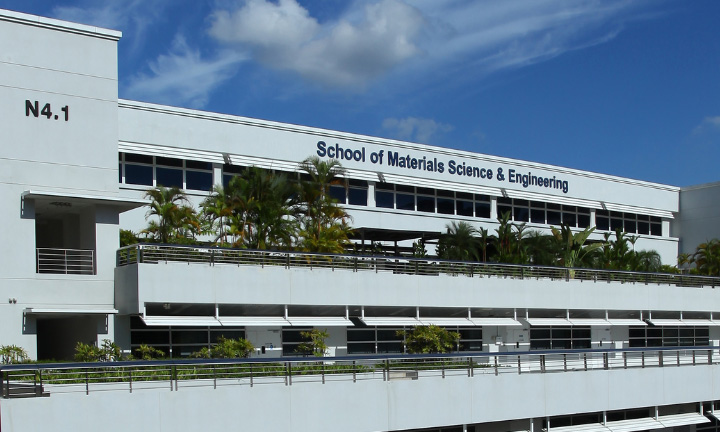
NTU MSE Seminar Hosted by Assistant Professor Jie Shen
Abstract
References:
[1] R. Yang†, L. Mei†, Z. Lin†, et al., Q. Lu*, J. Li*, Z. Y. Zeng*, Nat. Rev. Chem., 2024, 8, 410.
[2] R. Yang, et al., D. Voiry, Q. Lu, J. Li*, Z. Y. Zeng*, Nat. Synth., 2023, 2, 101-118.
[3] R. Yang, L. Mei, et al., H. S. Shin*, D. Voiry*, Z.Y. Zeng*, Nat. Protoc., 2022, 17, 358-377.
[4] L. Mei, Z. Gao, R. Yang, et al., J. Li*, X. Yu*, Z. Y. Zeng*, Nat. Synth., 2025, 4, 303-313.
[5] R. Yang, L. Mei, Y. Fan, et al., J. Yang, J. Li*, Z. Y. Zeng*, Nat. Protoc., 2023, 18, 555-578.
[6] Q. Zhang, et al., X. C. Zeng*, K. P. Loh*, Z. Y. Zeng*, Natl. Sci. Rev., 2026, accepted.
[7] L. Mei, M. Sun, et al., B. Huang*, L. Gu*, D. Voiry, Z. Y. Zeng*, Nat. Commun., 2024, 15, 7770.
[8] T. Ying, N. Onofrio, et al., C. Y. Tang*, D. Voiry*, Z. Y. Zeng*, Adv. Mater., 2025, 37, e04781.
[9] T. Ying, Y. Xiong, et al., C. Y. Tang, J. Fan, Z. Y. Zeng*, Adv. Mater., 2024, 36, 2403385.
[10] L. Mei, et al., D. Voiry, H. Wang*, A. B. Farimani*, Z. Y. Zeng*, Adv. Mater., 2022, 34, 2201416.
[11] Y. Zhang, et al., B. Huang*, Z. Y. Zeng*, Nano Lett., 2026, DOI: 10.1021/acs.nanolett.5c04248.
[12] L. Mei, et al., Z. Y. Zeng*, K. M. Y. Leung*, Natl. Sci. Rev., 2026, DOI: 10.1093/nsr/nwag055.
Biography
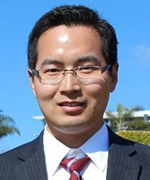
Professor Zhiyuan Zeng
City University of Hong Kong
Prof. Zhiyuan Zeng received his BSc, MPhil and PhD from Central South University, Zhejiang University and Nanyang Technological University in 2006, 2008 and 2013, respectively. After 4 years as a Postdoctoral Fellow at Lawrence Berkeley National Laboratory (LBNL) and 2 years as an Engineer working in Applied Materials Inc. (Silicon Valley), he joined the Department of Materials Science and Engineering, City University of Hong Kong as an Assistant Professor in 2019, and was promoted to Associate Professor in 2024, and then Professor in 2026. His research interests are intercalation phase engineering of transition metal dichalcogenides for phase-switchable preparation of TMDs, including conventional and unconventional phases, which greatly improved the electronic and environmental application performance. He has published 181 SCI papers (132 IF>10) including Nat. Mater., Nat. Rev. Chem., Nat. Synth., Nat. Protoc., Nat. Commun, Natl. Sci. Rev., etc, with 29521 citations and H-index of 76. He was the "2018 Youth Thousand Talents Plan" awardee, and he was also awarded the 2023/2024 Young Collaborative Research Grant (YCRG, 4,832,040 HKD) by the University Grants Committee (UGC) of Hong Kong. He has been listed as the Highly Cited Researcher (Top 1%, Clarivate Analytics) 5 times in 2024-2018. He was also awarded the Lifetime Fellow by IAAM, and CENG Research Excellence Awards for Junior Faculty by CityUHK in 2025.