
Electrocatalyst Design and Interface Engineering Toward Efficient Energy Conversion and Storage by Professor Jinwoo Lee
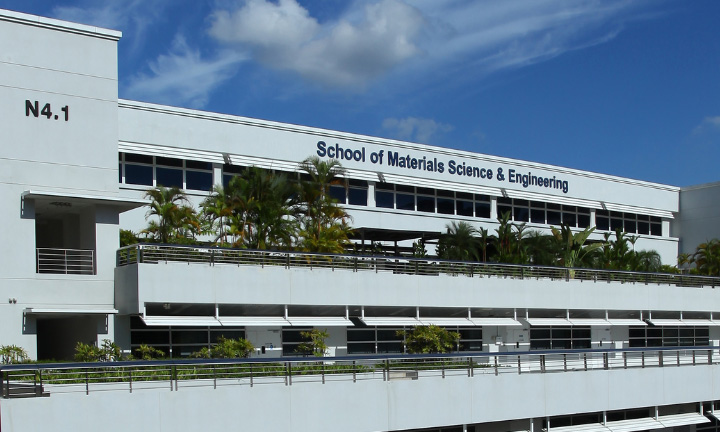
NTU MSE Seminar Hosted by Professor Xu Zhichuan Jason
Abstract
Single-atom catalysts (SACs) and atomically dispersed catalysts have attracted growing attention because the number of active sites, with unpredictable catalytic activity can be maximized. We have designed highly stable and high-loading atomically dispersed catalysts in porous architectures. We synthesized Ru SAC supported on WC1-x (Ru SA/WC1-x) for alkaline HOR reaction by an in situ high-temperature annealing strategy to induce strong interactions between Ru SA and the WC1-x support without forming of impurities (e.g., WOx) on the surface during the carburization, resulting in high Ru SA loading of up to 6.1 wt.. We also report self-assembly-assisted dynamic placement of noble metals selectively on multifunctional carbide supports for alkaline hydrogen electrocatalysts. The strategy for stabilizing the interface of next-generation high-capacity rechargeable batteries, including lithium-metal and sodium-metal batteries will be also discussed.
Biography

Professor Jinwoo Lee
Department of Chemical and Biomolecular Engineering
KAIST
Prof. LEE is currently a Professor at KAIST, Daejeon, Korea. His research field of interest is water electrolysis and alkali metal-based battery. He received his B.S. degree from the School of Chemical and Biological Engineering at Seoul National University, Korea in 1993. He then received his Ph.D. degree from the School of Chemical and Biological Engineering at Seoul National University, Korea in 1998. He started his professional career as an Assistant Professor in Department of Chemical Engineering at POSTECH (2008-2018) and moved to KAIST in 2018 where he was later appointed as the KAIST Chair Professor. He has published more than 314 papers including Nature Materials, Nature Catalysis, Joule, Nature Comm. Joule, Science Advances, JACS, Angew. Chem. Adv. Mater., Energy. Environ. Sci. Total citation number and H-index are >33,000 and 98, respectively. He serves as Editor for Chemical Engineering Journal and Associated Editor for Science Advances (AAAS).