
Bio-inspired Electronic Eye for AI-friendly Robotic Vision by Professor Dae-Hyeong Kim
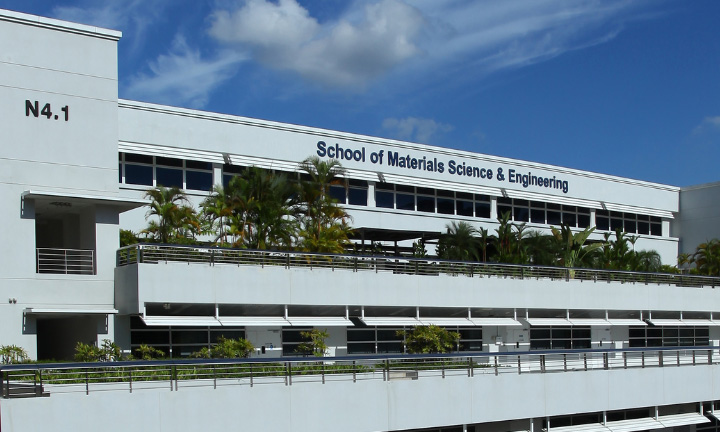
NTU MSE Seminar Hosted by Professor Chen Xiaodong
Abstract
Recent advances in artificial vision systems have enabled remarkable progress toward high-performance robotic perception; however, most existing approaches remain constrained by bulky optical assemblies and by the paradigm of full-frame image acquisition followed by power- and data-intensive post-processing. Such architectures are inherently inefficient for AI-driven robotics, where selective perception and on-site data reduction are critical. In this talk, a bio-inspired electronic eye for AI-friendly robotic vision is introduced. The platform is based on curved, ultrathin image sensor arrays that achieve a wide field-of-view, compact form factor, minimal optical aberration, deep depth-of-field, enhanced light sensitivity, and amphibious imaging capability without relying on bulky multi-lens optics. Beyond optical advantages, the system incorporates neuromorphic phototransistors with synaptic functionalities, enabling selective signal transduction, adaptive weighting, and in-sensor computing at the pixel and array levels. This hardware-level preprocessing allows salient visual features to be extracted and encoded directly at the sensor, substantially reducing data bandwidth and computational load for downstream AI algorithms. The proposed electronic eye establishes a new framework for energy-efficient, scalable, and AI-ready robotic vision systems, opening new opportunities for advanced electronics and autonomous robotics.
Biography

Professor Dae-Hyeong Kim
Seoul National University
Dae-Hyeong Kim obtained his B.S. and M.S. degree in Chemical Engineering from Seoul National University, Korea, in 2000 and 2002, respectively. He received his Ph. D. degree in Materials Science and Engineering from University of Illinois at Urbana Champaign in 2009. From 2009 to 2011, he was a post-doctoral research associate at University of Illinois. He joined Seoul National University in 2011 and is currently a professor in School of Chemical and Biological Engineering of Seoul National University. He has been serving as an associate director of Center for Nanoparticle Research of Institute for Basic Science (IBS) from 2017. He has been focusing on the research of nanomaterials-based bio-integrated and bio-inspired electronics. He is the Member of National Academy of Engineering of Korea (2024-present) and Fellow of American Institute of Medical and Biological Engineering (2025-present). He has been recognized with several awards including George Smith Award (2009), TR 35 award (2011), Hong Jin-ki Creative Award (2015), SCEJ Award (2016), Korea Young Scientist Award (2017), and Prime Minister Commendation of Ministry of Science and ICT of Korea (2023). He has been recognized as a highly cited researcher by Clarivate Analytics in 2018-2024. He has served as the editors and editorial board members in multiple journals, including the Senior Associate Editor of Science Advances (2024-present).