
Harvesting Energy from the Cold Universe: The Missing Piece in the Renewables Puzzle? By Professor Ioannis Papakonstantiou
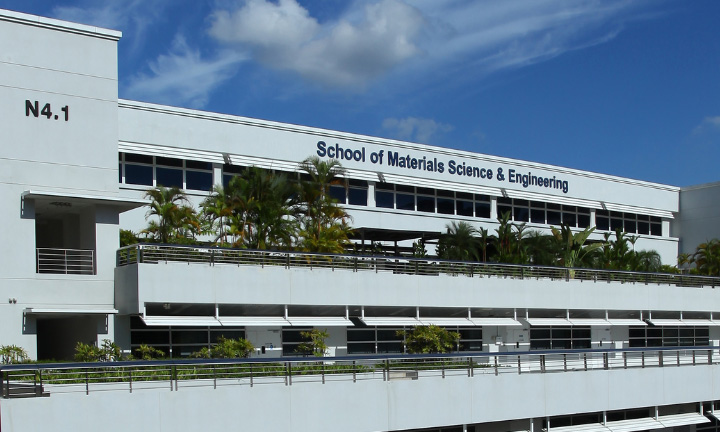
NTU MSE Seminar Hosted By Adjunct Professor Stefan Guldin
Abstract
On a bright, warm day, the more than 1TW of installed solar power capacity worldwide works tirelessly to light up our houses, charge our cars, power our business and in general, to seamlessly support our daily lives. This remarkable achievement has been made possible by over 60 years of advancements in photovoltaics, which convert the incoming solar radiation into useful energy. However, for the Earth to maintain a stable temperature, it must dissipate heat at a rate roughly equal to the power it receives from the Sun. This natural thermoregulation process, known as radiative cooling, taps into the infinite heat capacity of the ultracold Universe to release excess heat from Earth’s surface into the outer space. Recently, scientists have recognised that this vast, outgoing heat transfer could be harnessed, offering a new renewable pathway toward sustainable energy transition. This talk will cover the fundamentals of radiative cooling, will discuss recent advances in the photonic innovations lab, and will conclude with practical applications including sustainable horticulture and plant growth, passively cooling our spaces and vehicles, generating electricity in the dark, co-harvesting energy from the Sun and the outer space and more.
Biography

Professor Ioannis Papakonstantiou
University College London
Ioannis is Professor of Photonics and Nanofabrication in the Department of Electronic and Electrical Engineering at UCL and leads the Photonic Innovations Lab. Before joining UCL, he worked at CERN (European Organization for Nuclear Research) and Sharp Laboratories of Europe. His research focuses on light-matter interactions at the micro- and nanoscale, with applications spanning mid-infrared photonics, radiative cooling, luminescent solar concentrators, biomedical devices, climate resilient-agriculture and more. He has been the recipient of multiple awards including four grants from the European Research Council and two Marie-Curie fellowships. Ioannis also holds a diverse portfolio of 14 patent families in areas including optoelectronic systems, liquid crystal displays, photonic security features, biomedical devices, and radiative cooling technologies.