
Catalysing Sustainable Chemical Manufacturing by Professor Adam F. Lee
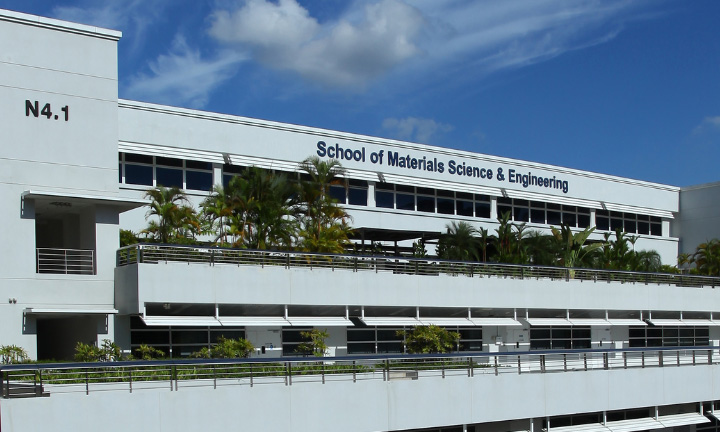
NTU MSE Seminar Hosted by Assistant Professor Wu Dongshuang
Abstract
References
- S. Chu, A. Majumdar, Nature 2012, 488, 294.2.
- M. A. Isaacs, C. M. A. Parlett, N. Robinson, L. J. Durndell, J. C. Manayil, S. K. Beaumont, S. Jiang, N. S. Hondow, A. C. Lamb, D. Jampaiah, M. L. Johns, K. Wilson and A. F. Lee, Nat. Catal., 2020, 3, 921.
- A. Shivhare, J. A. Hunns, L. J. Durndell, C. M. A. Parlett, M. A. Isaacs, A. F. Lee, K. Wilson, ChemSusChem 2020, 13, 4945.
- J.A. Hunns, L.J. Durndell, X. Zhang, M. Konarova, A.F. Lee, K. Wilson, ACS Catalysis 2024, 14 7052.
- A. Merenda,S. A. Orr, Y. Liu, B. Hernández Garcia, A. Osatiashtiani, G. Morales, M. Paniagua, J. A. Melero, A. F. Lee, K. Wilson, ChemCatChem 2023, 15, e202201224.
- H. Luo, Z. Liu, H. Lv, J. J. M. Vequizo, M. Zheng, F. Han, Z. Ye, A. Yamakata, W. Shangguan, A. F. Lee, X. Wu, K. Domen, J. Lu, Z. Jiang, Nat. Comm. 2025, 16, 8786.
- T. Liu, J. Huang, Q. Luo, S. Saravanamurugan, A. F. Lee, H. Li, Angew. Chem. Int. Ed. 2026, 65, e24749.
Biography
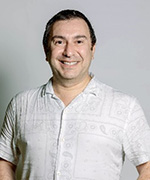
Dr Adam F. Lee, Professor
Institute for Materials Research and Engineering, A*STAR
(Shanghai Jiao Tong University; Dalian Institute of Chemical Physics)
Adam is an International Distinguished Scholar of the Chinese Academy of Sciences at Dalian Institute of Chemical Physics (DICP, China) through the Presidents International Fellowship Initiative and Visiting Professor of Sustainable Chemistry at Shanghai Jiao Tong University (China) and the Agency for Science, Technology and Research (A*STAR, Singapore). He previously held Chair appointments at Cardiff, Warwick, Monash, Aston, RMIT and Griffith Universities. Adam’s research addresses the rational design of nanoengineered materials for energy and environmental applications. He is a Fellow of the Royal Society of Chemistry and Royal Australian Chemical Institute, Associate Fellow of the IChemE, Editor-in-Chief of Materials Today Chemistry, Associate Editor of Energy & Environmental Materials and recipient of the 2011 McBain Medal, 2012 Beilby Medal and Prize, and 2023 RACI Welcome Award, and has co-authored >310 publications (h=index 91, 29,312 cites).