
Electrochemical Routes to Nitrogen Fixation for Ammonia Synthesis under Ambient Conditions by Asst/P FU Xianbiao
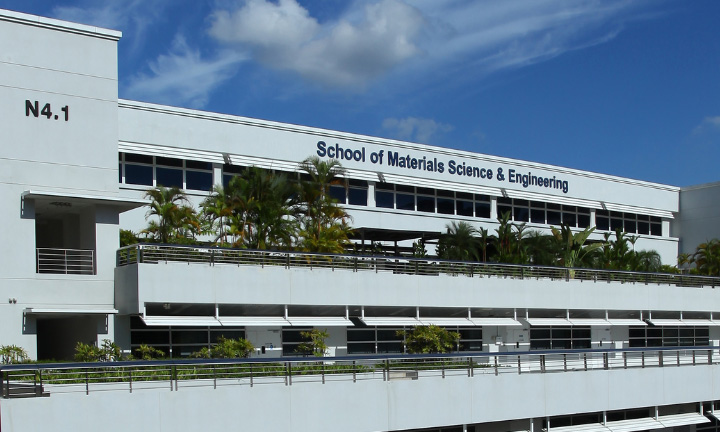
NTU MSE Seminar Hosted by Assistant Professor WU Dongshuang
Abstract
Ammonia (NH3) stands at the intersection of global agriculture and emerging energy technologies. Traditionally indispensable for the production of fertilizers, pharmaceuticals, and polymers, ammonia is now increasingly recognized as a promising hydrogen carrier and carbon-free fuel for sustainable energy systems. To overcome the high energy intensity and centralized nature of the Haber-Bosch process, electrochemical ammonia synthesis has emerged as a compelling alternative, offering decentralized production under ambient conditions and seamless integration with renewable power. This presentation will first revisit the historical evolution and dual significance of ammonia synthesis in the food and energy sectors. We then focus on the intrinsic challenges associated with nitrogen activation, stemming from its strong triple bond, high symmetry, and kinetic inertness, through thermodynamic and kinetic perspectives. The core of the presentation will focus on recent advances in lithium-mediated nitrogen reduction (Li-NRR), including the development of continuous-flow reactors, the design of stable anode catalysts in organic media, systematic screening of lithium salts and solvents, and elucidation of structure-activity relationships of proton shuttles. Under ambient conditions, we achieved highly efficient ammonia electrosynthesis in a continuous-flow reactor with a Faradaic efficiency of up to 61%. Expanding beyond lithium, we introduce the calcium-mediated nitrogen reduction reaction (Ca-NRR) as a novel pathway for ambient-condition ammonia synthesis. Using a rigorous experimental protocol and quantitative 15N2 isotope-labeling analysis, we provide the first direct evidence of N2 activation by metallic calcium, achieving a Faradaic efficiency of 40%. Finally, the talk will share updated mechanistic insights into electrochemical nitrogen activation and corresponding activation strategies, concluding with a discussion on the opportunities and challenges for the industrial deployment of electrochemical ammonia synthesis.
Biography

Dr. Xianbiao Fu is an Assistant Professor in the Department of Materials Science and Engineering at the National University of Singapore (NUS) and a Principal Investigator at the NUS Centre for Hydrogen Innovations (CHI). From 2021 to 2024, he conducted postdoctoral research at the Surface Physics & Catalysis (SurfCat) Center within the Department of Physics at the Technical University of Denmark, working with Prof. Ib Chorkendorff and Prof. Jens Kehlet Nørskov on electrocatalysis and electrochemical ammonia synthesis. In 2022, he was awarded the prestigious Marie Skłodowska-Curie Postdoctoral Fellowship by the European Union. Currently, his group’s research focuses on electrocatalysis, electrochemical engineering, and electrosynthesis, specifically concentrating on electrochemical ammonia synthesis, nitrogen activation, and ammonia energy. He has published over 50 peer-reviewed papers in leading international journals, including more than 30 as first or co-first author and corresponding author, with publications in Science (2), Nature Materials, Nature Energy, Nature Catalysis, Nature Reviews Clean Technology, and Nature Communications. He serves on the Young or Early Career Editorial Boards of Nano Letters, Journal of Energy Chemistry, Materials Horizons, eScience, Nano Research, and other leading journals. He serves as a reviewer for major awards and research funding programs, including the State Natural Science Award of the People’s Republic of China and the Swiss National Science Foundation. His recent honors include the MIT Technology Review TR35 Innovator Award, the Carbon Future Young Investigator Award, the Best Editor Award of Nano Research (2023 and 2024), the 1st Rising Stars in Materials Today Catalysis (2024), the Dream Chemistry Award Top 5 Prize (2025), and selection as an Emerging Investigator of Journal of Materials Chemistry A (2026). He was also named to the Stanford-Elsevier World’s Top 2% Scientists List (2024).