
Beam-On Characterization of Nuclear Structural and Functional Materials by Professor Michael Short
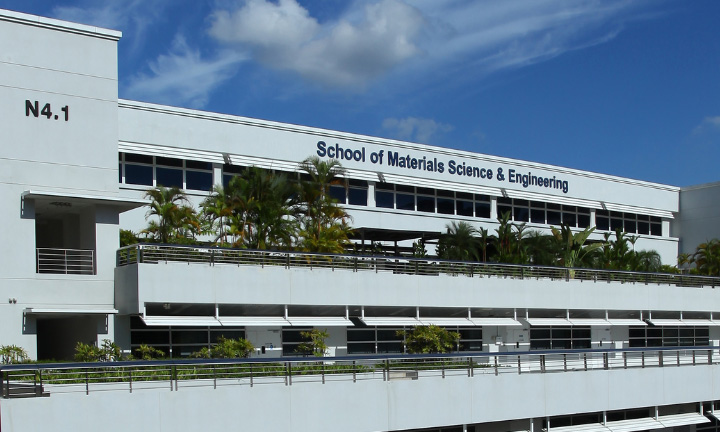
NTU MSE Seminar Hosted by Assistant Professor Eason Chen
Abstract
Too often we researchers "cook, then look" at nuclear materials, irradiating and then characterizing. However, nuclear materials in operando will be irradiated during service, and must perform as such. In addition, "looking while we cook" allows us to capture kinetics, better quantify uncertainties, and discover new effects during and immediately after irradiation. In this talk, I will present work regarding "beam-on" effects in nuclear materials, where surprising effects manifest due to in situ observations. These include (1) Drops in thermal transport corresponding to defect creation and relaxation kinetics as measured by transient grating spectroscopy, (2) Effects of simultaneous irradiation and corrosion vs. sequential, and (3) simultaneous radiation's surprising lack of effects on high temperature superconductor performance. All these examples serve to reinforce the notion that despite their considerably higher cost, time, and complexity, in situ irradiation studies must be performed to identify and quantify coupled effects in nuclear materials.
Biography

Professor Michael Short
Department of Nuclear Science & Engineering
Massachusetts Institute of Technology
Mike joined MIT's Department of Nuclear Science and Engineering in 2001 as a 1st year undergraduate researcher, and never left. Now he is a Full Professor of Nuclear Science and Engineering, having held nearly every possible academic job in that timespan. He and his group have spent 24 years studying coupled effects and challenges facing materials for nuclear power, for both fission and fusion. The group has made surprising discoveries ranging from radiation decelerated corrosion in molten salts to direct measurement of stored energy of radiation damage, to methods for detecting historical uranium enrichment for non-proliferation treaty verification. He is also a Scientific Advisor in A*STAR’s Institute of Materials Research and Engineering (IMRE), where he advises and helps guide teams working on major coupled challenges to create and expand the fusion material/component supply chain. Mike has been coming to Singapore every year since 2012 under the auspices of the Singapore University of Technology and Design (SUTD), and liked it so much that he recently spent a sabbatical at A*STAR to better understand and participate in Singapore’s leadership of the clean energy transition in the ASEAN region and worldwide