
Measuring Nanoscale Transport Diffusion in Silica Nanoparticles by Professor Chen Hongyu
08 Aug 2025
02.00 PM - 03.00 PM
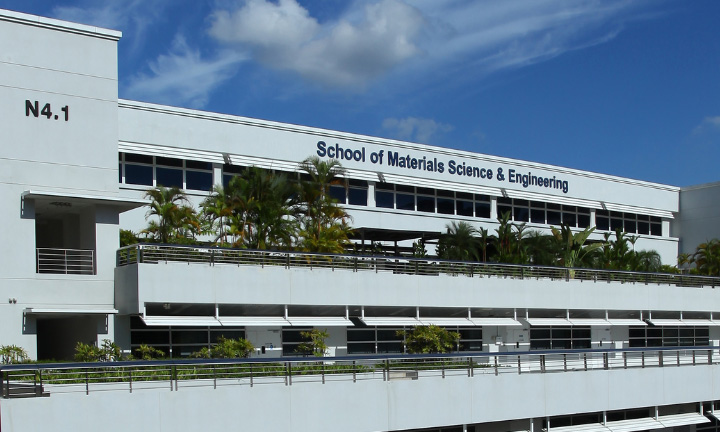
MSE Meeting Room (N4.1-01-28)
Alumni, Current Students
NTU MSE Seminar Hosted by Professor Jason Xu Zhichuan
Abstract
Macroscopic diffusion reflects an overall effect, whereas the measurement of diffusion rates at the nanoscale can provide a basis for the design of microporous materials. Traditional methods, such as NMR and quasi-elastic neutron scattering, can measure self-diffusion rates in the absence of concentration gradient, which is a characterization of Brownian motion. In contrast, current literature lacks methods for characterizing transport diffusion, especially for solvent molecules and ions that are non-fluorescent and chemically non-reactive. Our research group recently developed a method for measuring transport diffusion rates based on colloidal nanoparticles. Specifically, a rotor-based fluorophore thioflavin T (ThT) was embedded into silica nanoparticles. Using Stop-Flow technique, two solvents can be mixed within 1 ms, and the fluorescence changes caused by the diffusion of solvents are recorded. Given the uniform size of the nanoparticles, the diffusion behavior within a single particle can represent that of the entire population. Thus, accurate diffusion coefficients can be obtained through a simple Fickian diffusion model. Furthermore, we use this diffusion rate measurement as a "ruler". On one hand, by measuring diffusion rates under different drying and synthetic conditions, we can infer possible structural changes in the silica pores. On the other hand, by altering the fluorescent molecules, we can measure the diffusion rates of ions such as H⁺ and Li⁺, and deduce changes in the diffusion path of H⁺ by studying the H/D isotope effect. This method is also extended to MOF systems: uranine (Ura) is embedded into the pores of ZIF-8, and the diffusion coefficient of solvents is determined by monitoring changes in the fluorescence intensity of Ura. When the occupancy of Ura in ZIF-8 pores reaches 98%, the diffusion discrimination is significantly improved, as manifested in the asymmetry of solvent bidirectional exchange rates and the obvious difference in diffusion coefficients between H₂O and D₂O. This phenomenon of improving diffusion selectivity by filling (or partially closing) pores is named the "Throttle Effect".
Biography
Professor Chen Hongyu
Westlake University
Professor Hongyu Chen was born in Taizhou, China. He obtained his B. Sc. from University of Science and Technology of China (USTC) in 1998, and then Ph. D. from Yale University in 2004. After working as a postdoctoral fellow in Cornell University, he jointed Nanyang Technological University (NTU) in Singapore in 2006 as Assistant Professor. In 2011, he was promoted to Associate Professor with tenure, and served in several administrative positions. In 2016-2017, he moved back to China and joined Nanjing Tech University, where he co-founded the Institute of Advanced Synthesis (IAS) and served as Executive Dean. He joined Department of Chemistry, Westlake University in July 2021 as a tenured Professor and serves as Associate Vice President and Dean of Westlake Residential Colleges. Dr. Chen has published over 190 papers, with over 70 as the corresponding author in high-impact (IF > 10) journals. Among the students and postdoctoral fellows trained in his research group, 20 have become professors in academia. Dr. Chen’s research interest centers on the advancement of synthetic capability at the nanoscale, more specifically on the development of synthetic methods (like organic reactions), understanding the underlying principles, and applying these tools for novel nanostructures and new applications.