
Material transportations for cation exchange membrane water electrolysis and electrochemical CO2 reduction in a zero-gap reactor by Dr Katsushi Fujii
08 Aug 2025
10.45 AM - 11.45 AM
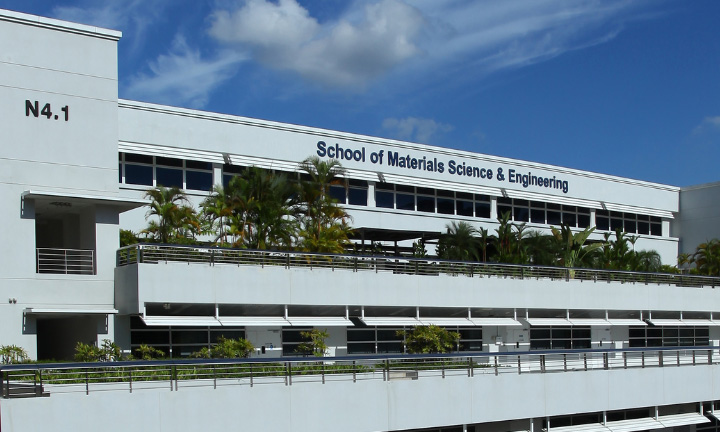
MSE E-Learning Studio (N4.1-B2-02)
Alumni, Current Students
NTU MSE Seminar Hosted by Assistant Professor Wu Dongshuang
Abstract
Material transportation, including electrons and ions for cation exchange membrane water electrolysis (CEMWE) and electrochemical CO2 reduction reaction (CO2RR), is still obscure. Even for the CEMWE, electron and proton transportation play a key role in the characteristics of the current density and voltage relationship. Especially, the stability related to these material transportations of electrochemical CO2RR with zero-gap reactors is one of the problems. The main reason for this stability problem is salt precipitation, which prevents CO2 supply to the CO2-reduced catalyst region, and electrolyte flooding in the cathode. These problems are not observed in CEMWE, which is similar to the cell structure of the CO2RR zero-gap reactor.
Since the evaluations of the salt precipitation and flooding are the first step to understanding the reasons, a cell with a transparent cathode endplate was fabricated to observe the inside of the cathode. Voltage oscillations of about a 40-min-period by a constant current supply were observed when the transparent cathode endplate cell was used at 200 mA/cm2. It was found that the CO2RR occurred at the higher voltage, and the hydrogen evolution reaction (HER) occurred at the lower voltage. This oscillation was observed in a relatively wide current density range (100 – 300 mA/cm2), and current oscillation was also observed with constant voltage application. The mode change from CO2RR to HER is probably the reduction of the CO2 supply. The reason for the mode change from HER to CO2RR is still obscure, however, this change is likely related to the material transportation change since the dissolving of salt and the decrease of flooding were observed at HER.
The electroosmosis and water and cation diffusion due to the electrolyte concentration difference are estimated to be the main material transportation based on model experiments with an H-type cell for CO2RR. Both cation and water transportation are found to have cross points from anode to cathode to cathode to anode, depending on the catholyte concentration. The mode change from HER to CO2RR is likely related to this material transportation condition.
Biography
Dr Katsushi Fujii
Photonics Control Team
RIKEN Center for Advanced Photonics
RIKEN Center for Advanced Photonics
Katsushi Fujii (Ph. D. Science) graduated from Osaka University in 1983 (B.Eng) and received his Ph. D. degree from Osaka University in 1994. He joined Mitsubishi Chemical Corporation in 1983. From 2004, he was a Researcher of “Nakamura inhomogeneous crystal project” of JST (2004-2006), a Visiting Associate Professor of Center for Interdisciplinary Research (CIR) in Tohoku University, and a Professor of School of Environmental Science (2006-2011), a Project Professor in Global Solar plus Initiative (GS+I) of the University of Tokyo (2011-2015), a Research Scientist of Center for Advanced Photonics, RIKEN (2015-2016), and a Professor of Institute of Environmental Science and Technology, the University of Kitakyushu (2016-2017).
Since 2017, he has returned and been a Research Scientist of Center for Advanced Photonics, RIKEN again. His current areas of research interest are energy storage system, energy conversion from sunlight to chemical energy (hydrogen evolution from water and carbon dioxide reduction), electrochemistry, and semiconductor science.