
Harnessing Molecular Self-Assembly for Chemo- & Biosensing
14 Apr 2025
10.30 AM - 11.30 AM
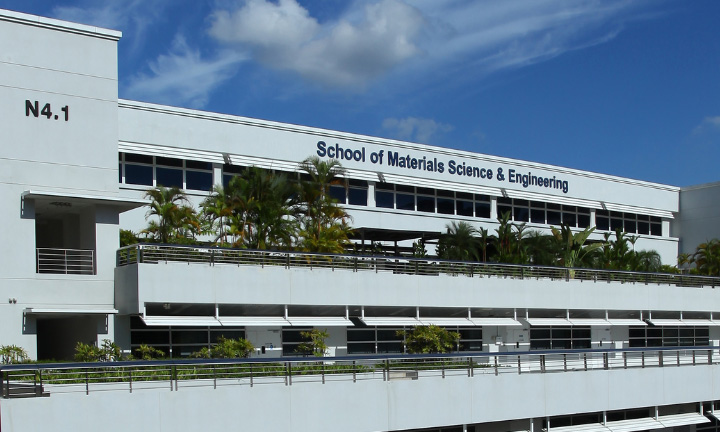
MSE Meeting Room (N4.1-01-28)
Alumni, Current Students
NTU MSE Seminar Hosted by Associate Professor Tan Kwan Wee
Abstract
My research group is interested in the fundamental question of how materials form and interact on the nanoscale for applications in healthcare and the environment. In this talk, I will share some of our recent work on nanoscale colloidal building blocks, their spatial arrangement and interaction with chemical and biological targets. Of particular importance to our research is the development of suitable analytical methods, e.g. for the determination of dispersity, structural order or evaluation of binding constants. I will demonstrate how molecular self-assembly enables the design of adaptive and responsive nanomaterials and report on the implementation of our principles towards the detection of disease biomarkers and therapeutic drug monitoring in paediatric cancer.
Biography
Professor Stefan Guldin
Stefan Guldin, PhD, CEng, FHEA, FIoP, FRSC, is Professor (Chair) of Complex Soft Matter at the Technical University of Munich (TUM) since 2024. He is currently seconded to TUMCREATE, where he serves as Scientific Co-Director and Resident PI of the Proteins4Singapore project. Stefan studied Physics with a focus on Soft Condensed Matter at Karlsruhe Institute of Technology and TUM, before earning his PhD from the University of Cambridge in 2012. Following his doctorate, he was a postdoctoral scholar at EPFL, supported by the German Academy of Sciences. In 2015, he joined University College London (UCL) as a Principal Investigator, later becoming Associate Professor (2018–2022) and Chair of Adaptive & Responsive Nanomaterials (2022–2024). Since 2024, he has held an honorary professorship at UCL.
Professor Stefan Guldin
Chair of Complex Soft Matter Technical University of Munich (TUM)
Professor Guldin's research focuses on nanoscale material formation through molecular self-assembly, the development of adaptive and responsive material architectures, and their applications in the life sciences. He has authored 90 peer-reviewed articles, one book, multiple book chapters, and holds four patents/patent applications. His scientific contributions have been recognized with awards from the Royal Society of Chemistry, Institute of Physics, German Academy of Sciences, German National Academic Foundation, Springer Publishing, and the European Materials Research Society. He is co-founder of the biomed start-up Vesynta, which is devoted to the development of companion drug monitoring solutions for personalized medicine with currently 10 full-time employees. His educational platform qTLC.app, which enables to conduct analytical chemistry with a smartphone, is used across 47 countries on 6 continents and received the UCL Education Award 2020.