
2D Materials Channels for Sub-nano Scale Separation
11 Jan 2024
02.00 PM - 03.00 PM
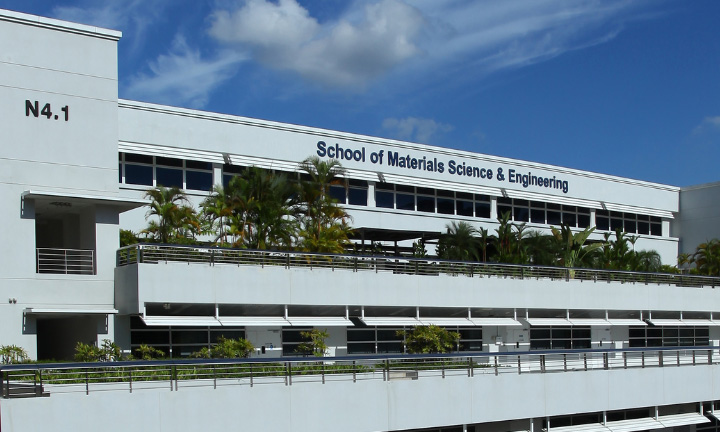
MSE Meeting Room (N4.1-01-28)
Alumni, Current Students
NTU MSE Seminar Hosted by Nanyang Assistant Professor Wu Dongshuang
Abstract
Biological channels efficiently and selectively transport water, specific ions, and molecules due to their uniform sub-nanometer (sub-nm) pore diameters and unique surface chemistry. Creating artificial channels with similar structures and functions and developing corresponding membranes has profound implications for energy-efficient separations in applications ranging from water purification to petroleum refining, chemical production, and carbon capture. Two-dimensional (2D) materials, characterized by atomic thickness and large lateral dimensions, offer the potential for membranes with ultimate permeation properties. However, the practical development of 2D material membranes for sub-nm scale separations faces critical challenges, such as controlling non-selective defects, channel size distribution, and ensuring long-term stability under industrial conditions.
This presentation will delve into the design and tuning of 2D materials channels leveraging materials science principles. It will further explore their mass transport characteristics at the sub-nm scale, including the selective transport of gases, liquids, and ions for separation membranes. The research contains three key aspects: (i) membranes with ordered channels, (ii) chemical regulation of channels, and (iii) molecular engineering of membranes. Additionally, the study will discuss the long-term stability of these membranes under industrial-like conditions and explore their potential for scaling up in various applications in the fields of energy, environment, and bioelectronics.
Representative Publications:
- 1. J. Shen†, Y. Cai†, C. Zhang†, W. Wei† et al., Fast water transport and molecular sieving through ultrathin ordered conjugated-polymer-framework membranes. Nature Materials, 21 (2022) 1183.
- 2. J. Shen et al., Artificial channels for confined mass transport at the sub-nanometre scale. Nature Reviews Materials, 6 (2021), 294.
- 3. L. Chen†, G. Shi†, J. Shen† (co-first author), B. Peng† et al., Ion sieving in graphene oxide membranes via cationic control of interlayer spacing, Nature, 550 (2017) 380.
Biography
Dr Shen Jie
Dr. Jie Shen has been a postdoctoral researcher at King Abdullah University of Science and Technology (KAUST) since 2018, working under Prof. Yu Han and Prof. Ingo Pinnau. He earned his Ph.D. in Chemical Engineering at Nanjing Tech University from 2013 to 2018 and was a visiting researcher in Mechanical Engineering at the University of California, Berkeley from 2017 to 2018. His current research focuses on 2D materials and nanoporous membranes for energy-efficient separation, clean water production, carbon capture, and renewable energy. He is the recipient of the 2023 North American Membrane Society (NAMS) Young Membrane Scientist Award and the 2023 European Membrane Society (EMS) Conference Fee Award for Young Academics. He has been recognized as one of the Global Top 2% Most-Cited Scientists by Stanford University and Elsevier (2023 & 2022). Jie serves as a youth editorial member for journals such as The Innovation, Nano Research Energy, and Sustainable Horizons.
Dr Shen Jie
Division of Physical Science and Engineering,
King Abdullah University of Science and Technology (KAUST)