HASS x AI
What should the relationship between Humanities, Arts and Social Sciences and AI be? What new forms of knowledge can AI produce; and what, which we value, does it threaten?
Last month, CoHASS hosted a series of conversations to ask those questions.
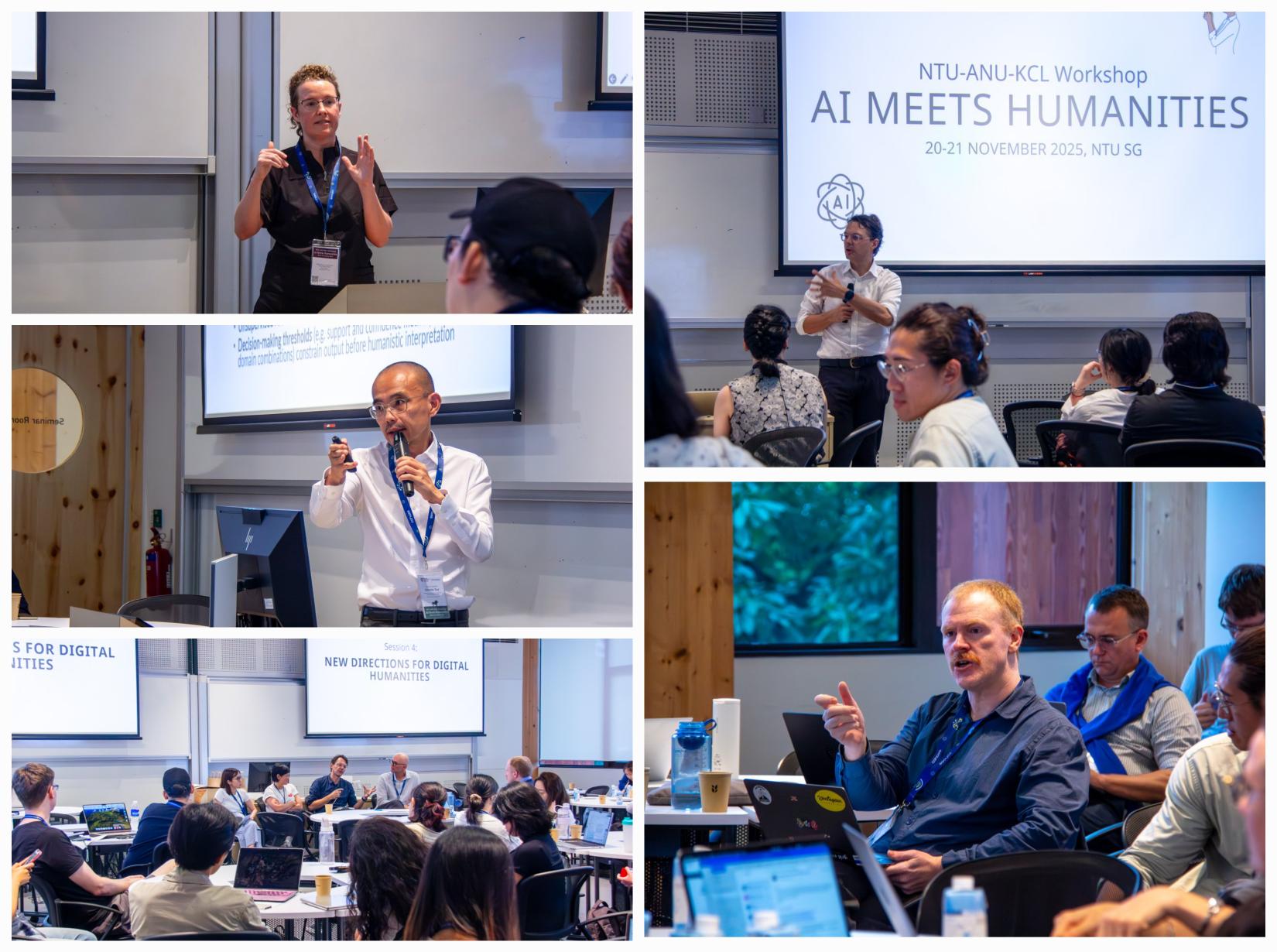
Participants in a workshop jointly organised between Digital Humanities scholars from NTU Singapore, King’s College London and Australian National University on 20-21 Nov asked what happens when ‘AI meets the Humanities’. Speakers included Prof Katherine Bode, on language models as cultural artefacts; Prof Dennis Tay on humanistic agency in AI; and Prof Bernard Geoghegan on creating a multimodal commons.
The workshop was followed by a series of two lectures by philosopher, Google fellow, and founder of the AI R&D Lab Limn, Dr Tobias Rees about the impact of AI on our concept of the human, and the university.
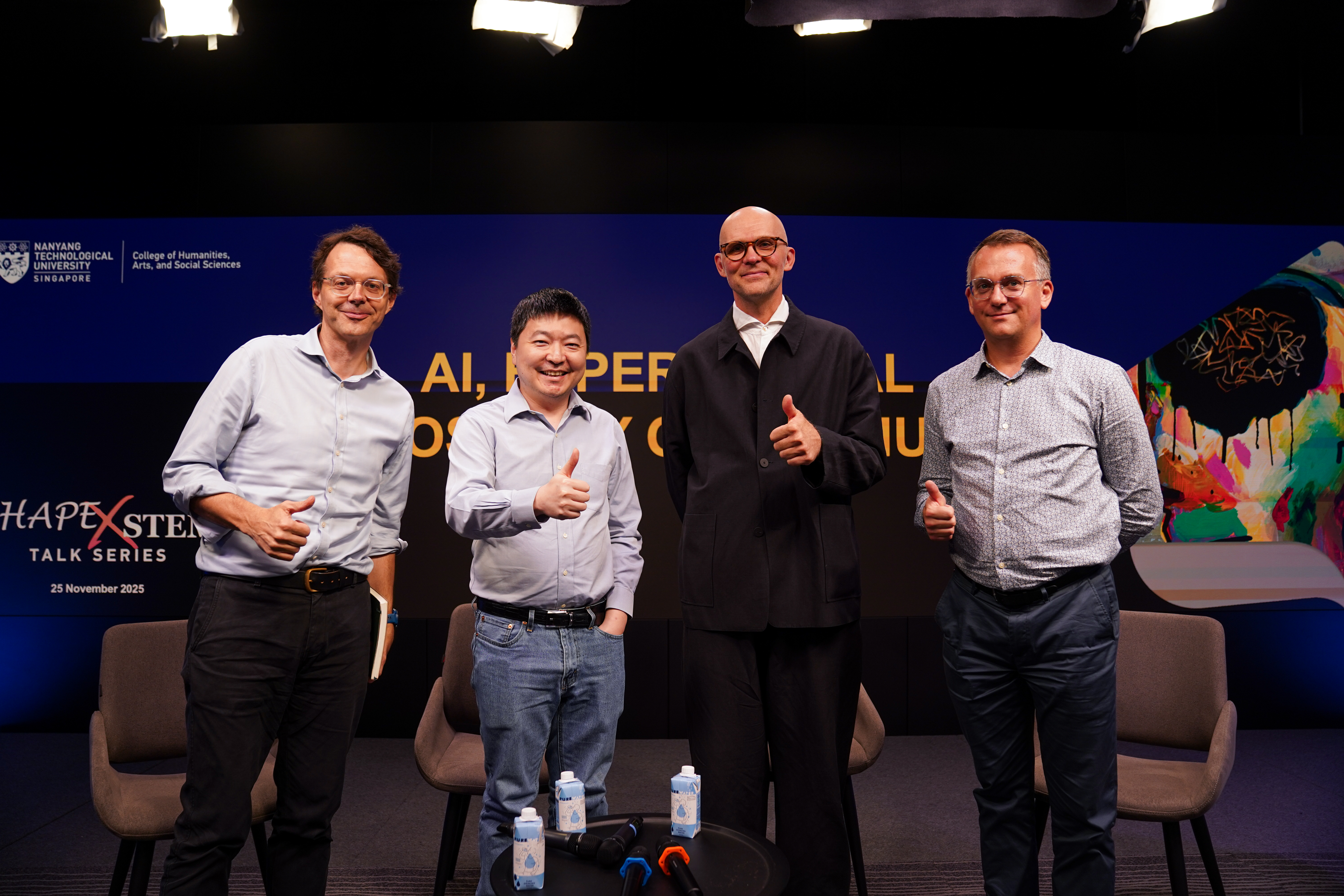
In his 25 Nov lecture, ‘AI, experimental philosophy of the human’, Dr Rees chronicled the philosophical thought about what it means to be human, inviting his audience to consider how AI challenges the dichotomy between human, nature and machine. AI has never been alive; but has its own agency and is capable of inter-action. Dr Rees argued that it also offers us a new way to experience time, transforming history from finite and finished to something alterable.
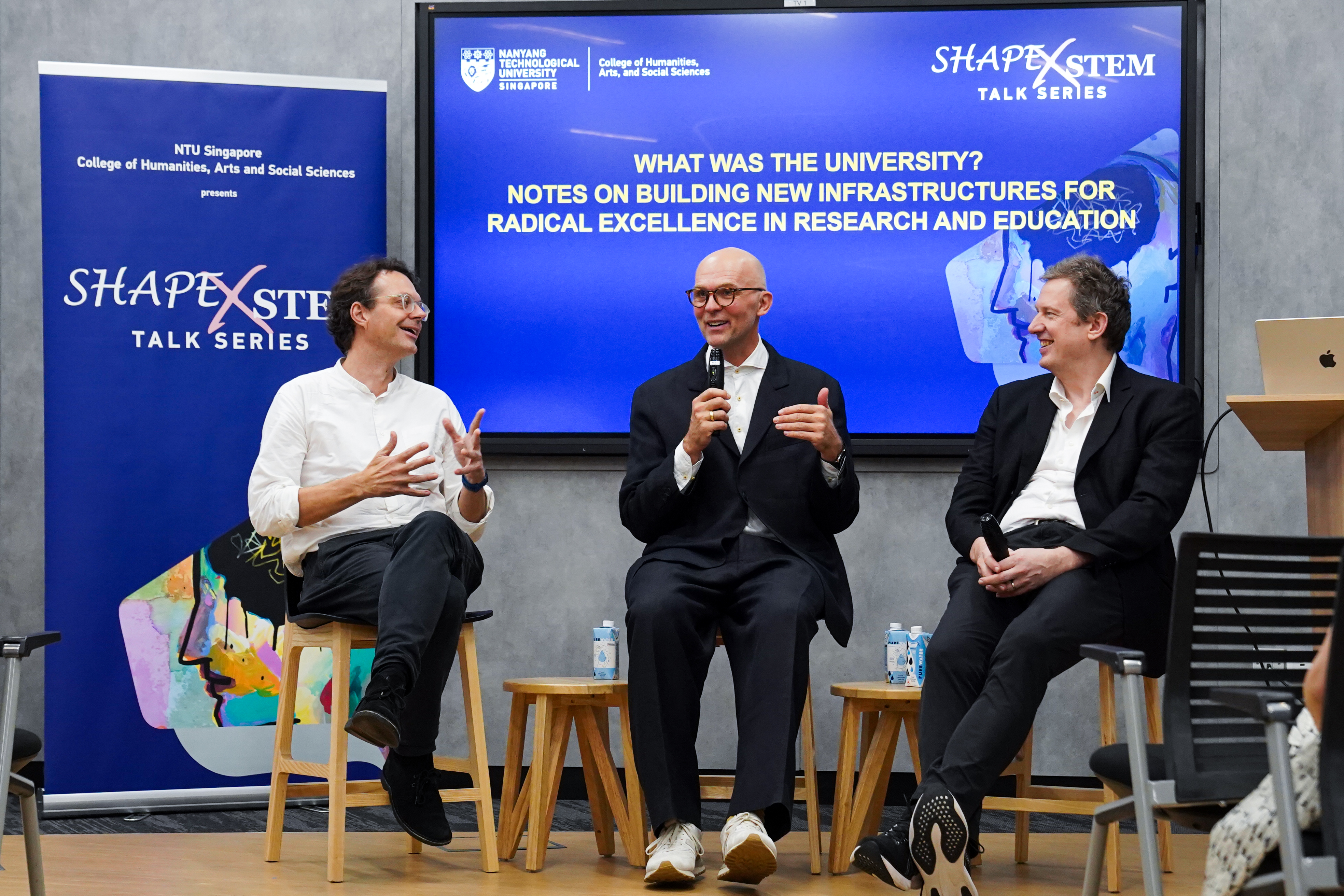
Dr Rees’s talk the second day asked ‘What was the University? Notes on building new infrastructures for radical excellence in research and education’. Amidst the collapse of distinctions between humanities, science and technology, Dr Rees suggested that universities cannot merely be content with interdisciplinary collaboration; they should strive to create novel forms of thought beyond the possibilities within any simple mix of disciplinary approaches.
These conversations will play a critical role in the development of a strand of research and teaching at CoHASS addressing the relationship between digital technology and society, which will occur in our Asian Centre for Digital Cultures and be supported by our new MA in Digital Humanities.
/assoc-prof-lin-jingxia_websitebanner.tmb-listing.png?sfvrsn=88a9cef8_1)