Global Asia Research Centre (GARC) Annual Flagship Conference on Asian Political Thought featuring Professor Wang Hui
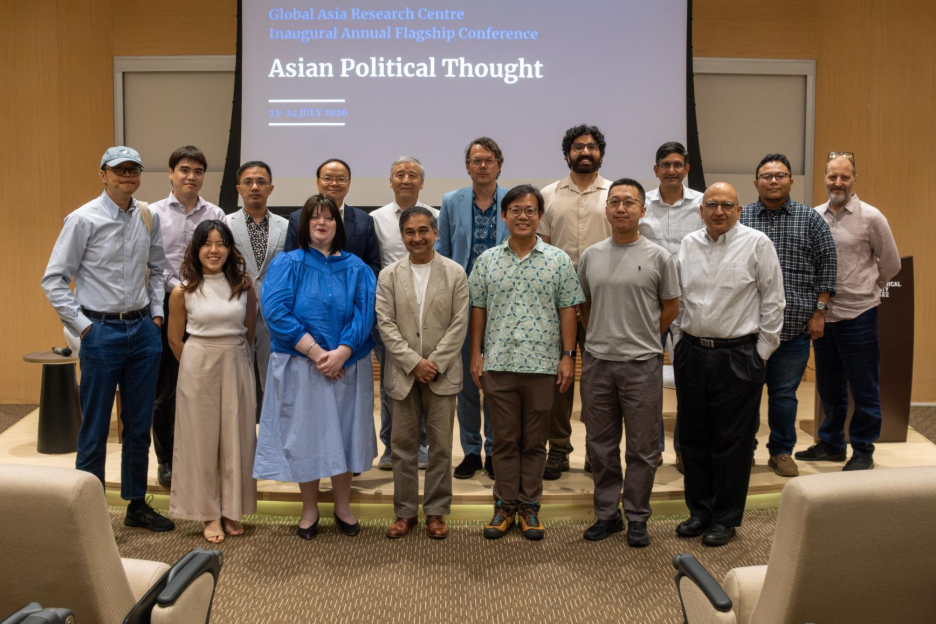
On 23 and 24 July 2026, NTU College of Humanities, Arts and Social Sciences’ (CoHASS) Global Asia Research Centre (GARC) held its Annual Flagship Conference on Asian Political Thought, featuring distinguished scholar Professor Wang Hui.
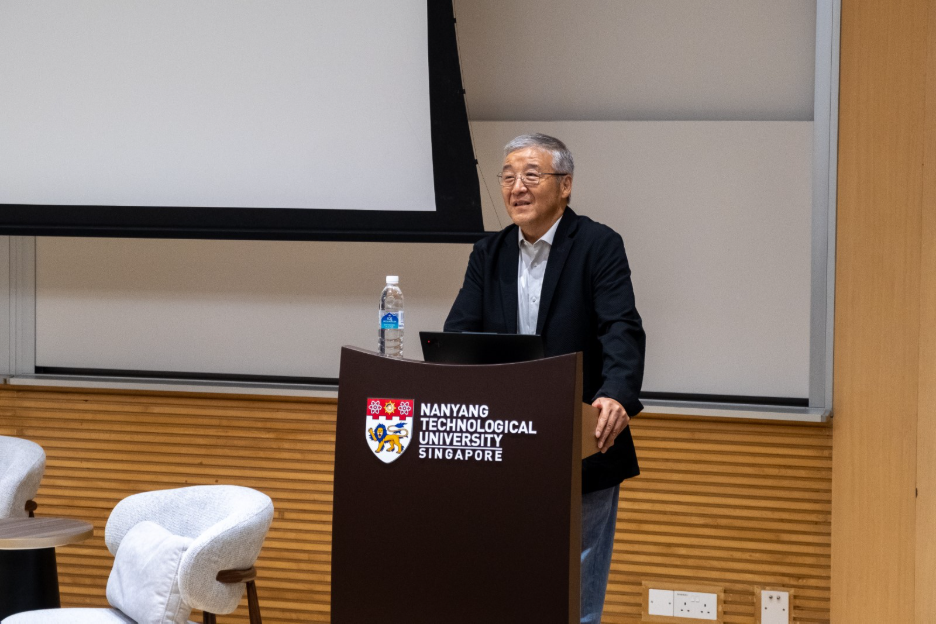
Held at the Nanyang Executive Centre Auditorium, the two-day conference brought together scholars working across history, political thought and Asian studies to engage with Professor Wang’s scholarship and explore different approaches to understanding Asia, its histories and its place in the wider world.
Professor Wang Hui is Distinguished Professor of Literature and History at Tsinghua University and Director of the Tsinghua Institute for Advanced Study in the Humanities and Social Sciences. His research spans Chinese intellectual history, literature, and social and political theory. He was also co-editor of the influential Chinese journal Dushu from 1996 to 2007 and was named by Foreign Policy as one of the world’s top 100 public intellectuals in 2008.
His publications include China’s Twentieth Century, China from Empire to Nation-State and The Politics of Imagining Asia. Across his scholarship, Professor Wang has examined questions of modernity, empire, the nation-state and the ways in which established frameworks of world history shape our understanding of China and Asia.
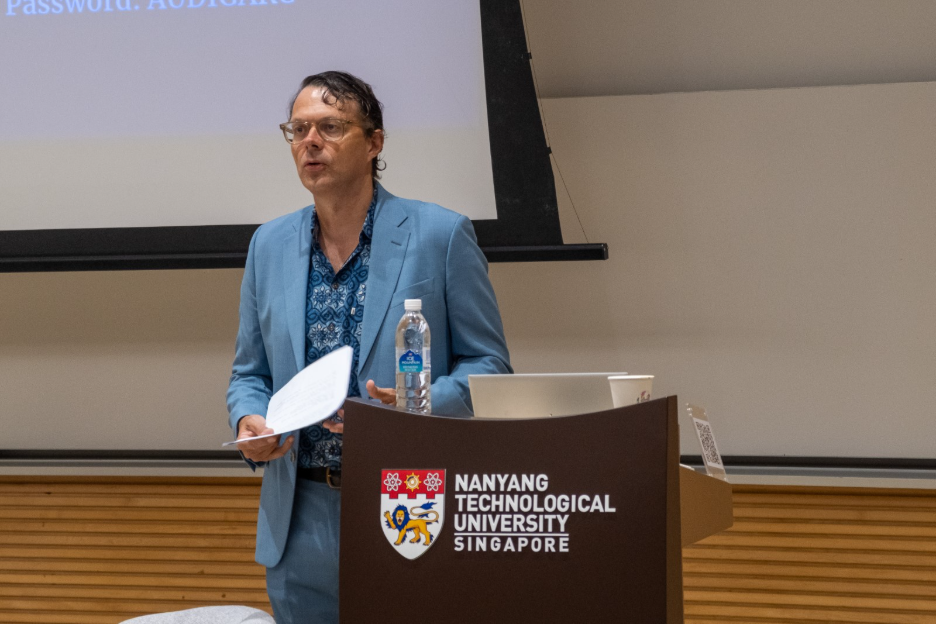
The conference opened with remarks by Professor Jon Wilson, Dean of CoHASS and Director of GARC, before Professor Wang Hui delivered the first keynote, “Revisiting ‘Asia as Method’: Asia as a New Problematic in World History.”
The keynote revisited the question of how Asia can be approached not simply as a geographical region or fixed cultural category, but as a means of rethinking established narratives of world history. Drawing on longstanding concerns in Professor Wang Hui’s scholarship, the session considered how ideas of Asia have historically been shaped through encounters with empire, colonialism, nationalism and European conceptions of world history.
It also invited participants to consider the limitations of treating European historical experiences and political categories as universal points of reference. Instead, examining the diverse historical experiences within Asia can open alternative ways of understanding modernity, political order, and relations between societies.
These questions provided a starting point for the three panel discussions on the first day. “Asia as Method” further examined the possibilities and challenges of using Asia as a methodological and intellectual point of departure, while “Theorising History” explored the conceptual frameworks through which historical change is understood. The final panel of the day, “Empire in Asia,” turned attention towards the different forms and legacies of empire across the region.
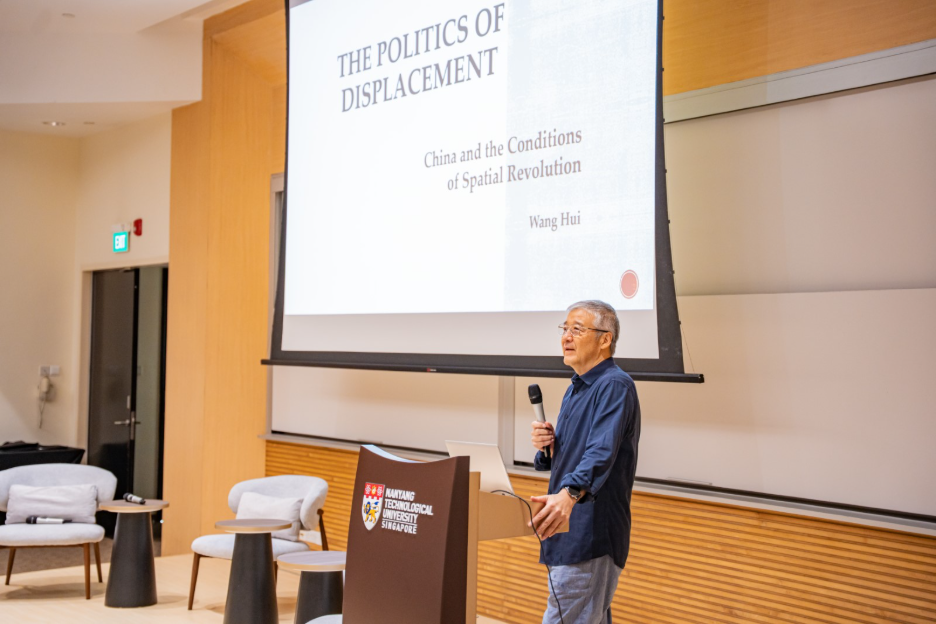
On the second day, Professor Wang Hui delivered his second keynote, “The Politics of Displacement: China and the Conditions of Spatial Revolution.”
The keynote approached twentieth-century China through the concept of a “spatial revolution”, examining the ways political ideas and historical experiences take on new meanings as they move between different geographical, intellectual and political contexts.
Central to this discussion was the movement and transformation of concepts commonly associated with modern political life—including the nation, sovereignty, the people, class and citizenship. Rather than assuming that these concepts retain the meanings associated with their original European contexts, Professor Wang’s work highlights how they are reinterpreted and transformed when situated within China’s distinct historical conditions.
The keynote was followed by three further panels that expanded the conference’s discussions beyond a single understanding of either China or Asia. “Critical China” brought different perspectives to questions surrounding China and its intellectual and political histories, while “Global Southeast Asia” considered Southeast Asia in relation to wider regional and global processes. The final panel, “Other Asias,” invited participants to rethink the plurality contained within the idea of Asia itself and the different histories, experiences and political imaginaries that the term can encompass.
Across the six panels, participants included scholars from NTU and institutions around the world. Their contributions generated discussions spanning intellectual and political history, empire, regionalism, and the production of knowledge about Asia.
The conference concluded with closing remarks from Professor Wang Hui, Professor Jon Wilson and Dr Swapna Kona Nayudu.
Through Professor Wang Hui’s two keynotes and the conversations across the six panels, the conference provided an opportunity to reflect on what it means to study Asian Political Thought not as a self-contained regional field, but as a source of concepts, histories and questions that can contribute to broader debates about politics and world history.
The conference forms part of the Global Asia Research Centre’s wider efforts to bring scholars from across Asia and the world into conversation and to develop new concepts and approaches grounded in the diverse historical and contemporary experiences of the region.
Stay tuned for more seminars, workshops and conferences from the Global Asia Research Centre.
/ug-town-hall-(header-pic)_updated1.tmb-listing.png?sfvrsn=a0936bc_1)
/58.tmb-listing.jpg?sfvrsn=c98bb35a_1)
749334c4-4609-4705-a4c3-e3100c93f512.tmb-listing.jpg?sfvrsn=a26bd855_1)
-(1200-x-720-px).tmb-listing.png?sfvrsn=cd745b16_1)