From Representation to Intervention: Global Futures of Comics in Healthcare
On 18 November 2026, NTU’s Centre for Health, Culture and Society (CHCS) hosted the From Representation to Intervention: Global Futures of Comics in Healthcare seminar, held at the SHHK Conference Room (SHHK-HSS-05-57). Featuring Prof. Sathyaraj Venkatesan, Professor of English (National Institute of Technology, Tiruchirappalli, India), the session explored the history and significance of Graphic Medicine, as well as its utility across medical education, patient communication, public health, reflective practice and research.
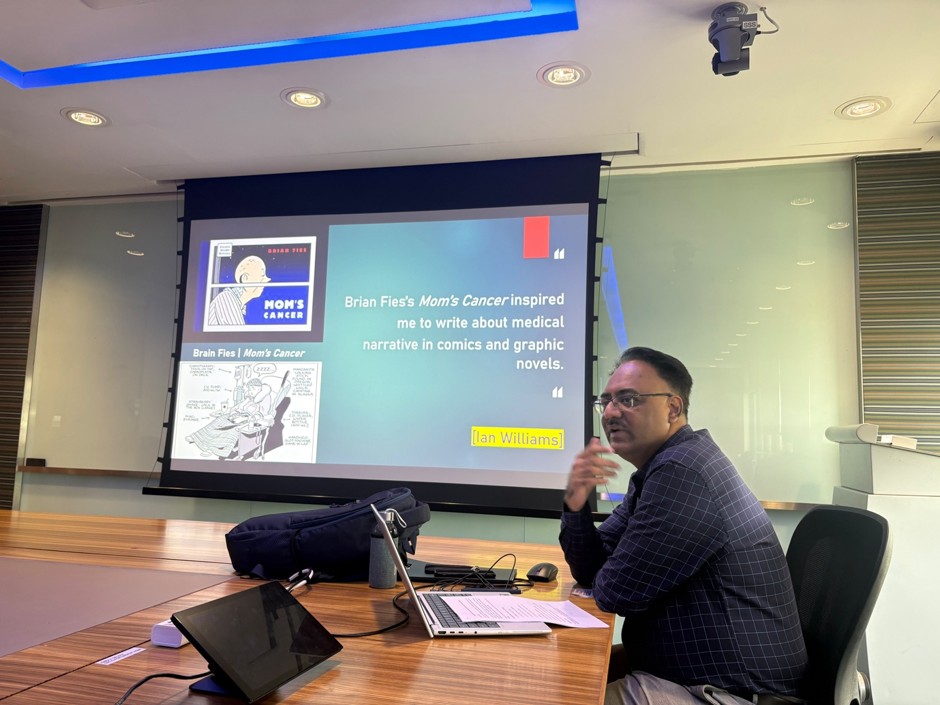
Prof. Venkatesan’s talk began with a comprehensive introduction to Graphic Medicine, as well as the various ways of interpreting the phenomenon: an ideology that prioritises non-conformist experiences; unofficial iconography that depicts subjective experiences of health that objective clinical medicine cannot capture; and an advocacy movement to create more inclusive healthcare systems.
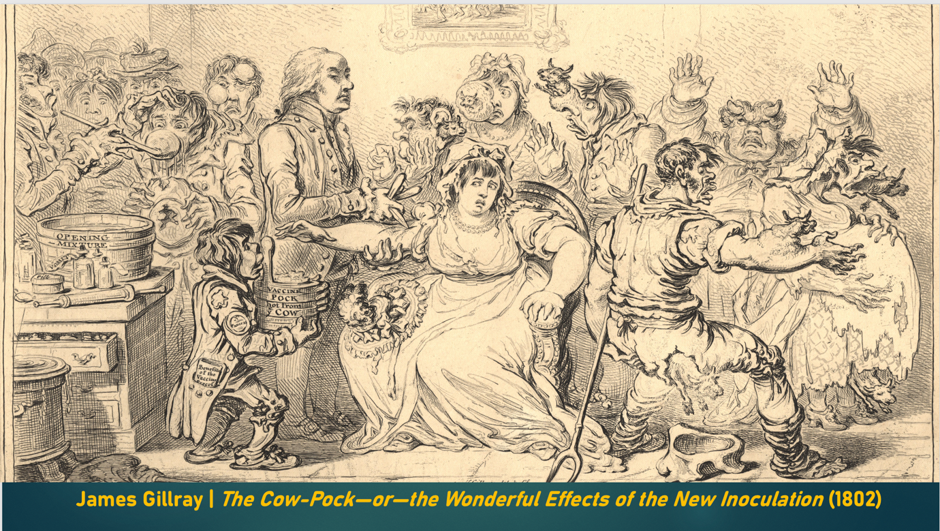
Prof. Venkatesan then gave an overview of the major themes in Graphic Medicine, the types of creators involved, and potential motivations in creating these works. He also explained why comics have been an attractive medium to depict these experiences, both for creators and the public. After providing a brief history of how visual mediums were used to depict health and illness, from James Gillray’s Cow-Pock or Wonderful Effects of New Inoculation depicting public reactions to the cowpox vaccine, to the Strip AIDS USA comics anthology at the height of the HIV Epidemic during the 1980s, Prof. Venkatesan discussed the “provincialisation” of graphic medicine in the digital age, in line with pluralistic understandings of medicine in global political modernity. Prof. Venkatesan then gave an overview of how Graphic Medicine has been positioned within the Indian context: from a tool to express grief in the midst of battling cancer, to educating girls on menstruation and female puberty, and even advocating public safety during theCOVID-19 pandemic. Dr Venkatesan concluded the talk with potential new directions the medium could take, including potential suggestions on how graphic medicine could have a stronger presence in Singapore.
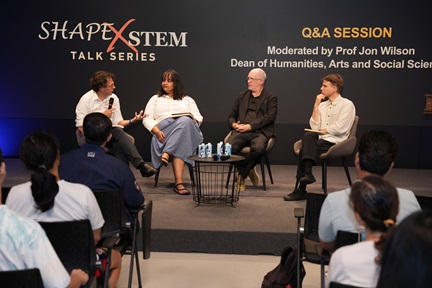
The presentation was soon followed up with a question-and-answer session. Participants asked Prof. Venkatesan how comics could be effectively used as therapy, how shifts in the digital landscape have affected the circulation of Graphic Medicine as a medium, and the role of drawing styles in affecting viewer responses.
The arts is one of the many mediums CHCS draws upon to serve its mission of creating greater empathy for individuals in healthcare contexts. By making subjective experiences of health and illness tangible through artistic depictions, CHCS hopes to generate positive change by helping us to develop greater understanding and be more compassionate for people with such experiences. We thank Prof. Venkatesan in sharing his valuable insights into how Graphic Medicine has and can be used to bridge these gaps, and we look forward in connecting with other researchers who are also interested in interdisciplinary applications of health and the arts.