Why CCDS Alumna Srishti Arora Believes Learning How to Learn is a Graduate's Sharpest Edge
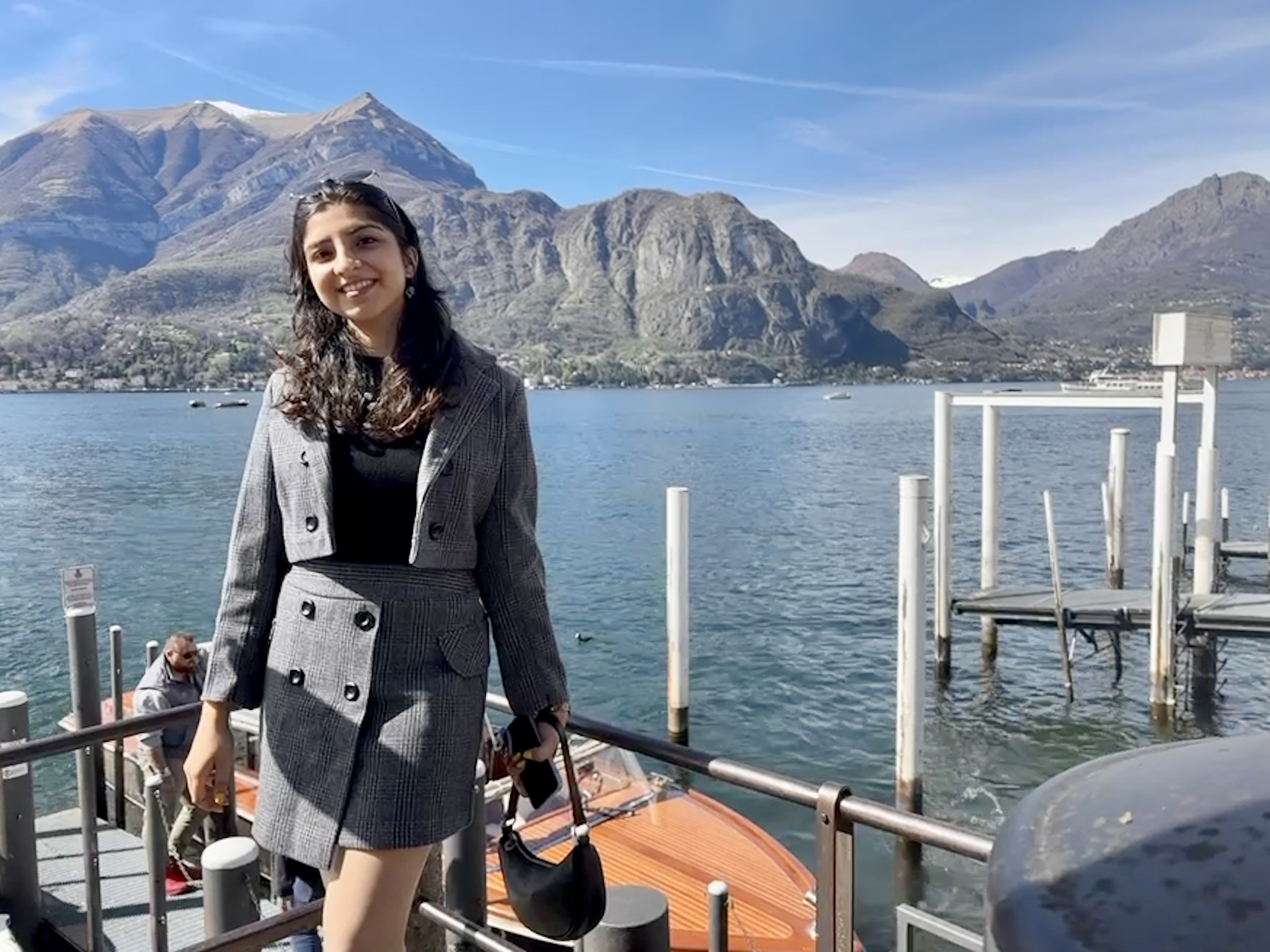
When Srishti Arora graduated as valedictorian of her cohort at the then-School of Computer Science and Engineering (now College of Computing and Data Science) in 2023, she knew AI could handle much of the code-writing.
This meant her real value would rest on something harder to automate: how she thinks, not what she types.
In her current role as a software engineer at Goldman Sachs, that belief has only been confirmed. Her role now centres on problem-solving and critical thinking – skills that no tool can replace. It’s a shift that has reinforced a conviction she first developed as a student at NTU: in a fast-changing industry, the most durable advantage isn’t what you know; it’s how quickly you can learn what you don’t.
Built for unfamiliar territory
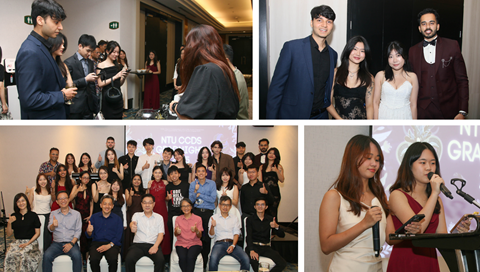
That conviction was forged well when she was a Computer Science student. In 2021, Srishti stepped into the role of president for NTU Women in Tech. This was her first time leading a committee, and she had little idea of what leadership actually required. But over a 16-month tenure filled with mentoring sessions, coding challenges, and workshops, she grew into the role, fostering a community where women across CCDS could share ambitions and support one another. The experience taught her that she could thrive in roles she hadn’t been prepared for, and that her own journey, doubts included, was more useful shared than kept to herself.
She carried that mindset into her final year project at NTU’s Centre for Brain and Computing Research, where she studied how emotions are represented in brain signals, a domain she had no background in. She knew nothing about signal processing or EEG. But she loved the work, and the experience reinforced what the Women in Tech role had already shown her: unfamiliar territory is where she grows most. “We set our limits,” she says, “and we can choose to edit them.”
More than just technical skills
Learning how to learn goes beyond mastering new skills. For Srishti, it also meant learning to communicate which was just as critical as any algorithm.
Early in her career at Goldman Sachs, she received feedback that her voice was too soft. It was a comment on her literal speaking style, but over time she realised it was also a metaphor for the confidence needed to be heard in a high-stakes environment. A female manager became her mentor, pushing her to speak louder – figuratively and literally – and teaching her how to convey ideas with clarity.
The experience shaped how Srishti thinks about what it takes to succeed as an engineer. Technical foundations matter, she says, but so does the ability to present your thinking clearly. She now encourages students to practise solving problems aloud, because interviews and workplaces assess how you think, not just what you know.
Sharing what she has learnt
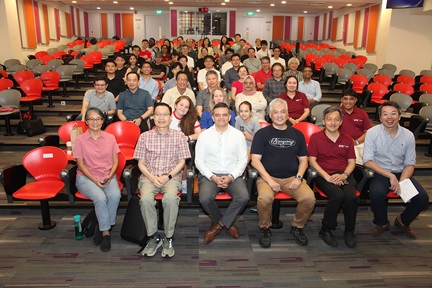
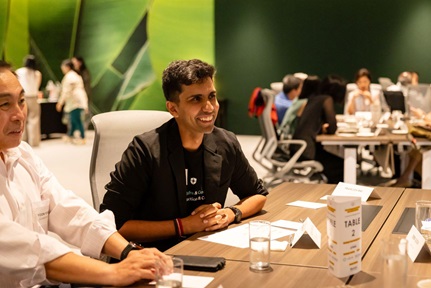
Srishti’s instinct to give back has not faded since graduation. At the CCDS alumni panel during NTU Open House 2026, she shared her perspective on navigating the AI-driven industry. She remains open to connecting with current students, just as the seniors before her once did for her. And her advice is characteristically direct: build deep foundations in data structures, algorithms, networks, and operating systems. Apply for every role that excites you, even if you don’t meet every criterion on the job description. Her golden rule: “If you do not ask, the answer is always no.”
Making a lasting impression
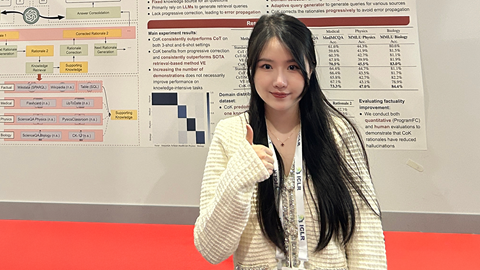
In 2025, Srishti was named one of the Top 10 Asia Young Women Rising Tech Stars. It was recognition of both her technical skill and her commitment to empowering others. But ask her what she wants CCDS students to take away from her story, and the answer is disarmingly simple.
“Do you learn best from mind maps, reading books, watching YouTube videos, or perhaps by implementing things yourself?” she asks. “It will keep you nimble as the world changes.”
Graduates like Srishti are a quiet reminder that the most lasting impact of a good education isn’t just what students go on to achieve – it’s the adaptability, curiosity, and generosity they carry with them long after they leave.