How CCDS Alumnus Pramodh Rai’s Multidisciplinary Education Shaped His Approach to Cybersecurity and Entrepreneurship
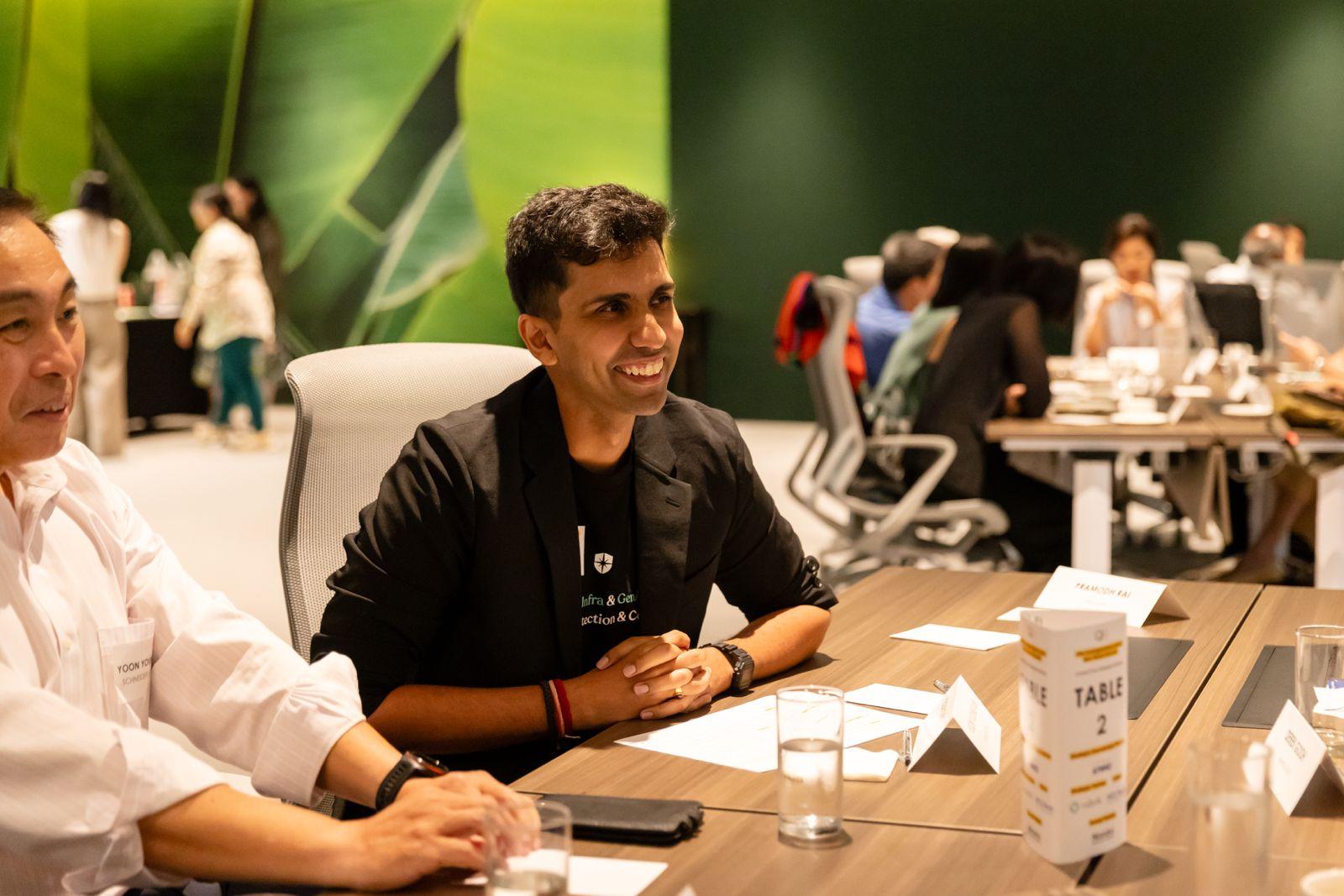
Ask Pramodh Rai what he took away from his years studying at what is now the College of Computing and Data Science (CCDS), and he won't point to a specific module or project. Instead, he describes as “the discipline to think in systems” – breaking any problem into its inputs, constraints, and desired outcomes. It sounds simple, but that structured thinking is the backbone of everything he does today. It is a thread that runs through every stage of his career, from his first corporate role to co-founding a cybersecurity company that now operates in five countries.
A way of thinking
Pramodh graduated in 2012 with a double degree in Computer Science and Business. Studying both disciplines meant constantly moving between two modes of thought – the technical and the commercial. Rather than feeling like a split focus, the combination had trained him to see problems the way they exist in the working world: messy, cross-disciplinary, and rarely solved by one perspective alone.
"I was always translating between the two worlds," he said. "That turned out to be an enormous advantage because most real problems sit at exactly that intersection."
The programme also pushed him to get comfortable without having a clean answer in front of him. "That comfort with ambiguity is honestly one of the most important things you can develop as a future entrepreneur," he said. It was not a lesson he fully appreciated at the time, but it has proved durable.
Beyond the coursework, Pramodh credited the broader NTU environment, which was “diverse, international and competitive”, for shaping how he works with people. That experience of working across cultures and perspectives on campus proved to be direct preparation for leading teams and managing clients across Singapore, Japan, India, the Middle East, and the United States today.
Putting the foundation to work
Pramodh did not go straight from campus to starting a company. He spent time at Barclays where he saw up close how a large bank handles compliance. He then joined Coinhako, a cryptocurrency venture, during a period when regulations in the sector were shifting almost weekly.
Both roles tested skills he first developed at CCDS. The structured thinking helped him make sense of complex institutional problems. The ability to move between technical detail and business context let him spot a gap that others with a narrower background might have missed: the tools companies used to manage risk were simply not keeping up with the threats they faced.
"The experience gave me scar tissue that no accelerator programme can replicate," he said. "You learn how deals actually get done, how organisations resist change, and what it takes to earn institutional trust."
That gap and that hard-won understanding eventually led him to co-found Cyber Sierra, an AI-powered governance, risk and compliance (GRC) platform.

Navigating the AI hype
If CCDS taught Pramodh to think critically, the cybersecurity industry gave him plenty of reasons to put that skill to use. Artificial intelligence has become both a tool and a marketing buzzword in the sector. Pramodh takes a measured view, focusing on specific workflows where AI demonstrably outperforms manual processes rather than making sweeping promises.
"I've seen a lot of AI hype in the cybersecurity space that overpromises and underdelivers," he said. "Enterprise customers, especially in regulated industries like finance and defence, aren't going to hand over risk management to a black box. You have to earn that trust." He shared that CCDS encouraged intellectual honesty from the start, and in a field prone to hype, that grounding has proved invaluable.
Giving back to where it started
In addition to his work at Cyber Sierra, Pramodh is also a part-time lecturer at Nanyang Business School. It is his way of giving back and making a deliberate investment in the next generation of technology leaders. He is currently in early discussions with NBS and CCDS to develop a module on Agentic AI and Cybersecurity – a subject he believes will define the future directon of this field. He is also building research links between his company and the CyberSG Research & Development Programme Office at NTU, particularly around AI safety and GRC automation.
"Singapore has an incredible opportunity to lead in this space, and NTU and CCDS are natural partners in that story," he said.
His advice to CCDS students thinking about entrepreneurship is practical. Work somewhere with real stakes first. Find a co-founder whose strengths are different from yours, not just someone you get along with. “It's easy to build a product that people say they like," he advised. "It's much harder to build one they'll pay for and depend on."
As for the mindset that matters most, Pramodh keeps it simple: "Don't optimise for knowing the answer. Optimise for being the person who can figure it out."
This advice echoes the core of a CCDS education, revealing its impact well beyond graduation.