Empowering Youth Through AI: CCDS Students Shine at Dell InnovateFest 2025
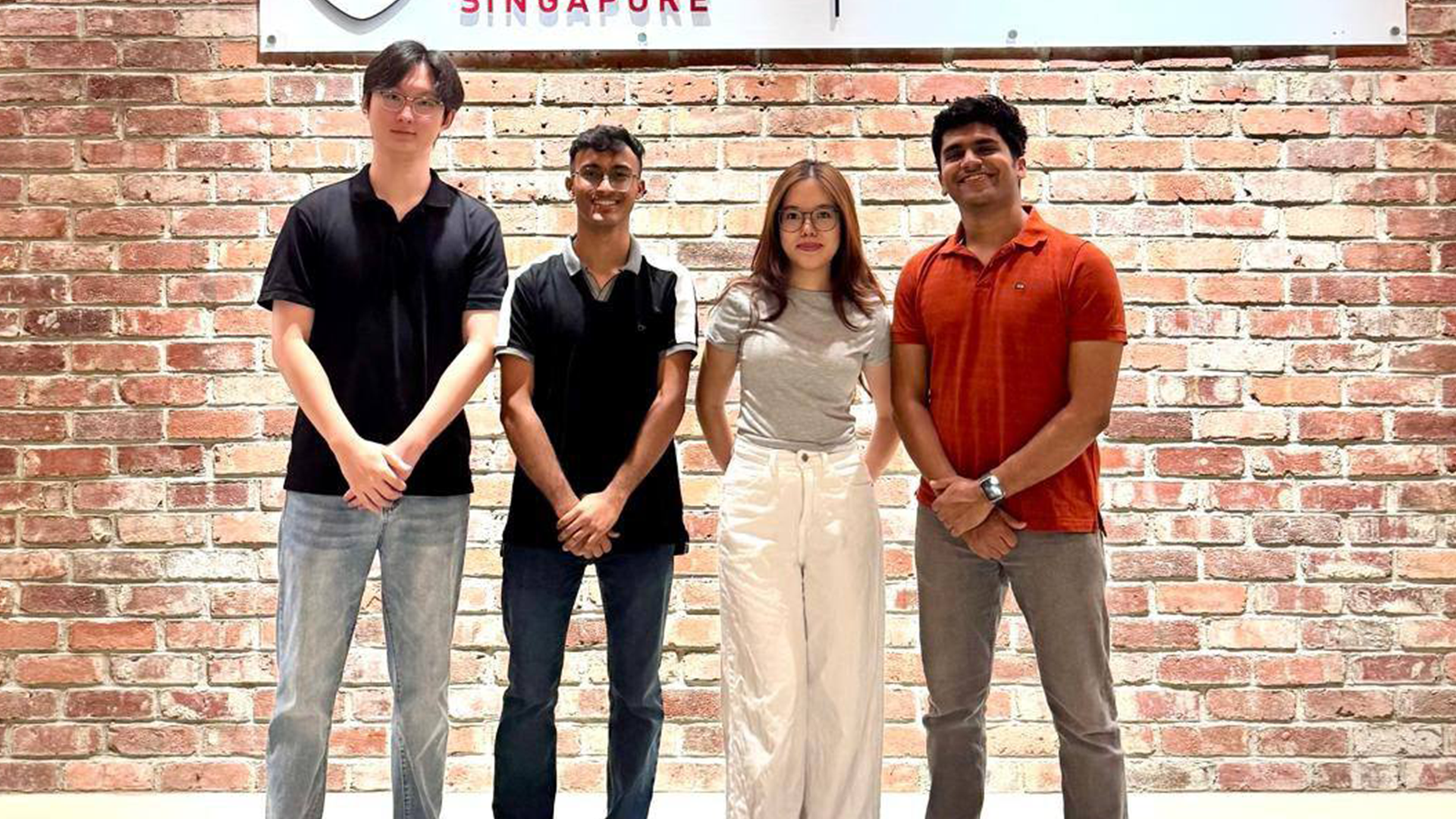
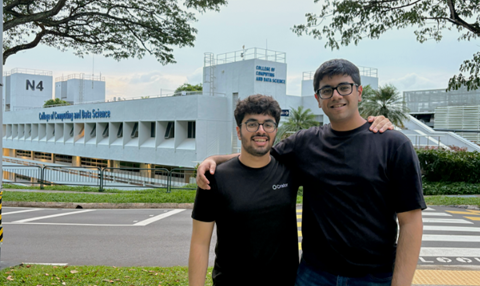
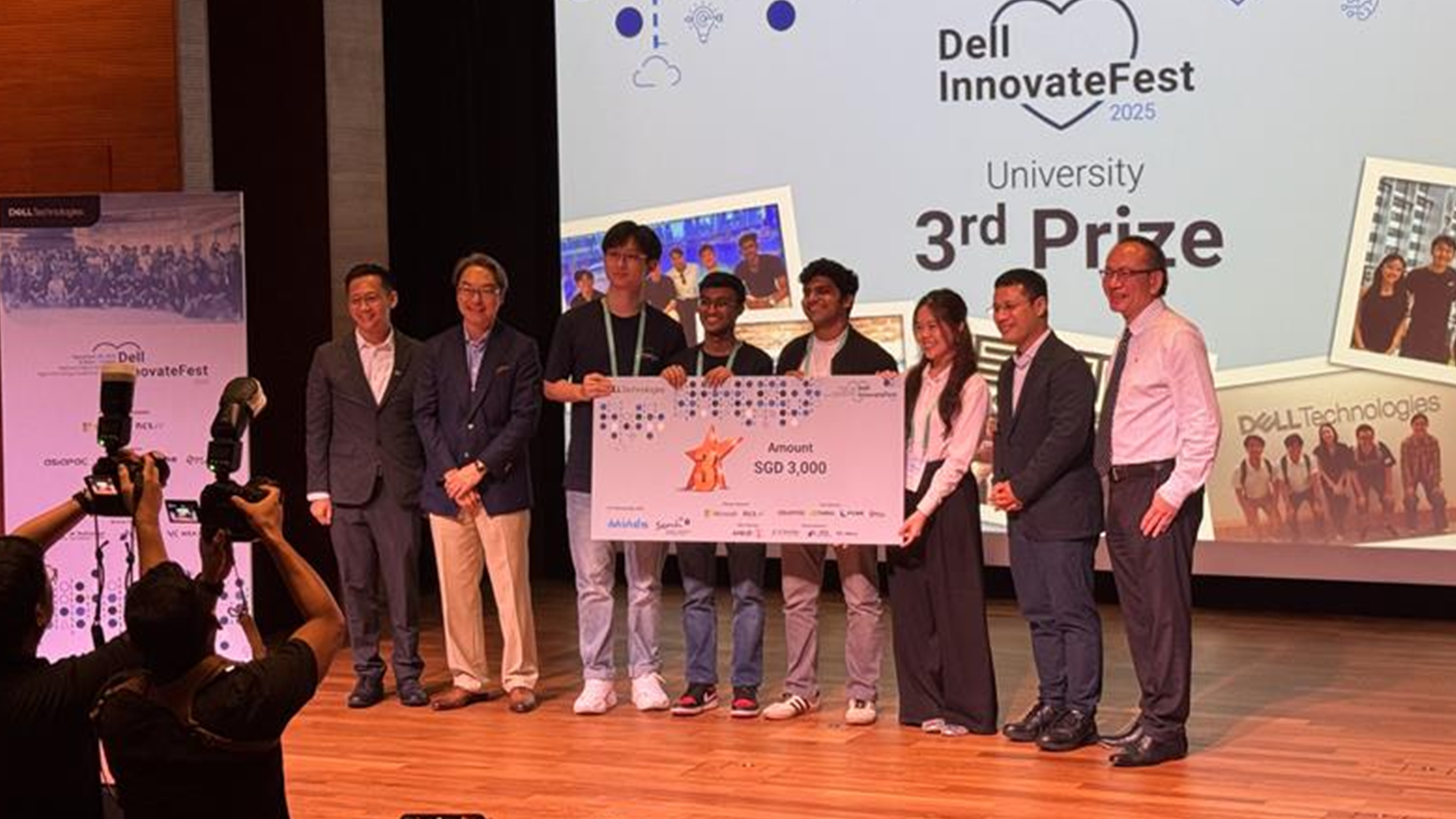
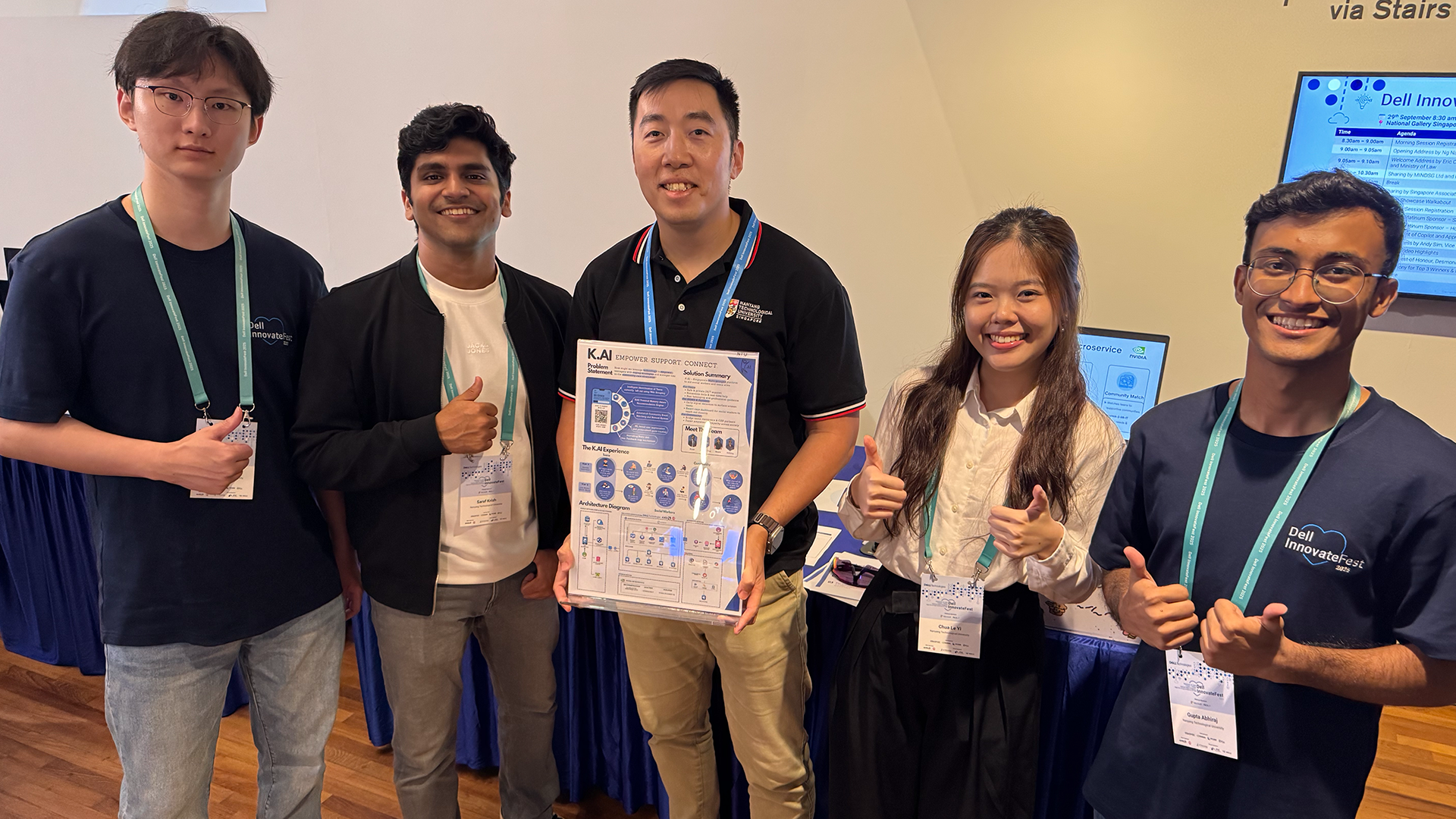
CCDS final-year students Krish Saraf, Abhiraj Gupta, Haung Ting, and Chua Le Yi have created an AI platform that listens, supports, and connects young people, and their idea just earned them 3rd place at Dell InnovateFest 2025.
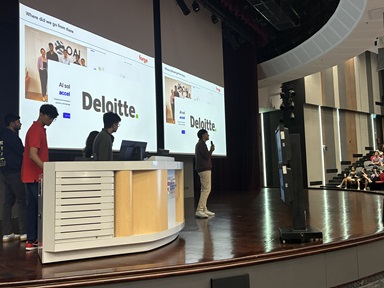
Held in September 2025, the inter-tertiary competition in Singapore brought together students from local universities and polytechnics to design technology solutions addressing mental-health concerns among teenagers and caregivers of persons with intellectual disabilities. Motivated by a shared belief that technology can drive social good, Krish, Abhiraj, Haung Ting, and Le Yi set out to tackle one of Singapore’s most pressing issues: youth mental wellness.
“One in three youths in Singapore face anxiety or depression, yet many don’t seek help,” they said. “We wanted to create a preventive, community-based tech solution that could make a real difference.”
Dell InnovateFest was more than a competition for the team. It became a platform to turn classroom learning into real-world impact.
Their winning project, K.AI (Kokoro AI), is Singapore’s first youth resilience and care platform that combines AI, data science, and human empathy. It supports teenagers through early-signal detection, gamified coping tools, journaling, and community matching, while empowering social workers with AI-assisted outreach.
K.AI works by scanning public youth forums such as Reddit for worrying posts. AI models detect risk signals and log them securely in a database. With consent, the system sends discreet outreach messages and connects the youth to social workers through a CarePilot console, which helps draft supportive replies.
Once onboarded, users can express themselves through journaling, join community activities, or play Resilience Quest, a series of short, choice-based mini-games that build coping skills in engaging ways.
What sets K.AI apart is its holistic design built on four pillars: ethical early detection, AI-assisted but human-in-the-loop outreach, gamified resilience-building, and verified community matching. The result is not just another mental-health app but a complete ecosystem of care connecting youths, caregivers, and support professionals.
Building such a system came with challenges. Handling sensitive social-media data required strict privacy safeguards and explicit user consent. “We designed anonymisation and opt-in features from the start,” the team explained. Balancing a serious topic with gameplay also demanded sensitivity. They worked closely with mentors from the Singapore Association for Mental Health (SAMH) to ensure that the game design remained supportive rather than trivialising.
Each team member brought a distinct strength, from data science and UX to software engineering and economics, and their shared CCDS background provided the technical depth and collaborative mindset needed for the project.
“Our CCDS experience taught us to combine technical rigour with social-impact thinking,” they reflected. “Courses in AI, machine learning, cloud systems and human-computer interaction were directly applicable, but what really helped was the emphasis on interdisciplinary teamwork and user-centric design.”
For youths, K.AI offers a private, stigma-free way to begin their mental-wellness journey, whether through journaling, playing resilience games, or finding a like-minded community. For social workers, it streamlines workload by automating routine drafting and surfacing high-risk cases earlier. Together, these elements strengthen Singapore’s mental-health support network without overburdening caregivers.
Winning 3rd place at an inter-tertiary innovation festival validated their approach. “It showed that mental-health innovation matters and that our solution resonated with both industry and community partners,” the team said. “For us, the award is encouragement to keep building and scaling solutions that address real societal gaps.”
Looking ahead, the students plan to refine K.AI, pilot it with youth organisations such as SAMH, and explore CSR partnerships to scale community programmes. As they prepare to graduate, they remain united by one goal: to continue applying computing and data-science skills to create technology that uplifts lives.