Evolution of Japanese economic interest in Africa
The TICAD process
By Takuo Iwata
Africa has been called “the last frontier” in the business community for decades. The Japanese media continue to view Africa in a similar manner in the 2020s. This means that Japanese companies have not yet established a significant presence in the African market and have not been noticeable in African countries.
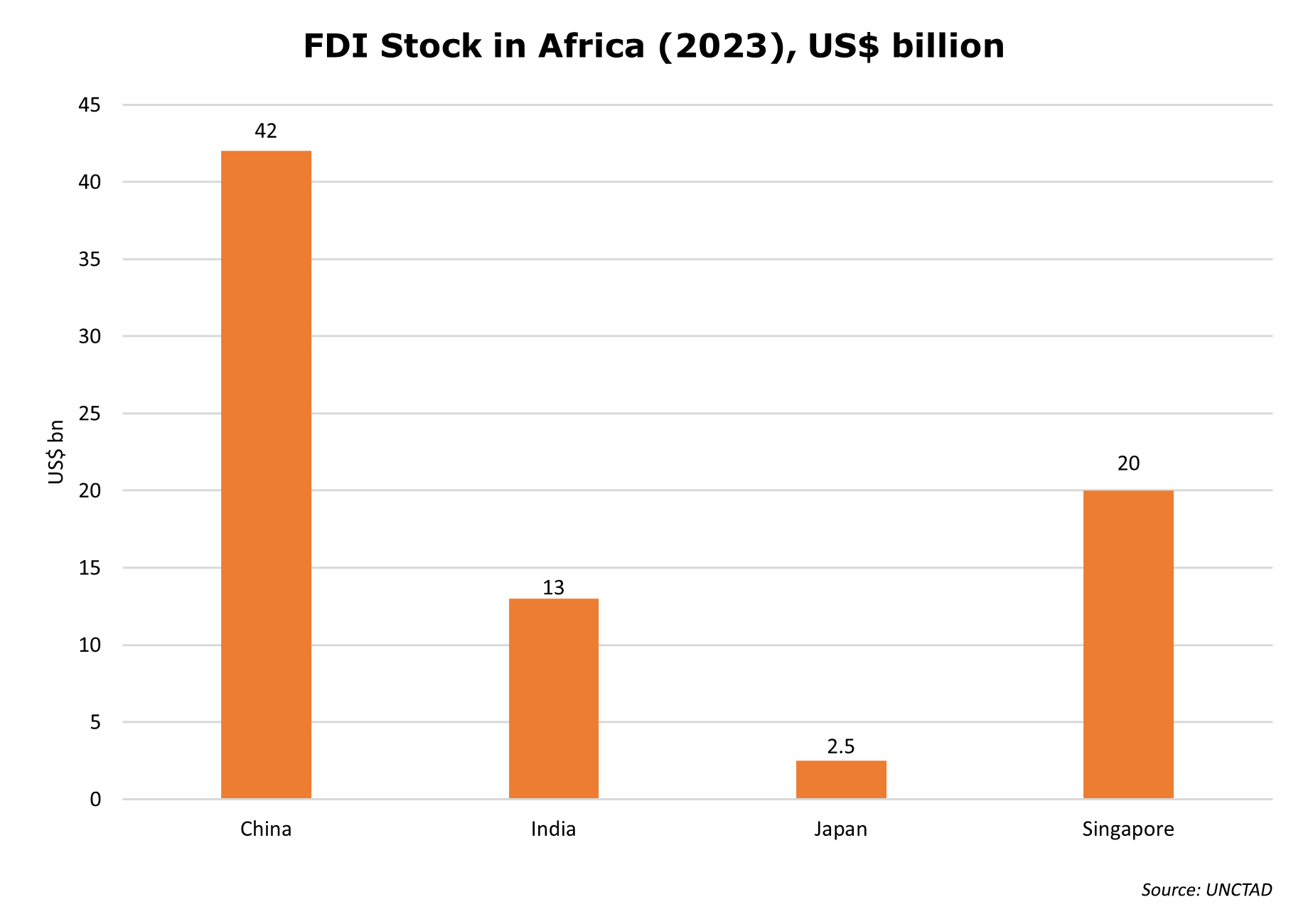
In the twenty-first century, economic exchanges between Asian and African countries have expanded and diversified significantly (Iwata 2012). For example, China’s economic presence is particularly salient. In addition to the Forum on China–Africa Cooperation (FOCAC, established in 2000), the Belt and Road Initiative (BRI, established in 2013) and the Asian Infrastructure Investment Bank (AIIB, established in 2016) are significant, robust Chinese initiatives aimed at accelerating trade and investment between China and African countries. China is the largest bilateral trade partner on the African continent (US$282bn in 2023).[1]
India has also significantly expanded its trade with Africa.[2] India is keen to transform its economic development platform from foreign aid to foreign direct investment (FDI) and to push for a trilateral partnership, such as with Japan and Germany (CII 2024).[3]
 In contrast to China and India, Japan’s trade with and investment in Africa remain modest. In the first two decades of the twenty-first century, Japan’s trade with Africa doubled from approximately US$10bn to US$23bn (in 2021). However, it decreased compared to the peak years of 2008 and 2012, when it reached US$34bn.
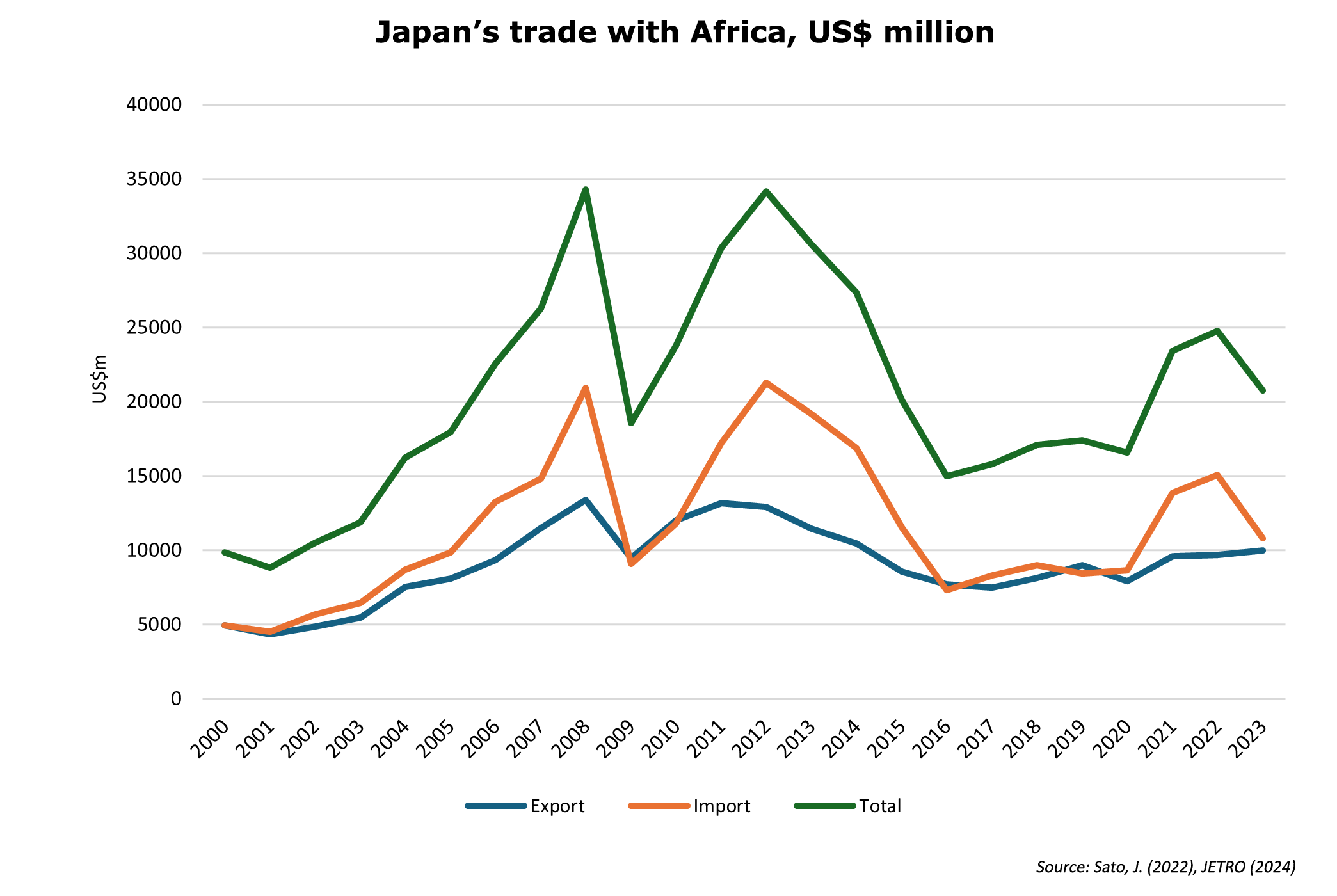
Trade with Africa has accounted for only approximately 1%–2% of Japan’s total trade over the past decades (ABP 2022; Ministry of Finance n.d.). Japanese companies’ FDI (stock) in Africa was approximately US$6bn (in 2021) (Sato 2022).[4]
This paper traces the history of Japanese business in Africa. Then, it examines the Japanese government’s engagement with Japanese companies in Africa through its Africa Forum, specifically the Tokyo International Conference on African Development (TICAD), which was established in 1993.
Historical overview of Japan’s economic interest in and approaches to Africa
Africa has been a relatively marginal part of Japan’s overall trade. However, in the early twentieth century, Africa was a more crucial trade destination for Japan. Africa was a significant source of raw cotton and a key export market for cotton and other textile products from Japan (Kitagawa 2020, 25, 67–72). During the peak period of the early 1930s, Africa’s share of Japan’s exports (mainly textile products) expanded from 3.9% to 8.4% (Kitagawa 2020, 88).
Japan was defeated in World War II and occupied by the United Nations GHQ (practically under US military control) from 1945 to 1952. Japan had to face compensation requirements from Asian countries that Japan had damaged and occupied through military occupation and colonization. Japan needed to collaborate with Asian and African countries to join the United Nations. Japan also faced challenges in rebuilding its economy. During that period, the Japanese government did not have a concept of “foreign aid,” which was based on the Western conception of charity; instead, its approach was similar to South–South cooperation, in which the economic cooperation provider also sought its economic benefits through the cooperation.
Since the 1960s, Japan’s status in the global economy has undergone significant changes. Japan became the second-largest economy, surpassing West Germany in 1968. Japan established a substantial economic influence in Asia. By the 1970s, Japan had focused on Asia in its intensive foreign aid policy, combining trade and investment through Japanese companies. Japan began its economic cooperation, simultaneously encouraging the expansion of trade and investment of Japanese companies. While the United States accused Japan of unbalanced trade and expanding US deficits, it required Japan to increase its foreign aid to Africa (Kitagawa 2020, 128). In the late 1980s, the Japanese government almost doubled its official development assistance (ODA) amount to Africa.[5]
In addition to pressure from Western countries, the Japanese government began to aim at becoming a “global” power rather than simply an Asian “economic” power. The Japanese government exposed its diplomatic ambition to become a permanent member of the UN Security Council. Therefore, Japan needed broader support from African countries to achieve its diplomatic objectives; it also needed to demonstrate its capacity to be a global leader in Africa.
Inception of the Tokyo International Conference on African Development (TICAD) process
The Japanese government began preparing to host an international conference on African development in 1991.[6] This was the first attempt at such an initiative for comprehensive engagement in Africa’s development hosted by an Asian country. As Asian countries have continued their rapid economic growth, the relationship between major Asian countries and African countries has undergone a significant transformation since the 1990s, shifting from non-aligned Third World partners to a new type of South–South cooperation partner (Iwata 2012; 2020).
The Japanese government planned to co-host the conference with the UN and other international organizations.[7] It had a different character compared to other Asian forum-hosting countries, which have traditionally preferred bilateral frameworks since their foundation.
Japan was the sole prominent Asian OECD donor of foreign aid to Africa in the early 1990s. Japan’s GDP was more than three times the combined GDPs of China, India, and South Korea (World Bank 1990). Japan maintained its status as the first ODA provider among OECD–DAC donors in the 1990s (Takahashi 2020, 88). Therefore, the Japanese government’s attempt to host TICAD attracted significant attention from not only African countries but also Western countries and international organizations. The first TICAD welcomed representatives from forty-eight African countries, including five heads of state (although it was planned as a ministerial meeting), thirteen Western donors, and eight international organizations.[8]
The principal purpose of the conference was to discuss political and economic reforms, including democratization and economic structural adjustment, as well as the Asian experience for future economic development in Africa.[9]
During TICAD, the Japanese government was keen to turn the experiences of Asian countries in achieving economic growth into lessons for African countries, though some African countries expressed discomfort with acknowledging Africa’s failures. Some African countries expressed dissatisfaction with the support for democratization as a condition of economic development.[10] Japan was also willing to promote South–South cooperation between Asian and African countries as a “northern” supervisor.[11]
After the conference, African countries and Western donor countries reacted to TICAD, particularly noting the Japanese government’s ambition to become a new permanent member of the UN Security Council through its reforms.[12]
TICAD 2 highlighted social development (e.g., education, sanitation, and poverty reduction), economic development (e.g., the private sector and agriculture), and governance building (e.g., conflict prevention and post-conflict development) in the Tokyo Agenda for Action (Kitagawa 2020, 133). At TICAD 3, the concept of human security was highlighted alongside traditional agendas, such as poverty reduction and South–South cooperation (Kitagawa 2020, 133–134).
Following Japan’s launch of TICAD in 1993, China began the Forum on China–Africa Cooperation (FOCAC) in 2000, South Korea hosted the Korea–Africa Forum (KOAF) in 2006, India established the India–Africa Forum Summit in 2008, and Indonesia started the Indonesia–Africa Forum (IAF) in 2018.
From TICAD 1 to TICAD 3, the Japanese government generally focused on highlighting humanitarian and governance reforms (Takahashi 2020, 92). The first three TICADs did not significantly expand Japanese business in Africa.
Transformation of TICAD’s character and Japanese business in Africa
TICAD 4 (2008) was the threshold of the transforming character of TICAD according to the transformation of Japan’s (fading) economic presence in the world.
Thanks to rising commodity prices, African countries have continued their economic growth since the dawn of the twenty-first century. The Japanese government has gradually shifted its African policy. TICAD 4 shifted to a more business-friendly approach by encouraging Japanese companies to trade with and invest in African partners. TICAD 4 appealed to double its ODA and private investments by Japanese companies (Kitagawa 2020, 135). This was a turning point, as it introduced the new “traditional” Japanese approach to economic cooperation.
Japan has faced a severe economic slump since the 1990s. By contrast, China, India, and South Korea have continued their dramatic economic growth. China surpassed Japan (in terms of GDP) in 2010, becoming the world’s second-largest economy. China’s GDP is now four times larger than Japan’s. India’s GDP is expected to surpass Japan’s in the coming years, and South Korea’s GDP per capita is nearly equal to Japan’s (World Bank 2023).
TICAD 5 was the first TICAD after Japan had been surpassed by China in terms of GDP, becoming the third-largest economy. The Japanese government could no longer appeal its new ODA amount compared to China’s pledge in the FOCAC. TICAD 5 highlighted human resource assistance and encouraged Japanese companies to invest in Africa, for example, through the Africa Business Education (ABE) initiative, named by the hosting Japanese Prime Minister, Shinzo Abe. The ABE initiative provided a training program for over 1,000 trainees from African countries. Japanese graduate schools[13] educated them in a master’s course, offering all courses in English to foster business human resources that contribute to their country’s economy and bridge the gap in Japanese companies’ African business development.
TICAD 6 marked a significant turning point for the Japanese government, as Japan underwent substantial changes in its operations. Since TICAD 1, which was held in 1993, the Japanese government has hosted it in Japan every five years, inviting African delegations and heads of state to Japan. However, TICAD 6 was co-hosted with Kenya in Nairobi three years after TICAD 5, which was held in 2013 (Takahashi 2020, 83–84). This was the first time that TICAD had taken place outside Japan and only three years after the previous one. This transformation has significantly altered the power balance between Japan and the African continent. The Japanese government highlighted “high-quality infrastructure” and providing support to Africa, as Japan could no longer compete with China in terms of the ODA amount (Takahashi 2020, 99–100). Prime Minister Abe first introduced the concept of the “Free and Open Indo-Pacific” during TICAD 6 in Nairobi (Endo 2025, 69).
Since TICAD shifted its approach, becoming more business-friendly, after the fourth conference (2008), the Japanese government has repeatedly encouraged Japanese companies to expand their investments in Africa and trade with African countries. Although this trend has persisted throughout TICAD 7 and TICAD 8, the amount of investment and trade by Japanese companies has not increased dramatically. Overall, Japanese companies have been reluctant to expand their business in Africa due to geopolitical risks.
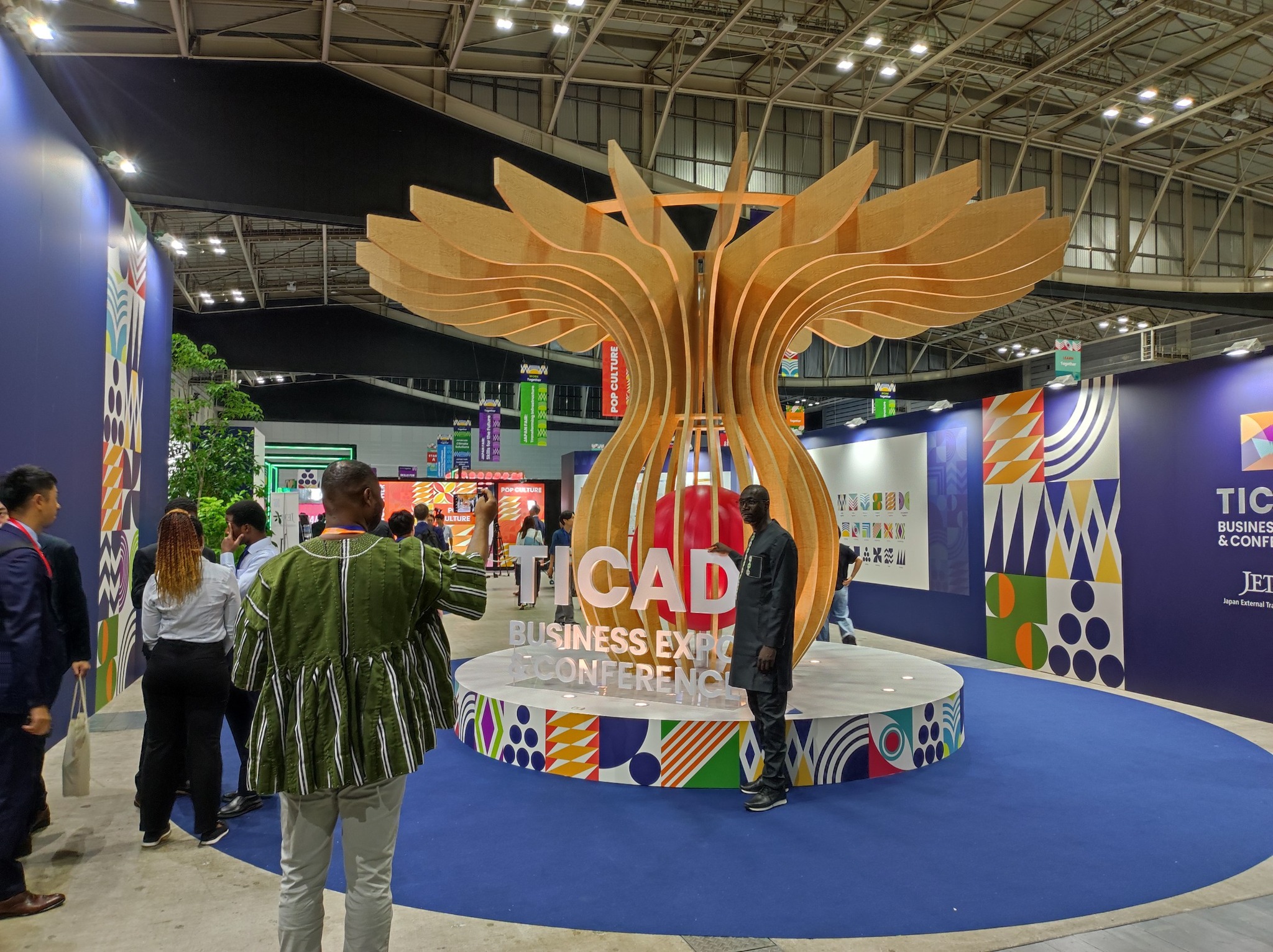
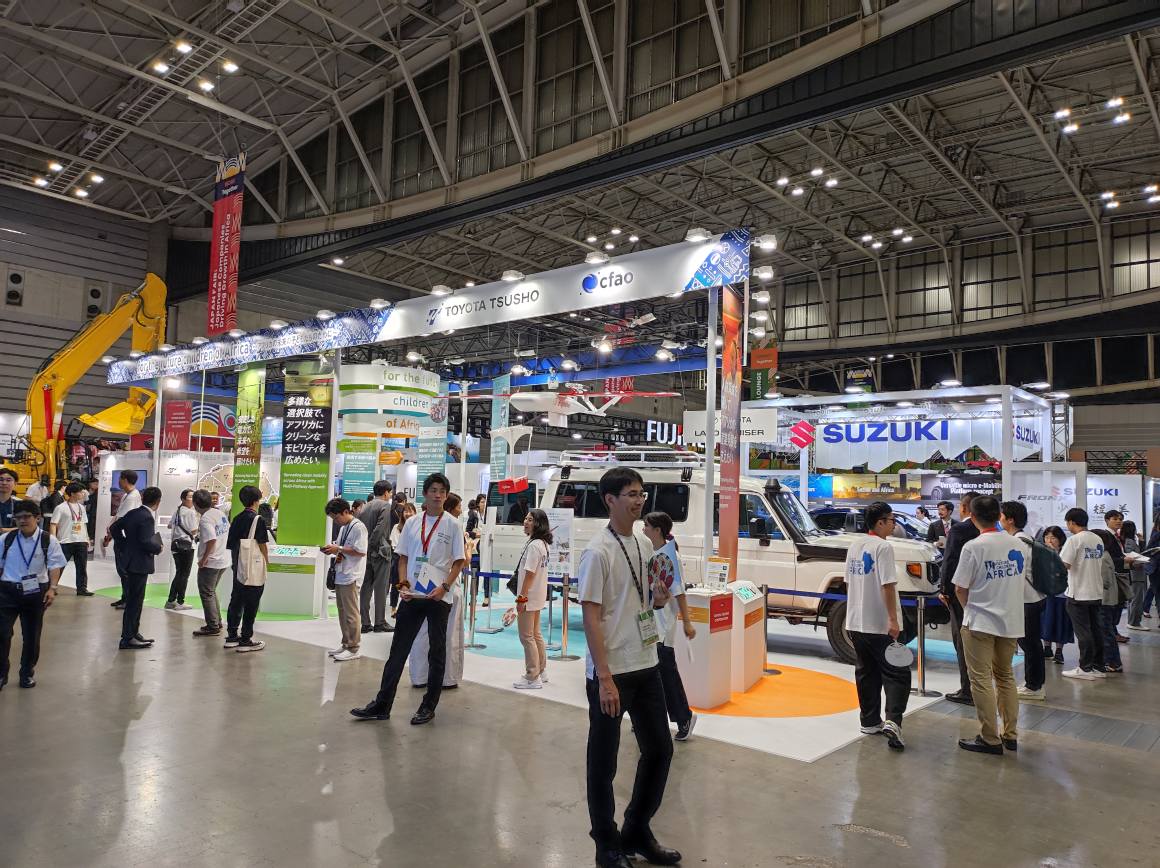 Business booths at TICAD 9 side event. Photo source: Author (August 2025, Yokohama)
Japanese business in Africa has gradually expanded, though more slowly than Chinese, Indian, and Singaporean businesses. According to a report by Africa Business Partners (ABP, a Japanese consulting company specializing in African business), the number of Japanese companies in Africa increased from 277 to 535 (193%) between 2013 and 2024. This report counts sixteen African countries with more than ten Japanese companies. Japanese companies expanding into Africa are primarily strong in the machinery, auto parts, and chemical sectors. They have been relatively less visible in sectors that directly target African consumers, such as retail, restaurants, and ICT communications (ABP 2024).
The top Japanese companies with the highest recognition rates in Africa are automobile and motorcycle companies (e.g., Toyota Motor, Suzuki, Honda, and Yamaha) and home appliance companies (e.g., Sony, Toshiba, and Panasonic). Japanese companies have not updated their corporate image in African consumers since the 1980s and 1990s (ABP 2025).
Entering the 2010s, new developments have been seen in Japan’s African business. Toyota Tsusho acquired CFAO, a French trading company with expertise in Africa, and expanded its African business in French-speaking West African countries, where Japanese companies have traditionally been unfamiliar. In the 2020s, Suzuki Motor Corporation made significant strides in African markets, and companies such as Daikin, Otsuka Pharmaceutical, and Japan Tobacco built new factories. Meanwhile, Panasonic (low-priced smartphones) and Nissin Foods (instant noodles)[14] expanded into Africa, targeting the bottom of the pyramid (BOP), but subsequently withdrew from the African market. Japanese companies face a significant challenge when attempting to directly apply their Asian business models to African businesses (ABP 2024). Japanese companies could not expect to enjoy cheap labor costs for production and big consumer markets for their products in African countries. Notably, in recent years, Japanese companies have established new operations in Kenya, Morocco, Nigeria, and South Africa (ABP 2024).
Kenya is often referred to as the “gateway to Africa” for Japanese companies because of its consumer population and strategic location for business in East Africa. Many Japanese individuals have established startups and small to medium-sized enterprises in Kenya. Isuzu has the largest share of automobiles produced and sold in Kenya. In Kenya, Toyota, Hino, and Nissan Motor Corporation also assemble cars, and Honda assembles motorcycles. Kansai Paint acquired Sadolin, which operates throughout East Africa, entering the Kenyan market. Sojitz established a joint venture with edible oil manufacturer Kapa Oil Refinery to begin manufacturing and selling instant noodles. Kubota, Kikkoman, Rohto Pharmaceutical, Unicharm, and Pigeon sell their products through exports. Toshiba Energy Systems, Fuji Electric, and Mitsubishi Heavy Industries have delivered geothermal power generation to Kenya (ABP 2025).
In Morocco, Sumitomo Electric, Yazaki, and Fujikura operate factories that produce goods for export to the European market. Companies such as Denso, JTEKT, NSK, Fuji Machinery, Mitsui Kinzoku, Mitsuba, AGC, Kansai Paint, and Asahi Kasei have manufacturing bases for automotive-related parts in Morocco. In the clothing industry, Uniqlo (Fast Retailing) established its first contract factory in Africa in Morocco. YKK has been operating there since 2005 and has announced the opening of a new factory. Mitsui & Co. has invested in coal-fired and wind power plants, and has also invested in Zalar Holdings, a local poultry farm. Maruzen Tea has established a joint venture with a local company to export raw tea from Japan, process it in Morocco, and export it to European and American tea manufacturers. Container logistics company ONE established a joint venture in Morocco (ABP 2025).
In Nigeria, Yokogawa Electric sells control systems to the oil industry, and Toyo Engineering has been contracted to build fertilizer plants, so Japanese companies are involved in the oil industry. Japanese companies have become involved in consumer businesses in Nigeria, given its large population. Honda and Yamaha have been producing and selling motorcycles in the country since the 1980s. Ajinomoto has been repackaging and selling umami seasonings since the 1990s, and it acquired a stake in the local food giant Promasidor. Sanyo Foods established a joint venture with Olam International, a Singaporean giant agriproducts trading firm funded by Mitsubishi Corporation, to manufacture and sell instant noodles under the Cherie brand. Recently, Otsuka Pharmaceutical built a factory to manufacture and sell Pocari Sweat (sports drink). Daikin assembles and sells air conditioners through an agency. Sony Music Entertainment has established a local subsidiary in Nigeria. Chemical manufacturers Kaneka and Denka export synthetic fibers for women’s hair extension products (ABP 2025).
Toyota began assembly production in South Africa in 1962 and has used it as an export base to Europe ever since. Denso, Toyota Boshoku, and Toyoda Gosei, which supply Toyota Motor. In selling vehicles produced in India and other countries, Suzuki has rapidly increased its market share in South Africa. Komatsu has been selling construction and mining machinery since the 1960s. Sumitomo Rubber Industries manufactures Dunlop tires, and Fujifilm manufactures medical equipment and instant cameras (e.g., Cheki). NTT expanded its presence in Africa by opening a data center in South Africa. Kansai Paint acquired Freeworld Coatings, a major paint company. NEC acquired system integrator XON. Major Japanese trading companies handle these trading operations and have bases in South Africa that cover the whole continent (ABP 2025).
French-speaking West Africa, including Côte d’Ivoire— the economic hub of the region—remains a challenging region for Japanese companies. Nipro sells dialysis-related medical equipment and supplies. Satake sells grain dryers and rice polishers. Several prominent trading companies, including Toyota Tsusho, Mitsubishi, Itochu Corporation, and Marubeni, have established bases in the area. Toyota Tsusho operates the supermarket Carrefour (ABP 2025).
Opportunities and challenges associated with TICAD and Japanese business in Africa
The Japanese government recently co-hosted its ninth TICAD (August 20–22, 2025) in Yokohama. Business agendas have become more mainstream in the TICAD process (Diplomacy 2025, 76-77). For Japanese business leaders, TICAD is an attractive event because it provides an opportunity to discuss business directly with numerous African leaders in a short period (Diplomacy 2025, 86). According to a high-ranking Japanese diplomat in African affairs, Japan’s diplomatic resources are largely derived from its economic power (Diplomacy 2025, 84).
Despite numerous attempts by Japanese private companies and encouragement from the Japanese government, bilateral trade and investment by Japanese companies with African countries have not expanded dramatically. In recent years, some Japanese media have highlighted business opportunities in Africa for Japanese companies via third countries (i.e., those in which Japanese companies have already established a presence), encouraging them to expand their operations on the African continent. For example, a two-step business approach from Japan to Africa via third countries, primarily India, has attracted the attention of the Japanese media and trade authorities. In recent years, collaboration between Japanese companies and those from third countries in African businesses has begun to yield results. Japanese, European, and Asian companies are increasingly collaborating on single projects in Africa. For example, in a seawater desalination plant project currently under construction in Senegal, the technology and pumps are being provided by a Japanese company, an Indian company is handling the engineering, and the construction is being undertaken by a French company (Diplomacy 2025, 84).
The Japanese Ministry of Economy, Trade, and Industry (METI) and Nikkei (Nihon Keizai Shinbun) co-hosted the Japan–India–Africa Business Forum (February 2025) in Tokyo as a TICAD 9-supporting event. They invited representatives from Japanese companies that have deployed their African business based on their business experiences in India (e.g., Daikin, Suzuki Motor, and Toyota Tsusho) to speak about their business approaches to Africa via India.[15]
The Japan Association of Corporate Executives (Keizai Doyukai) established a Fund “&Capital” to invest in African startups in 2022, with plans to begin investing in the fall of 2025 (Nikkei, August 13, 2025). To encourage Japanese companies to invest in Africa, the Japanese government has established a framework for investment, loans, and credit guarantees (Nikkei, August 14, 2025).
During TICAD 9, in Yokohama (August 20-22, 2025), African leaders and delegations were enthusiastically welcomed. TICAD 9 announced the Indian Ocean-African Economic Zone Initiative to build a logistics network between Africa and the Indian Ocean region (Nikkei, August 15, 2025). During TICAD, more than 300 MOUs were concluded by Japanese government organizations, firms, and African partners (JETRO 2025).
Although it remains significantly challenging for Japanese businesses to expand trade and investment in Africa, business potential exists and is growing.
(The author teaches international relations at the Ritsumeikan University in Kyoto. His area of specialization is Africa)
Citations
Africa Business Partners (ABP). Trade relations between Japan and 54 African trading partners (2021/2022 edition).
https://abp.co.jp/contents/insights/trade_2021/ (accessed May 27, 2025)
ABP (2024). List of Japanese Companies in Africa Business (in Japanese).
ABP (2025). Survey report on recognition of Japanese companies and image of Japan in Africa (in Japanese)
Confederation of Indian Industry (CII). (2024). Pathways for Shared Progress: India-Africa Economic Cooperation.
Endo, M. (2025). Political Dynamics of African Development. Diplomacy (Ministry of Foreign Affairs of Japan), 91, 68-74. (in Japanese)
Iwata, T. (2012). Comparative Study on “Asian” Approaches to Africa: an introductory reflection. African Studies Monographs (Kyoto University), 33(4), 209-231.
Iwata, T. (2020). (Ed.). New Asian Approaches to Africa: Rivalries and Collaborations. Wilmington: Vernon Press.
Iwata, T. (2024). Rethinking South–South Cooperation: Asian Initiatives in Triangular International Cooperation in Africa. Ritsumeikan Annual Review of International Studies, 23,13-42.
Japan–India–Africa Business Forum (February 26, 2025, Tokyo), https://nikkeiforum.com/jia/en/index.html (accessed February 26, 2025)
JETRO. Business Brief (January 26, 2024). https://www.jetro.go.jp/biznews/2024/01/8557d19d76957aae.html (accessed September 2, 2025)
JETRO. Business Brief (August 22, 2025). https://www.jetro.go.jp/biznews/2025/08/7a88e12f05ddbb94.html (accessed August 24, 2025)
Just Food (March 15, 2024). AFRICA: Nissin targets Morocco, Tunisia, and Algeria. https://www.just-food.com/news/africa-nissin-targets-morocco-tunisia-and-algeria/?cf-view (accessed July 15, 2025)
Kitagawa, K. (2020). Japan’s Economic Relations with Africa in a Historical Perspective: A Study of the Pre-War Japanese Consular Reports. Osaka: Kansai University Press.
Nikkei (Nihon Keizai Shinbun newspaper)
Round Table “TICAD9: Perspectives on Africa’s Future.” Diplomacy (MOFA of Japan), 91, 75-86. (in Japanese)
Sato, J. (2022). Latest Trends in African Business (Presentation handout). Japan External Trade Organization (JETRO). (in Japanese)
Takahashi, M. (2020). TICADs under the Changing Global Landscape — Japan’s Role in African Development Reconsidered. In Iwata, T. (Ed.). New Asian Approaches to Africa: Rivalries and Collaborations. Wilmington: Vernon Press, 83–107.
Trade Statistics of Japan (Ministry of Finance). Ministry of Finance Trade Statistics: Total imports and exports by year. https://www.customs.go.jp/toukei/suii/html/nenbet.htm (accessed May 27, 2025)
World Economic Forum. (June 25, 2024). Why strong regional value chains will be vital to the next chapter of China and Africa’s economic relationship. https://www.weforum.org/stories/2024/06/why-strong-regional-value-chains-will-be-vital-to-the-next-chapter-of-china-and-africas-economic-relationship/ (accessed May 24, 2025)
References
[1] The amount of trade between China and sub-Saharan Africa was USD 282 billion in 2023. Chinese foreign direct investment (FDI) has expanded from USD 75 million (in 2003) to USD 5 billion (in 2023) (World Economic Forum 2024).
[2] India’s amount of trade with Africa reached USD 98 billion in 2023 (CII 2024).
[3] See Iwata (2024).
[4] Converting from Japanese Yen (original amount data) to USD using the average exchange rate in 2021 (USD 1 = JPY 110).
[5] Telegram draft (Second Africa Division) from Foreign Minister (Tokyo) to Ambassadors in African countries, 6366, April 6, 1992, 2024-579, DA MOFAJ.
[6] This was announced in the MOFA press release on June 21, 1991. North African countries were not on the Japanese government’s invitation list despite Egypt and Tunisia repeatedly requesting that Japan invite North African countries. Approval document on International Conference on African Development, June 10, 1991, 2024-579, DA MOFAJ. Telegram from Ambassador Hatano (UN, New York) to Foreign Minister (Tokyo), R027746, February 10, 1991, 2024-579, DA MOFAJ.
[7] Botswana’s President Masire has proposed cohosting TICAD, which Japan is planning with the Global Coalition for Africa (of which he is cochair). Report from Second Africa Division, May 8, 1992, 2024-579, DA MOFAJ.
[8] At first, TICAD was planned as a ministerial-level conference. It eventually received five African heads of state. Tokyo Conference Preparation Committee, Summary of Tokyo Declaration on African Development, October 1, 1993, 2024-579, DA MOFAJ. First and Second Africa Divisions, Tokyo International Conference on African Development Q&A Summary (Press Conference), October 1993, 2024-580, DA MOFAJ. The Japanese government made its diplomatic documents from the first TICAD (hosted in October 1993) available to the public via the Diplomatic Archives of the Ministry of Foreign Affairs in December 2024.
[9] Speech Draft of the Vice-Prime Minister–Foreign Minister Hata, Africa Second Division for the Tokyo Declaration on African Development, September 22, 1993, 2024-579, DA MOFAJ.
[10] Telegram from Ambassador Konishi (Zimbabwe) to Foreign Minister (Tokyo), R215602, October 18, 1993, 2024-579, DA MOFAJ.
[11] Tokyo Conference Preparation Committee, Summary of Tokyo Declaration on African Development, October 6, 1993, 2024-579, DA MOFAJ. Takahashi (2020, 89).
[12] Telegram from Ambassador Abe (Gabon) to Foreign Minister (Tokyo), R207658, October 7, 1993, 2024-579, DA MOFAJ. Telegram from Ambassador Kuriyama (US) to Foreign Minister (Tokyo), R208108, October 7, 1993, 2024-579, DA MOFAJ.
[13] Including my department, the Graduate School of International Relations at Ritsumeikan University in Kyoto, Japan.
[14] Nissin is trying to enter the North African market (Just Food 2024)
[15] Japan–India–Africa Business Forum (February 26, 2025, Tokyo) https://nikkeiforum.com/jia/en/index.html (accessed February 26, 2025)