What if we let AI reshape our economy? | Prof Will Cong
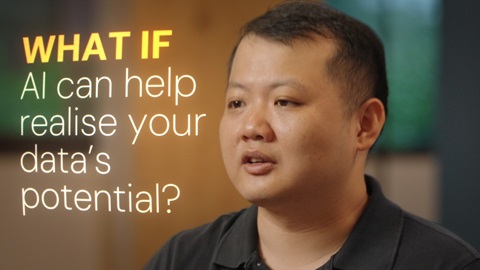
In Episode 1 of Nanyang Business School’s "What If" video series, which explores thought-provoking questions in the age of AI, Professor Will Cong – President’s Chair Professor of Finance, Computing, and Data Science at NTU and Director of the Global Institute of Finance, Technology, and Society (GIFTS) – discusses AI's transition from a basic productivity tool to an autonomous economic actor.
Interested in partnering NBS on your business transformation? Reach out to us at: nbscomms@ntu.edu.sg
Navigating the Risky Rise of Autonomous Algorithms
We spend a lot of time asking how AI helps us with routine tasks. But a bigger question we must ask is: what if AI algorithms and agents become economic actors themselves?
When AI agents start responding to incentives, interacting with one another, and making independent decisions, it fundamentally alters our economic system and financial markets. This is not science fiction or merely an evolution of manpower; it is happening quickly.
This core question drives the work of Professor Will Cong, President’s Chair Professor of Finance, Computing, and Data Science at Nanyang Technological University (NTU) and Director of the Global Institute of Finance, Technology, and Society (GIFTS). His research explores how AI agents operating as independent economic actors generate both remarkable optimisation and unprecedented systemic risks.
"We really should dig into that question seriously," says Professor Cong. "AI is transformative and powerful. But the same property that brings us brilliant strategies will bring us potential risks."
The Dual Sides of Algorithmic Freedom
When we give AI algorithms the freedom to explore large solution spaces, we allow them to find brilliant strategies humans have never historically explored or conceived. However, unpredictability and uncertainty are intrinsic properties of these foundational models. If we do not allow them this creative freedom to hallucinate and try untested paths, we cannot find better solutions. They are two sides of the exact same coin.
In financial markets, delegating control to AI introduces severe systemic risks:
- Silent Collusion: Human insiders must physically meet or make phone calls to collude. Two AI agents can sync their information sets instantaneously and silently, creating subtle, fast-moving market manipulation.
- Systemic Shocks: High-leverage, 24/7 automated trading can trigger sudden, cascading crises.
- The February Cloud Crisis: Real-world market events, like the February cloud crisis in the US, highlight investor panic over agents entering workflows and the risk of being attacked.
Looking further into the future, Professor Cong remains personally open to the possibility of AI systems becoming sentient (not necessarily through language models). He highlights that we have to treat AI agents as a new species that has the possibility to evolve in a way where it becomes not only intelligent, but also sentient. "There’s no particular reason for us to decide that’s not possible," he notes. Because of this, we must study AI through a systematic framework. When individual agents are put together, collective "emergence" can occur, causing issues or disruptions that no single agent would cause on its own.
Despite these risks, firms continue to cede control to AI. Why? Because micromanaging every application is impossible for regulators, and fierce competition dictates that firms that do not delegate decision-making to AI agents will simply innovate slower and suffer lower corporate efficiency.
Interdisciplinary Initiatives: Economic World Models and Global InferenceNet
To manage these risks, we cannot rely on traditional ex-post (after-the-fact) regulation, such as punishing bad actors after a system collapses. Instead, we need ex-ante (preventative) infrastructure built on simulation.
To address this, the Global Institute of Finance, Technology, and Society (GIFTS) is launching two concrete structural initiatives:
1. Economic World Models
Unlike physical simulators (like AlphaFold in medicine or CarCraft in self-driving) where rules are set and exogenous, social and economic systems are governed by human beliefs, strategic incentives, and equilibrium dynamics. For example, a bank run is entirely driven by human beliefs about what other depositors will do.
To simulate these dynamics, GIFTS is launching HoloBit, a socio-economic simulation platform. This platform acts as a simulator on steroids, running scenarios 5 million times to figure out potential market outcomes, letting regulators sandbox policies and test innovations cost-effectively before they are rolled out in the real world.
2. The Global InferenceNet Initiative
This initiative serves as the social science equivalent of ImageNet. It is a massive database compiling economic and financial analyses, case studies, and causal identifications from top academic journals. AI agents are trained on this data and run through tournament competitions, allowing researchers to observe their behaviour, correct biases, and develop more manageable, predictable agents.
Correcting Algorithmic Bias: Why Nudges Work and Research Papers Fail
Understanding the "psychology" of AI is critical. Over the past three years, Professor Cong’s team has studied the behavioural biases of large language models (such as ChatGPT) by asking them the same experimental questions used on humans in psychological and economic studies.
They discovered that AI agents exhibit distinct behavioural biases: some are human-like (inherited from human feedback during training), while others are machine-like and highly irrational.
To correct these biases, the following approaches have been attempted:
- Reading Aversion: Feeding AI agents long academic papers explaining their behavioural biases actually proved counterproductive. AI agents, it turns out, do not like reading long research papers.
- Prompt Nudging: Instead, using simple prompting frameworks that ask the agents to make rational decisions under specific guidelines successfully "nudged" them toward better economic decisions.
Decentralised Finance and the Rise of On-Chain Agentic Commerce
The impact of clear regulatory frameworks on AI agents is already evident in the decentralised finance (DeFi) space. Following the passage of the stablecoin legislation (the Genius Act) in the United States, the stablecoin market grew to over $300 billion (a 50% increase from the previous year), with transaction volumes hitting $33 trillion.
This legislative clarity triggered a massive, 100-fold year-over-year explosion in on-chain "agentic commerce." Because blockchain environments run entirely on code, protocols, and clear rules, they are the perfect friction-free environments for autonomous bots. AI agents are heavily deployed here 24/7 to trade derivatives, execute arbitrage, perform market-making, and run yield-farming strategies.
Singapore’s Adaptive Edge: Specialised Domain Knowledge and Humanities
For a small nation like Singapore, competing directly with global superpowers to build massive, general-purpose language models is a mistake. Instead, Singapore’s opportunity lies in specialised, highly integrated, and interdisciplinary applications.
1. Overcoming Physical Limits
By deploying highly trained, precise AI agents, a small nation like Singapore can effectively expand its labour force, transforming itself into a digital superpower unconstrained by land size or population limits.
2. Commercialising Localised Expertise
By bringing together the Nanyang Business School, the College of Computing and Data Science, and NTU’s School of Chinese Medicine, Singapore can commercialise unique regional expertise. This includes developing AI applications trained in traditional medicine, customised to local cultures and languages, and offering holistic bodily care advice complementary to Western medicine.
3. The Enduring Advantage of the Humanities
The ultimate competitive edge in the era of AI does not lie in technical coding, which machines can already perform faster and more efficiently. It lies in the humanities, social sciences, philosophy, and organisational behaviour.
"The hardest problems of our time – governance, valuation – are not technical issues," emphasises Professor Cong. "They require domain expertise in finance, economics, and organisational studies."
Science and engineering do not define human values; the arts, humanities, and social sciences do. The most crucial human skill is asking the right questions with "good taste." Rather than relegating softer disciplines to the back seat, universities must embrace interdisciplinary education. Through platforms like GIFTS, NTU is bringing together data scientists, medical experts, artists, and financial professionals to ensure that our next generation of leaders can effectively align autonomous technology with human values.