What if AI sits on the board of directors? | Associate Professor Angie Low
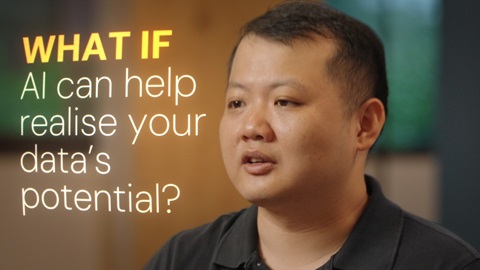
In Episode 3 of Nanyang Business School’s "What If" series, which explores thought-provoking questions in the age of AI, Associate Professor Angie Low from the Division of Finance and Associate Dean (Undergraduate Education) at NBS explains the legal and strategic hurdles of putting AI on the board of directors, and why human empathy remains irreplaceable for corporate governance.
What a Board Actually Does
Associate Professor Angie Low researches corporate governance, boards of directors, executive compensation, and related topics at Nanyang Business School. Her work also explores emerging questions, including what happens when AI sits on the board.
At a high level, the board has two primary responsibilities: to monitor management and to advise management. It must ensure that leadership acts in the best interests of the company and its shareholders, whilst simultaneously helping management think through major strategic choices and risks.
However, human boards face structural constraints:
- Time and Attention: Directors have limited bandwidth, typically meeting only seven or eight times a year.
- Information Bottlenecks: Board members face natural information asymmetry, relying heavily on the CEO and internal management for much of the information needed to oversee the company effectively.
- Human Biases and Incentives: Like all humans, directors may carry personal egos, individual agendas, and career concerns.
"That is where AI comes in," Assoc Prof Low explains.
AI never sleeps. It can analyse vast volumes of unstructured data day-in day-out and remain permanently integrated into a company's internal information systems. While AI outputs can reflect biases, algorithms do not possess personal egos or political agendas in the way that human directors do. As a result, they may help address some of the inherent limitations of traditional boards.
AI as a Decision Tool
In its most immediate application, AI serves as an advanced decision-making tool, functioning as "an ultra-prepared analyst in the boardroom". It can ingest board packs, summarise lengthy agendas, run real-time data simulations, and stress-test strategic alternatives. In this scenario, the human board is not replaced; it is significantly enhanced.
Assoc Prof Low is careful to distinguish between informal AI use and formalised boardroom tools. Today, many directors may quietly turn to public chatbots to help them prepare for meetings. This practice introduces severe risks regarding the leakage of highly sensitive corporate data.
The ideal path forward, she argues, is for companies to formalise the role of AI by deploying proprietary, secure, and dedicated corporate AI agents. This ensures that every director has equal, secure access to the same calibre of analytical support.
AI as a Voting Director
The more disruptive paradigm occurs when an AI agent is granted independent voting power on a board. This transition introduces three major corporate governance hurdles:
1. The Accountability Gap
When a human director breaches their duties, they can be held personally liable under corporate law. An AI agent, however, is not a natural person and cannot be held legally accountable in the same way. If an autonomous AI director makes a catastrophic, negligent decision, who carries the liability? Is it the board chair who authorised the deployment? The software development firm? Or the company itself?
2. The Legitimacy Deficit
In public markets, shareholders exercise democracy by voting to elect directors. Can shareholders legally elect an AI program? Can an algorithm truly discharge a director's fiduciary duties? In many jurisdictions, legal frameworks are not yet well equipped to answer these questions.
3. The Challenge of Management
A successful director must possess the moral courage to challenge strong management. Here, AI may offer a distinct advantage: it is not subject to the same reputational and social pressure that can sometimes make human directors hesitant to push back. If designed well, an AI system could systematically test management’s assumptions, flag inconsistencies, and surface dissenting views. In this sense, it can objectively challenge management, dismantle corporate echo chambers, and act as an internal activist.
Despite these advantages, Assoc Prof Low urges caution. AI relies heavily on historical data, mathematical structures, and precedents. It makes recommendations based on probabilistic calculations. Human directors, by contrast, excel at creativity, out-of-the-box thinking, and intuitive judgement.
She also highlights a fascinating boardroom dynamic: if a human director disagrees with a CEO's proposal, but the boardroom AI sides with management based on data modelling, who will the other directors trust? "My suspicion is that, as AI gets better, human directors may trust the AI more. I find that a little worrying," she notes.
The Rise of Agentic AI Shadow Boards
To bridge this gap, Assoc Prof Low discusses the implementation of AI shadow boards.
In traditional corporate structures, shadow boards are typically composed of younger employees who operate in parallel with the formal board, evaluating the same issues from a fresh perspective. An agent-based AI shadow board would take this concept further. Rather than merely answering queries, it would autonomously run scenarios, test strategic assumptions, and deliver real-time recommendations to stress-test the formal board's decisions.
She references a recent article in the Harvard Business Review describing an experiment that pitted a human board against an AI-driven board:
• The AI board's decision-making was consistently more structured and systematic.
• However, the AI could not replace the human board because it lacked contextual nuance and the relationship-building skills essential for long-term trust.
The presence of such an active AI shadow board would inevitably keep the formal, human board on its toes. Knowing that their decisions are being systematically audited and mirrored by an objective, analytical shadow agent forces directors to arrive at meetings far better prepared.
Why Companies Still Need Human Directors
There is a powerful, understated argument for preserving human presence in corporate leadership: trust-based risk-taking.
Corporate management must frequently make bold, risky decisions. To do so confidently, they need to know that if a calculated risk fails due to external factors, the board will evaluate the failure with contextual empathy rather than executing a knee-jerk termination.
This level of assurance is built on trust and mutual relationships. A human director, having steered companies through similar crises, can offer grace, understanding, and strategic support. It is highly unlikely that management would place that same level of vulnerability and trust in an unfeeling AI system. Without human empathy in the boardroom, corporate management may become overly risk-averse, stifling the bold innovations that drive long-term value creation.
Emerging Real-World Practices
Assoc Prof Low remains highly optimistic about the integration of AI into corporate oversight. "I am optimistic that AI can actually help to make board decision-making better," she says.
While public examples remain limited, it is clear that AI is already being used in some governance settings as a decision-support tool. The more immediate path is not AI replacing directors, but AI helping boards prepare better, test assumptions, and evaluate strategic scenarios more systematically.
For immediate implementation, her advice to boards is clear: Adopt AI decision-support tools now. One of the most critical roles of a board is scenario analysis, and AI can rapidly test multiple strategic scenarios and assumptions, allowing human directors to focus on judgement and interpretation.
A Shift in Professional Standards
The rise of AI-assisted governance mirrors a broader transformation occurring across all professional domains. Used responsibly, AI raises the collective benchmark of professional output. Used carelessly, it becomes a dangerous substitute for critical thinking.
Furthermore, organisational culture is highly dynamic. Human interactions shift day by day, and even minute by minute. While AI excels at predicting outcomes based on historical patterns, the future holds too many variables for any model to perfectly anticipate. Interpreting this shifting human context is where human leaders retain an undeniable competitive edge.
The Human Skills We Must Preserve
Assoc Prof Low’s deepest concern is the potential erosion of critical thinking among the next generation of leaders."If I do not know the basics – if I do not understand what accountability is, what legitimacy is, or what the fundamental role of a board is – I cannot evaluate the output of that AI," she says.
If professionals rely too heavily on chatbots, they risk taking cognitive shortcuts. Critical thinking, independent analysis, and ethical judgement are the core markers of human intellect.
"If we start to relegate our thinking to chatbots, our brains may not be exercised enough," she warns. "The true human advantage does not lie in processing speed; it lies in lived experience, ethical responsibility, and contextual empathy. The tool is only as good as the mind evaluating it."