Paying for Pain: Spartan Race, Tough Mudder... But Why?
The craze for obstacle course races hit Asia a few years ago and it is showing no signs of abating yet. This May, Spartan Race returns to Thailand for a second year to put participants through gruelling obstacles that throw them far from their comfort...
By Julien Cayla
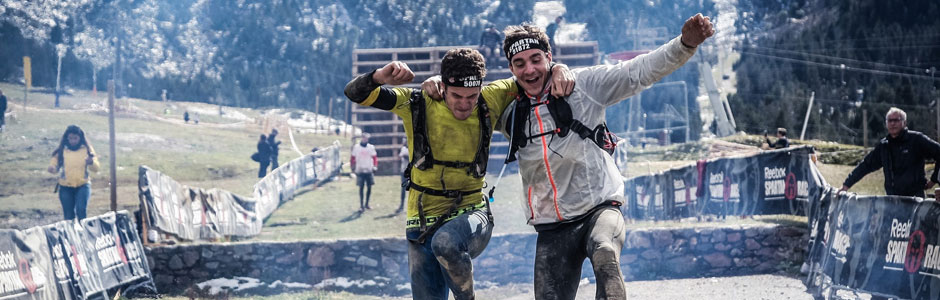
The craze for obstacle course races hit Asia a few years ago and it is showing no signs of abating yet. This May, Spartan Race returns to Thailand for a second year to put participants through gruelling obstacles that throw them far from their comfort zone. Beyond running, they will be expected to climb, push, pull and crawl, battling through walls, hills, trees, mud and even barbed wire.
Tough Mudder, another particularly gruelling challenge, involves a series of approximately 25 military-style obstacles to overcome in half a day: wading through torrents of mud, plunging seven feet into freezing water and even crawling through 10,000 volts of electrified wires. Injuries have included spinal damage, strokes, heart attacks and even death.
Yet, rather than being discouraged by the company's warnings of potential injury, the promise of intense pain or even the hefty entrance fee (starting at around US$140), more than 2.5 million men and women worldwide had entered the challenge by late 2016. Tough Mudder also debuted in Beijing and Shanghai last year.
While obstacles races such as Spartan Race and Tough Mudder are becoming more and more popular across Asia, their appeal might not be immediately obvious – not especially, to the more sedentary among us. It is an odd phenomenon, after all, that people are willing to pay – and a lot too – for a great deal of pain and duress; and by post-challenge reviews on social media, participants seem to be enjoying the experience.
Researchers are now able to shed some light on why "paying for pain" has been gaining a steady following in this region.
Taking on three separate roles – spectator, volunteer and a participant – to provide an understanding of the Tough Mudder experience, research also considered photos and videos captured using a GoPro camera during the event, pre- and post-event interviews and material posted on social media.
The findings were consistent with previous research that these experiences engage the senses, provide an escape from the everyday, and help humans to develop a tribal link. But beyond these areas of successful experiential marketing, three other dimensions suggest that participants use pain as a form of escape.
Firstly, these games are a reaction to the disappearing of the body from everyday life. The modern man is more likely to be found in front of his computer or on one of his devices. Our bodies are no longer used to labouring for a living or fighting to protect what is dear.
By contrast, the pain elicited by the obstacle courses brings the body into sharp focus, allowing individuals to rediscover their corporeality. How often have you heard the expression, "I am hurting in parts I didn't even know I had", but said with such pride? The unpleasantness of pain and cold forces participants to focus on parts of their bodies they rarely pay attention to. The body becomes the object of attention and everything else becomes background.
In a painful experience like Tough Mudder, the body is thus experienced as a new presence. If pain and blood and spasms validate our now-regained body, then the scars and keloids and wounds are the trophies that certify that we and our bodies are still alive.
Secondly, pain becomes meaningful and gains significance through an intricate process of ritualisation and dramatisation. The clear plot of Tough Mudder is evoked in the question addressed to potential participants: "Are you tough enough for Tough Mudder?" The course takes participants through a process of transformation to achieve rebirth.
The final dramatic Electro-Shock Therapy perhaps best illustrates this. Participants are jolted by 10,000 volts to provoke extreme pain before they emerge into a puddle of mud to the cheers of all around. They then receive the ritual artefact of the orange headband, like a rite of passage where the pain is not punitive but transforming.
Finally, there is what happens in the aftermath of the event.
It is significant that afterwards, participants not only feel the pain of sore muscles but also expend significant resources in narrating their pain, using pictures of wounds and scars to share their experience with others. On social media and in their everyday life, participants proudly display the symbols of having finished the event, using the experience of overcoming pain as a particular "achievement". The narrative is crafted as one where they have explored a new dimension of their humanity through their body and thus have lived a little more.
Importantly, besides being a story that participants tell others, it is also a story that they tell themselves. Even as participants return to work, the sense of achievement from having overcome their own physical limits serves as powerful evidence that they have lived a life filled with worthy experiences, and that their life is fuller and richer as a result.
What the obstacle challenge market has done is cleverly sell the idea of importance, need and fulfilment in connecting with our bodies. The idea is not sold as just an experience but as one leading to the resurrection of the body, a rebirth of the self, as well as the possibility to tell the story of a life spent exploring the limits of the body. And in a country like Thailand where the concept of rebirth is deeply rooted in the beliefs of her predominantly Buddhist people, the upcoming Spartan Race may not be a simple check off the bucket list, but the start of an ongoing pursuit of this new form of transformation and rebirth.
About the author
Julien Cayla is an assistant professor of marketing at Nanyang Business School, NTU, and a fellow at the Institute for Asian Consumer Insight.
This commentary was published in South China Morning Post on 12 January 2017.