From Black to Grey: Improving Access to Antimalarial Drugs in the Presence of Deceptive Counterfeits
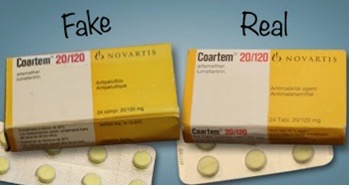
Malaria remains one of the world’s deadliest diseases, claiming over 400,000 lives annually, with 80% of them being children under five in Africa. While highly effective treatments exist, counterfeit drugs have infiltrated legal supply chains, creating a dangerous obstacle to improving access to life-saving medications. A new study reveals how donors should rethink their subsidy strategies when counterfeit drugs are present in the market.
The Counterfeit Drug Crisis
In Kenya, counterfeit antimalarial drugs account for approximately 20% of the private sector market. In the Democratic Republic of the Congo, that figure rises to 42%. These counterfeit drugs range from substandard medications that fail to meet quality standards to falsified medicines containing little or no active ingredients, or worse, dangerous contaminants.
The problem is compounded by the deceptive nature of these counterfeits. Even trained pharmacists struggle to distinguish fake drugs from legitimate ones on store shelves. High production costs for quality-assured drugs, combined with funding shortfalls, have created conditions where retailers may unknowingly source counterfeit drugs from uncertified suppliers to remain competitive.
Rethinking Subsidy Strategies
Traditional wisdom in public health has consistently recommended purchase subsidies, which reduce retailers’ acquisition costs for certified drugs, over sales subsidies, which increase retailers’ revenue per unit sold. However, this research demonstrates that in the presence of counterfeits, this approach may no longer be optimal.
The study examines two types of suppliers: certified suppliers offering quality-assured legitimate drugs, and uncertified suppliers who may offer a mix of legitimate drugs and counterfeits. A critical challenge is that sales subsidies, typically implemented through voucher schemes, cannot distinguish between certified and uncertified drugs, potentially subsidizing counterfeits.
When Purchase Subsidies Alone Are Not Enough
The research reveals several scenarios where the traditional approach falls short:
- With sufficient budgets: When donors have adequate funding, purchase subsidies remain the optimal choice. They not only improve public health but can completely eliminate counterfeits from the market—an additional benefit beyond what previous research had identified.
- With limited budgets: When funding is constrained—a reality for many malaria-endemic regions—the optimal strategy becomes more nuanced: sales subsidies may be preferable, or in some cases, donors may need to refrain from offering any subsidy at all to avoid worsening the situation.
Beyond Subsidies: Evaluating Alternative Interventions
The research also examines three complementary strategies:
- Imposing penalties on retailers: While penalties for sourcing counterfeits can reduce the budget needed to incentivize certified sourcing, they present a trade-off. If retailers continue purchasing uncertified drugs despite penalties, consumers face greater harm from reduced drug availability.
- Traceability technology: Surprisingly, donor investment in traceability technology to prevent subsidizing counterfeit drugs may be ineffective. The resources spent on such technology would achieve better outcomes if allocated to expanding the subsidy budget instead. Even when available at no cost, traceability can harm consumer welfare by constraining donors' ability to support high-quality uncertified drugs.
- Price controls: Numerical analysis calibrated to data from Mozambique shows that government-imposed price controls can be beneficial when consumers’ counterfeit awareness is high or when uncertified drug costs are high. However, if governments can set prices optimally to maximize health benefits, price controls are almost always superior to unregulated markets.
Practical Implications for Donors and Policymakers
This research provides actionable guidance for improving access to antimalarial medicines:
- Address funding shortfalls as a priority: Sufficient budgets eliminate much of the complexity in subsidy design.
- Customize strategies to local markets: Consider drug quality, consumer awareness, and retailer pricing power when designing subsidy programs.
- Concentrate resources strategically: When budgets are limited, focus spending in fewer locations rather than spreading funds thinly.
- Understand uncertified drug quality: Before making budget allocation decisions, assess whether uncertified drugs are primarily high-quality legitimate medications or dangerous counterfeits.
- Monitor consumer awareness: Low counterfeit awareness makes retailers more willing to source low-quality falsified counterfeits.
The findings help explain real-world observations, such as why Kenya saw a significant decline in quality-assured antimalarial drug market share after the AMFm subsidy was reduced from 95% to 70%, and why the program had particularly unfavourable results in Madagascar, where retailers typically have limited pricing power.
Ultimately, this work provides an analytical foundation for addressing a pressing global health challenge: ensuring that life-saving medications reach those who need them most, even in markets compromised by dangerous counterfeits. By implementing tailored approaches that account for local market conditions, donors and policymakers can improve access to high-quality antimalarials and save lives in malaria-endemic regions.
Authors: Jiatao Ding, Michael Freeman, and Saša Zorc
Published in: Management Science (Forthcoming)Source: SSRN
(See for the publication summary and for the full study details.)