Don't leave home without Home
Next time your fellow traveller plonks his bottle of Kowloon Soy Sauce, or the Yu Kee Oyster Sauce on the table as you start dinner in some exotic destination, don’t laugh. These items are as powerful – even for an adult – as that tattered toy bunny you..
By Wei Jie Yap & Georgios Christopoulos
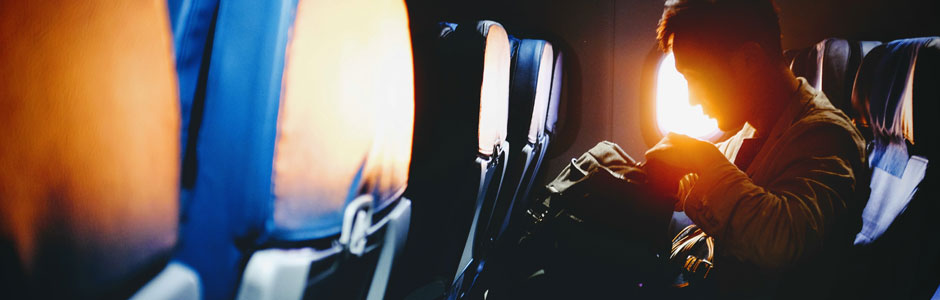
Next time your fellow traveller plonks his bottle of Kowloon Soy Sauce, or the Yu Kee Oyster Sauce on the table as you start dinner in some exotic destination, don't laugh. These items are as powerful – even for an adult – as that tattered toy bunny you clutched to bed when you were a baby.
Our research shows that adults develop a sense of attachment to icons, probably in the same way as children develop attachment to maternal figures. This phenomenon premises on a human's need for bonding. As we grow older, it is no longer our caregiver or our cuddly; we would have directed our attachment to a familiar culture, in a process called cultural attachment. This can be via affiliation with a social group, allegiance to a set of social values or a nod to familiar cultural symbols. This "cultural attachment" is important because it affects our reactions to threat.
Together with Professor Ying-yi Hong of The Chinese University of Hong Kong, we studied a group of students in a clinical setting. The subjects, who were Singaporeans, had not spent a significant amount of time overseas except for some short-term travel and brief exchange programmes. Importantly, the main cultural attachment of these subjects was undeniably Singaporean.
Before the study, we had established that one of the symbols Singaporeans most identified with was the Merlion. The image was found to evoke a similar emotion that participants from the United States had for the Statue of Liberty and China students had for the terracotta warriors of Xi'an.
To measure the emotional response of our students, we used a test called skin conductance response (SCR) to record how much sweat they produce in their fingers. The idea is that with higher levels of stress one experiences, even subconsciously, the body secretes more sweat to cool itself in response.
Stressful situations stimulate our glands to produce more sweat, thereby producing a higher SCR. The SCR is a proven test as it relies on participants' involuntary response, meaning that participants are mostly unaware even when this response happens.
Participants in the test were exposed to two sets of images. The first was a neutral image (e.g., mobile phone) and a threat image (e.g., a gun pointed at them). The second set consisted of a control image (e.g., treasure chest), that had no cultural value, and the other was a cultural image (e.g., the Merlion), that held cultural value for most people. The second set of images was flashed quickly so that the brain would not register it consciously, but the subconscious mind would pick it up.
The results showed a clear difference in the emotional responses elicited. Participants who saw the threat-and-control (the gun and treasure chest combination) images registered a higher SCR suggesting a higher level of stress. On the other hand, those who saw the threat-and-Merlion images showed a significantly lower SCR. The familiar image of the Merlion had apparently reduced the sense of threat and made the subject calmer.
This result - that cultural symbols affect how we process threats and can reduce bodily responses towards threat - might have important implications for governments.
They can take a leaf from marketers who have long known and cleverly harnessed the emotive power of symbols. For example, when you buy Nike, you are not only buying a pair of shoes, but are avowing the can-do yolo culture embedded into the logo. In the same way brands have the ability to evoke consumer loyalty, cultural symbols like the Merlion have the power to connect citizens back to their own country in a comforting and assuring way.
Countries that send missions and troops overseas could help its displaced soldiers ease into their new posts by incorporating cultural symbols into their environment, such as providing familiar food, magazines, or music. This is how bagpipes played at the close of day during WWII continually provided a powerful motivation to battle-worn soldiers, comforting with music from home was, as well as reminding them what they were getting up the next day to fight for.
Even in peacetime, countries can do well to harness the power of cultural symbolism to galvanise large groups into proactive action or to defuse tense mob situations. Countries need to continually develop social rituals, narratives and cultural icons so that in times of war or of political and economic uncertainty, there is a secure cultural base for its citizens to fall back – the effect is akin to the child glimpsing, out of the corner of his eye, that his caregiver is nearby.
Companies that send a lot of employees overseas could leverage on the mediating effect of cultural symbols because it has also been suggested in previous studies that attachment of expatriates to their country's cultural symbols is associated with better well-being and adjustment in the foreign environment. Simple things like decorating the expatriate lodgings in a style similar to those back home, hosting social events with fellow citizens and providing access to familiar brand groceries go a long way to helping employees to adapt.
So whether it's for your next trip, or that important presentation you need to deliver, or sending your child off to college in another state, remember to pack something familiar from home – it goes a much longer, deeper way.
About the authors
Georgios Christopoulos is an Assistant Professor of Decision Neuroscience at Nanyang Business School, NTU. Wei Jie Yap is a PhD candidate at the Decision, Environmental & Organisational Neuroscience Lab at NTU. This paper was written with Professor Ying-yi Hong, Department of Marketing, The Chinese University of Hong Kong.
This commentary was published in South China Morning Post on 1 March 2017.