Could AI Be Making Us Less Kind?
Why It Matters
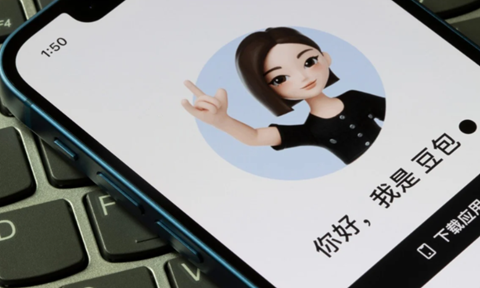
From cashier-less supermarkets to robot waiters and AI-powered hotels, automated services are becoming part of everyday life. New research suggests these technologies may have an unexpected side effect: they could reduce our willingness to help others.
Key Takeaways
- Consumers who interact with AI-driven service environments are less likely to donate, volunteer or perform other acts of kindness than those served by people.
- The effect is driven by a reduced sense of social connectedness, not by fear or distrust of AI.
- Businesses can counteract this effect by designing AI experiences that reinforce human connection and clearly communicate how the technology benefits customers.
Automation Changes More Than the Customer Experience
AI is transforming the service industry. Autonomous supermarkets, robot-operated restaurants and AI-powered hotels promise faster service, lower costs and greater convenience. For businesses, automation offers an opportunity to improve efficiency while addressing labour shortages.
Yet customer interactions are not simply transactions. Every encounter with a service provider, however brief, is also a social experience. As AI increasingly replaces frontline employees, researchers led by Asst Prof Sharon Ng asked an important question: does removing human interaction change how people behave towards others?
Across a series of experiments involving grocery stores, hotels and restaurants, the researchers consistently found that it does. Compared with consumers served by human employees, those interacting with AI-driven autonomous services were less willing to donate to charity, volunteer their time or choose actions that benefited others. This pattern held across both physical robots and non-embodied AI systems, suggesting the effect stems from automation itself rather than the appearance of the technology.
Why AI Can Reduce Our Willingness to Help
The researchers wanted to understand why this happens. One possibility was that AI makes people anxious or threatened, making them less generous. Instead, they found a different explanation.
Consumers in AI-driven environments consistently reported feeling less socially connected than those who interacted with human staff. That diminished sense of connection, rather than feelings of threat, explained why they became less willing to support charitable causes or volunteer their time.
The finding highlights an often-overlooked role of everyday service encounters. Even brief interactions with another person can reinforce a sense of belonging to a wider community. When those interactions are replaced by automated systems, people may become more focused on completing their task than on their relationship with others.
The researchers also demonstrated that this effect is not inevitable. When participants were first reminded of their existing social relationships, differences between AI-operated and human-operated services largely disappeared. Simply strengthening people's sense of connectedness restored their willingness to help others.
Businesses Can Design AI That Supports Human Connection
The research offers encouraging news for organisations embracing AI. Rather than abandoning automation, businesses can design customer experiences that reduce its unintended social consequences.
One effective approach is encouraging shared experiences. Participants who imagined shopping with family or friends in AI-driven stores were just as willing to volunteer as those using human-operated stores. Shopping together strengthened their sense of social connection and offset the negative effect of automation.
Communication also matters. In field and online experiments, the researchers found that when businesses explicitly framed AI as a tool introduced to improve customer wellbeing, such as making shopping faster, more convenient or less stressful, consumers became more willing to volunteer or donate. In these cases, prosocial behaviour returned to levels comparable with human-operated stores.
These findings suggest that customer perceptions of AI are shaped not only by the technology itself, but also by how organisations introduce and position it. AI that is perceived as serving people, rather than simply replacing them, may preserve the social connection that encourages kindness.
Business Implications
As AI becomes a permanent feature of customer service, businesses should evaluate success using more than operational metrics such as speed, efficiency and cost savings. They should also consider how automation influences customer psychology and behaviour.
Designing AI experiences that foster social connection, encouraging shared customer experiences, and communicating the consumer benefits of AI can help organisations avoid unintended social costs while maintaining trust and engagement. As businesses continue automating customer interactions, the challenge will be to ensure that greater efficiency does not come at the expense of our sense of connection with one another.
Authors and source
Authors: Sharon Ng (Nanyang Technological University), Xiaoyan (Jenny) Liu (Nanyang Business University), Chi Hoang (ESCP Business School)
Original article: Automation and prosocial behaviour in AI-driven service environments (forthcoming).
---
For more research, click here to return to NBS Knowledge Lab.