The nation builders behind everyday Singapore
Across very different roles, they share a focus on building the people, systems and capabilities Singapore will need for the future. Meet four of this year’s Nanyang Alumni Achievement Award recipients.
Text: Sadia Roohi
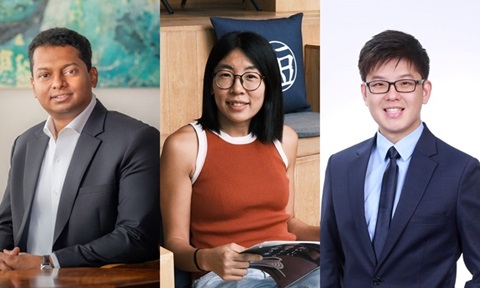
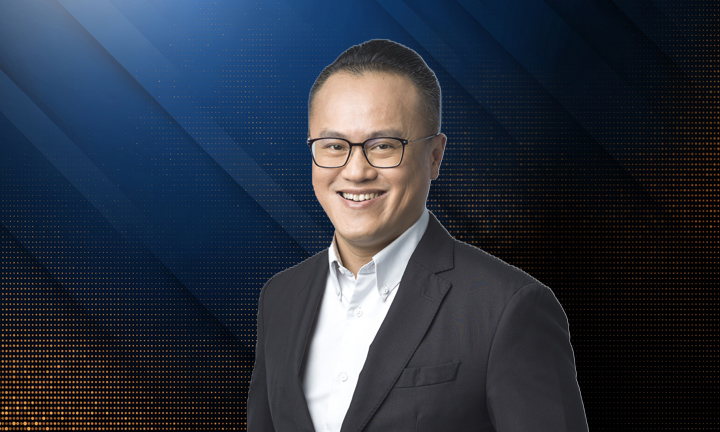 Sam Liew
Chief Executive Officer, NCS
Sam Liew believes that education, including his NTU accountancy degree, opened doors that might otherwise have stayed shut. As CEO of NCS, the Class of 1997 graduate is working to open those doors for others.
He noticed that some people who wanted to continue studying were choosing to start work first, either for financial reasons or because they preferred learning on the job. So NCS created three work-study programmes, which he sponsors, supporting ITE graduates towards a diploma, polytechnic graduates towards a degree, and degree holders towards a master’s in technology.
His view is simple: there is no single track into tech.
That thinking extends to hiring. While many companies are pausing graduate intake in the artificial intelligence (AI) era, NCS is not.
“I take a contrarian approach. I’m actually continuing to hire fresh graduates, as long as I’ve got demand.”
Firms that stop now, he warns, could find their pipeline of experienced talent hollowed out in one to two years.
He has also reshaped NCS around industry-focused groups, harmonised the delivery groups and established a central AI team whose small squads can work with clients to develop solutions within five days to two weeks. He has also committed to reskilling the entire company, because he does not believe growth should come at the expense of jobs.
Asked what building Singapore’s tech workforce means to him, he says whatever is built has to last.
“We need to be optimistic about the future, and we need to come together, importantly, as an ecosystem, to pursue the goals for Singapore, for our future generation, just like our forefathers did, to help us get to where we are.”
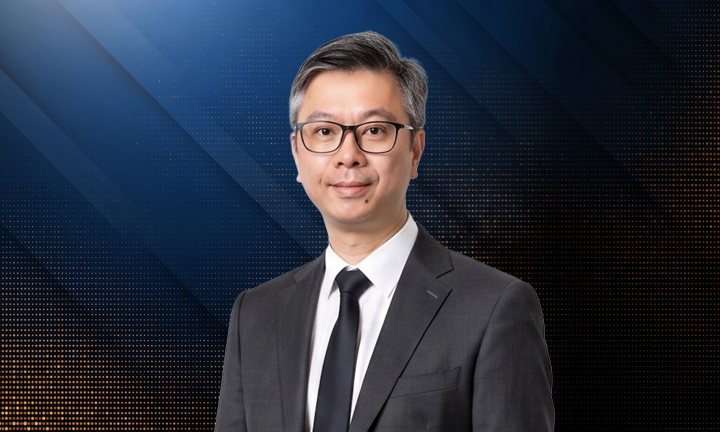 Chang Sau Sheong
Deputy Chief Executive and
Chief Technology Officer, GovTech
Since earning his computer engineering degree in 1995, Chang Sau Sheong has spent his career building technology and the teams behind it. At GovTech, that work now reaches Singapore's entire population.
His career has taken him from HP, Yahoo and PayPal to SP Group, which he joined in 2016 to set up a Singapore-based product engineering team. His team launched the SP Utilities app, while SP Digital grew into an energy technology business serving SP Group and external customers.
At GovTech, he builds for a far bigger audience. The difference, he says, comes down to who is on the other end.
“In government, the users are the whole population, including people who may have limited digital access or no alternative channel.”
Platforms such as Singpass and the Government on Commercial Cloud support services across government, making them shared infrastructure rather than products for a single organisation.
Day to day, Chang helps agencies use AI in practical ways, through workshops, hackathons and shared platforms, so agencies can learn from one another rather than solve the same problems independently. He is also helping to modernise ageing systems while retaining the engineering expertise needed to run critical services well.
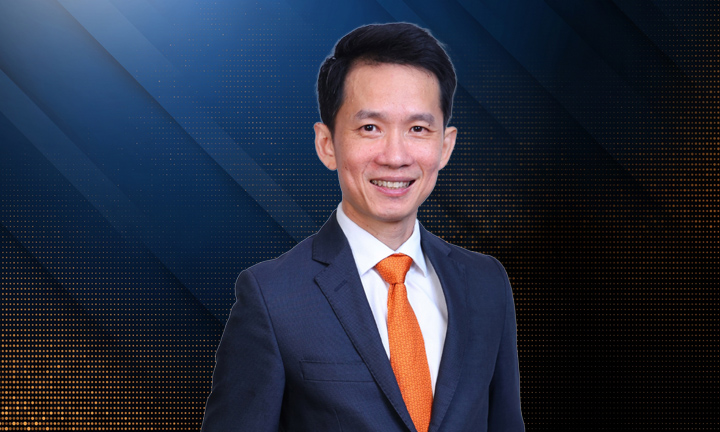 Ow Fook Chuen
Commissioner and Chief Executive Officer, Inland Revenue Authority of Singapore (IRAS)
As Commissioner and Chief Executive Officer of IRAS, Ow Fook Chuen leads Singapore’s revenue authority, safeguarding the revenues that support national priorities while driving the transformation of tax administration. He champions a trusted, future-ready tax system to simplify compliance and enhance taxpayer and business experience. He also represents Singapore in key international tax forums, advancing the nation’s interests and contributing to global tax cooperation.
The role builds on nearly a decade as Singapore’s Accountant-General, where he helped safeguard the integrity of Singapore’s public finances. During the COVID-19 pandemic, when the government committed close to S$100 billion across five Budgets to protect lives and livelihoods, drawing on Past Reserves, he supported the President and Council of Presidential Advisers with financial information, assessments and advice.
“The imperative was to enable a swift and decisive response while upholding the safeguards and accountability that protect Singapore’s reserves.”
Having been involved earlier in his career in formulating and reviewing the reserves protection framework, the 1995 accountancy graduate found it especially meaningful to see it work as intended when Singapore needed it most.
He sees his former Accountant-General role and current IRAS Commissioner role as complementary forms of stewardship of Singapore’s public finances.
At IRAS, that stewardship also means preparing the organisation for the future. Jobs have been redesigned and clearer pathways created for officers to build digital, data and technology skills. As AI automates routine tasks, the aim is to create more opportunities for work that calls for judgement, engagement and problem-solving.
He also supports the Nanyang Business School Global Leaders Programme and the IRAS Gold Medal, which recognise excellence beyond academic achievement.
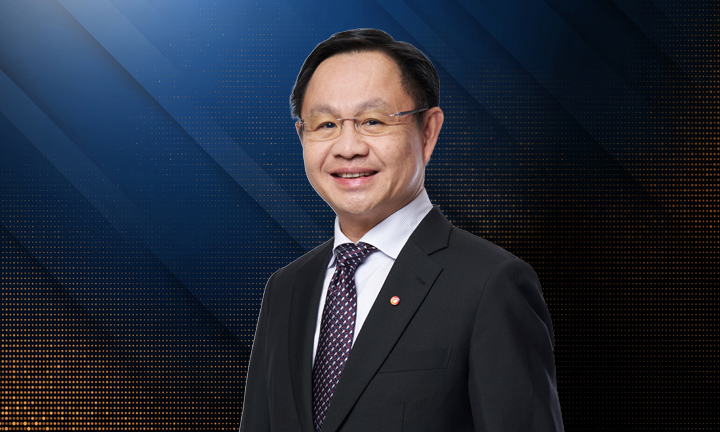 Yam Kum Weng
Chief Executive Officer,
Changi Airport Group
Yam Kum Weng began his career at the Civil Aviation Authority of Singapore, where he learnt that aviation is more than an industry for Singapore. It is a strategic necessity. As a small nation, he says, Singapore’s success depends on staying connected to the world. Every flight brings more than passengers. It brings trade, investment, jobs and ideas.
That early lesson shapes how he now leads Changi Airport Group’s biggest undertaking: Changi East and the future Terminal 5.
“Nation-building often requires making bold investments long before the need becomes obvious. Whether it is T4, Changi East or T5, I see these projects as investments in Singapore’s future. The real question is not what Singapore needs today, but what future generations will need, and whether we have the foresight to prepare for it.”
Having led the development of Terminal 4, he carries three lessons into Terminal 5: put people at the centre, build through partnerships, and prepare for a future that cannot be fully predicted. T5, he says, is not simply an expansion.
“Terminal 5 is more than an expansion of Changi Airport. It is a generational investment in Singapore’s future connectivity, competitiveness and relevance – an opportunity for the aviation community to collectively reimagine the air hub and set a new benchmark for what travel can be.”
Since becoming CEO, his focus has shifted from building infrastructure to bringing together the people and partners who keep Changi Airport running. He now spends more time strengthening the connections across Changi Airport Group, from empowering frontline teams to deepening trust with partners.
He sees that responsibility as something passed from one generation to the next. Earlier generations invested boldly in Singapore’s future. He sees Changi’s role as carrying that responsibility forward to those who come after.
“If what we build today expands opportunity, strengthens our competitiveness and keeps Singapore connected for generations to come, then we will have created more than an airport, we will have built an enduring platform for Singapore’s future.”
This article first appeared in issue 8 of U, the NTU alumni magazine.