Pioneering breakthroughs for a better Singapore
From cyborg insects used in search-and-rescue efforts to an electric taxi tailored for Singapore’s warm tropical climate, NTU has pioneered many innovative technologies.
Text: Kenny Chee
As we mark the country’s 60th year of independence, U highlights 18 firsts by the University that contribute to building a better nation, with some even putting the Republic on the world map.
First satellite designed and built in Singapore
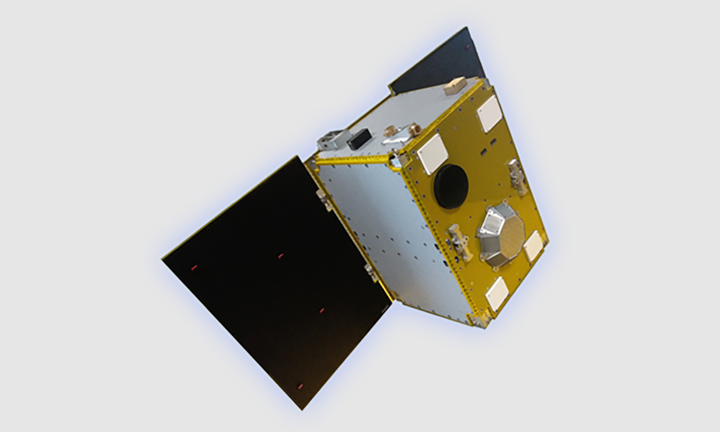
History was made in 2011 when Singapore’s first locally made satellite was launched into space. The 105kg fridge-sized microsatellite, named X-SAT, was built by NTU and Singapore defence research organisation DSO National Laboratories.
Orbiting more than 800km above Earth and travelling roughly nine times faster than an F-15 fighter jet, X-SAT took photos that scientists used to measure soil erosion and environmental changes.
NTU has also been running Singapore's first satellite programme for undergraduates and postgraduates since 1996, and has launched 13 satellites to date.
First outdoor delivery robot in Singapore
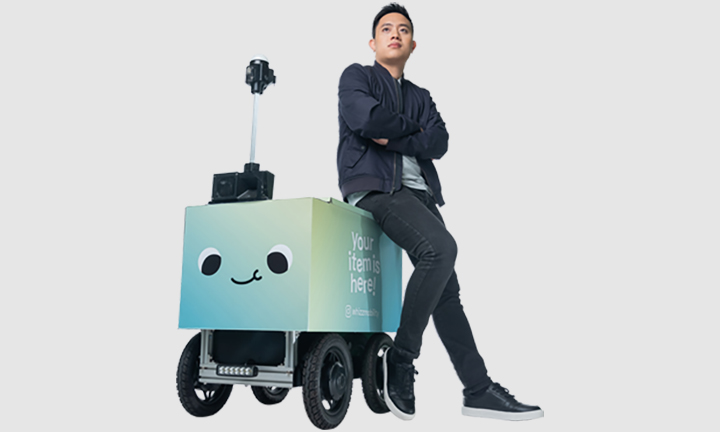
During the height of the COVID-19 pandemic in 2020, when food deliveries surged amid social distancing measures in Singapore, a new and safer food delivery option emerged – FoodBot.
The self-driving robot, built by NTU Renaissance Engineering Programme students, was the country’s first outdoor delivery robot.
Each FoodBot followed pre-mapped delivery routes and used onboard cameras and student-developed algorithms to navigate safely around people and obstacles.
Over the next two years, fleets of FoodBots completed over 12,000 deliveries, bringing orders to students and staff across campus and to the nearby CleanTech Park.
First robot to host Singapore’s National Day Parade
 EDGAR at a rehearsal with other hosts of the National Day Parade in 2017. (Photo: Wong Choon Yue)
Born in an NTU lab, EDGAR is a humanoid robot that can act on his own. Ask him a question and he'll reply with a voice and a wave.
In 2017, he made history as Singapore's first robot host of the National Day Parade, appearing in red and white and with flag in hand.
The robot had other hosting gigs in Singapore, including the Public Transformation Awards and the Civil Service College’s National Day Observance Ceremony in 2018.
First full-size autonomous electric bus in the world
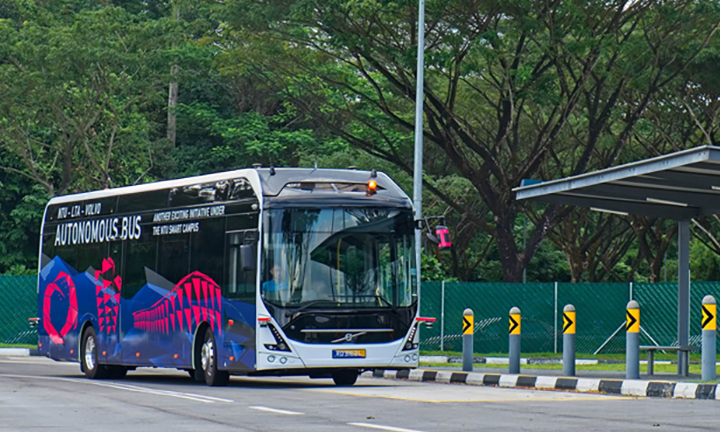
Singapore moved a step closer to self-driving vehicles on the road with the launch of the world’s first full-size driverless electric bus, unveiled by NTU and Volvo in 2019.
The 12m-long vehicle needs 80% less energy than a similarly sized diesel bus and can carry nearly 80 passengers. It is equipped with sensors and navigation controls powered by an artificial intelligence (AI) system.
The bus was tested at the Centre of Excellence for Testing and Research of Autonomous Vehicles-NTU, Singapore's first autonomous vehicle testbed facility that NTU helped pioneer. The centre can simulate heavy rain and partly flooded roads to test how driverless vehicles perform in tropical weather conditions.
First human-sized robot in Singapore
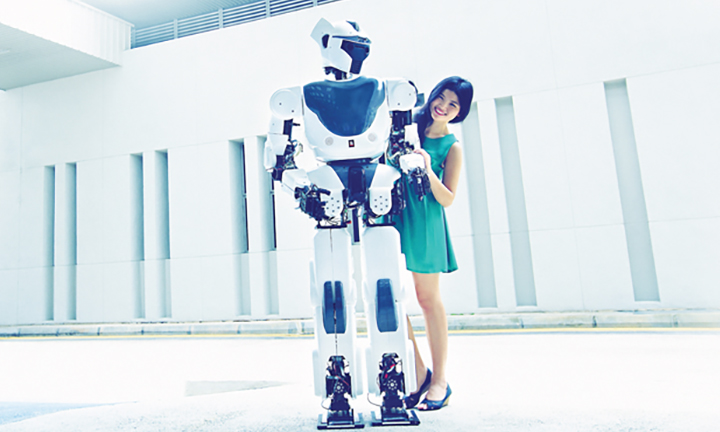
Before EDGAR, there was NASH, Singapore’s first human-sized robot, unveiled in 2011.
Standing at 1.8m, NASH had hundreds of algorithms controlling the 40 motors and gear systems at his joints to help him stand and move. He could alson carry a load of up to 40kg on his back.
NASH stood out then because of his ability to learn languages and make sense of his environment. The robot could understand over 500 words and follow simple instructions, and was dubbed “Singapore’s C-3PO” by the local media at the time of his debut.
First large-scale wooden building in Southeast Asia
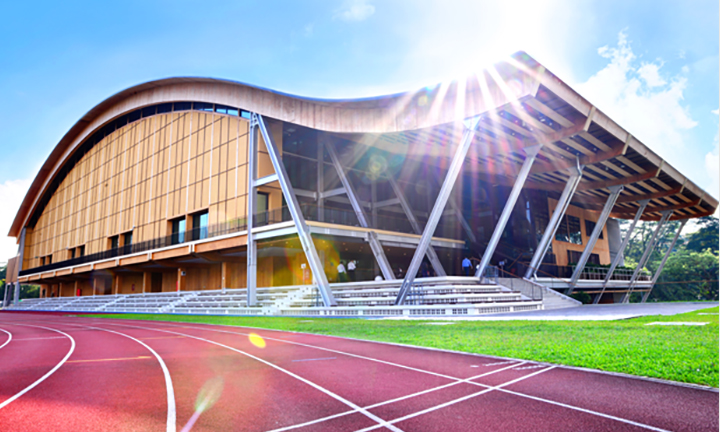
Building a 72m-long wave-like roof without internal pillars to support it is a challenge. But this feat was achieved with the 2017 launch of The Wave in NTU, Southeast Asia’s first large-scale building made from sustainably sourced mass-engineered timber.
Other buildings in Singapore have since used this timber technology, including the complex housing NTU's business school, as well as buildings in the Punggol Digital District.
The special timber used in the University’s sports complex is stronger than concrete or steel by weight, meaning timber of the same mass can support a heavier load. This allows the 440-tonne timber arches forming The Wave's roof to be supported by columns on the building’s exterior, creating a vast, pillarless, three-storey interior.
The sprawling arena can be quickly reconfigured to host 13 badminton matches or three basketball games – or anything in between.
First 3D-printed concept car in Singapore

A four-wheeled, solar-powered electric car built by a team of engineering students zoomed onto the racetrack in 2015 as Singapore’s first 3D-printed concept car. Dubbed Nanyang Venture 8, the eco car was designed and constructed using techniques learnt in class.
The team used 3D-printed parts made of lightweight plastic to maximise the cabin space while reducing the vehicle’s weight. This and the car’s aerodynamic design made it more energy efficient. With a top speed of 60km/h and weighing just 120kg, Nanyang Venture 8 competed in races from Manila to London, bagging six awards along the way. The vehicle even appeared on CNBC.
First educational institution in singapore to turn its solid waste into resources
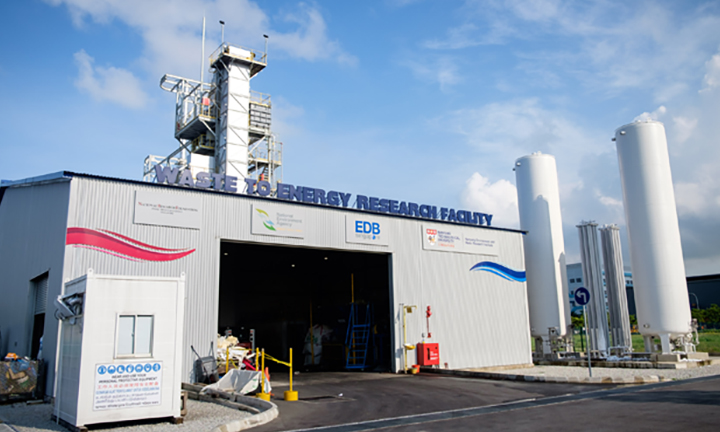
Since 2019, NTU has turned its municipal solid waste from campus into electricity and resources, becoming the first educational institution in Singapore to do so using its infrastructure.
Rubbish becomes gas at a very high temperature for generating electricity. The process also melts solid materials left over from the gasification process into metal alloys and a glass-like material called slag. The metal alloys can be recycled while the slag can be used for construction.
The pilot research facility in Tuas South, launched with Singapore’s National Environment Agency, can reach temperatures of up to 1,600 degrees Celsius, nearly twice that of conventional mass-burn incinerators.
First cyborg roaches used for humanitarian efforts in the world
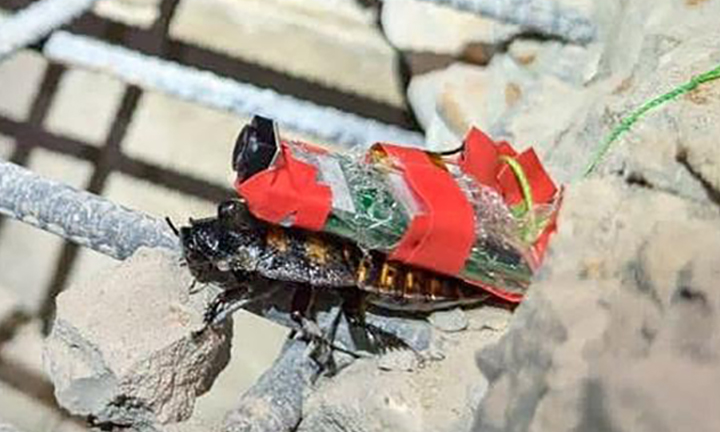 (Photo: HTX)
Searching for survivors through rubble in a disaster zone is tough. But NTU's insect-hybrid robots gave rescuers a helping hand, letting them cover more ground.
For the first time ever, “cyborg cockroaches” – created in collaboration with Singapore’s Home Team Science and Technology Agency, and Klass Engineering and Solutions – were deployed in a disaster operation following a major earthquake in Myanmar earlier this year.
The Madagascar hissing roaches used were fitted with backpacks containing electronics to remotely control the insects’ movements, as well as sensors and infrared cameras that detect signs of life.
The researchers recently found a way to speed things up by developing a method that automatically attaches the tiny backpacks to the insects – getting them ready for work in a jiffy.
First deep-tech unicorn from Singapore
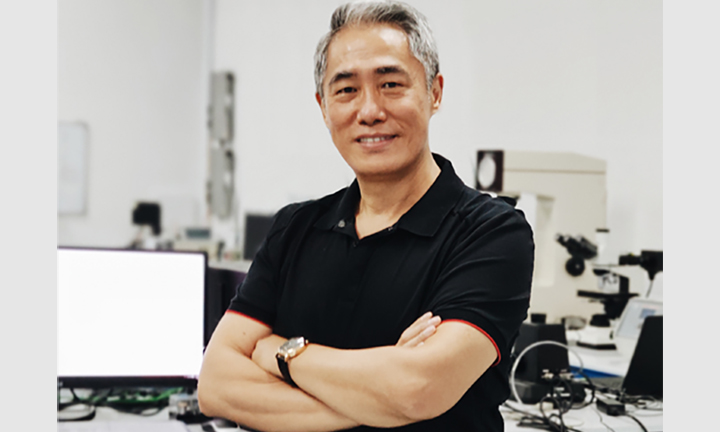
With a valuation of S$1.9 billion (US$1.5 billion) after its initial public offering in 2020, Nanofilm Technologies International – a nanotechnology spin-off from NTU – became the nation’s first deep-tech unicorn to be listed on the Singapore Exchange.
The company was founded in 1999 by Dr Shi Xu, a former associate professor at NTU’s School of Electrical & Electronic Engineering.
Nanofilm specialises in ultra-thin protective coatings used in many products, from consumer gadgets to automotive parts and optical devices. These innovations are built on proprietary technologies and processes that Dr Shi invented and patented during his time at NTU.
In 2023, the company came full circle by partnering with NTU to launch a corporate lab on campus, focused on advancing research in coatings and nanofabrication.
First 3D-printed concrete bench using recycled glass in Singapore
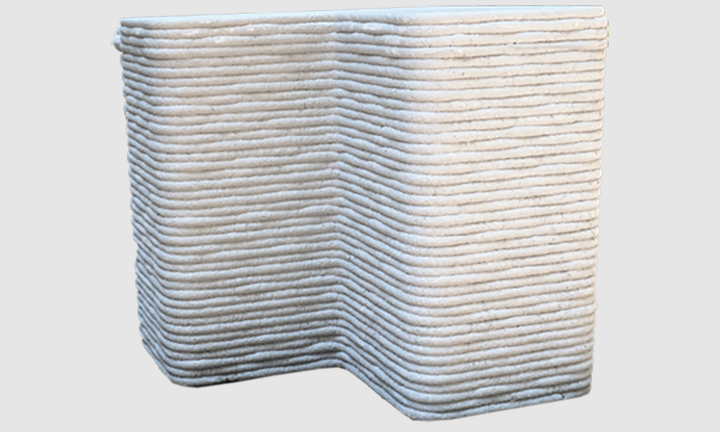
Sand, the main ingredient of glass, is facing a global shortage due to growing urbanisation and construction.
But in 2022, NTU researchers addressed this issue with a Singapore first – they used recycled glass to replace sand in a concrete mix to 3D print a concrete bench. The mix also required less water, and the printed bench met industry standards for mechanical strength.
First 'lego-style' high-rise residences in Singapore
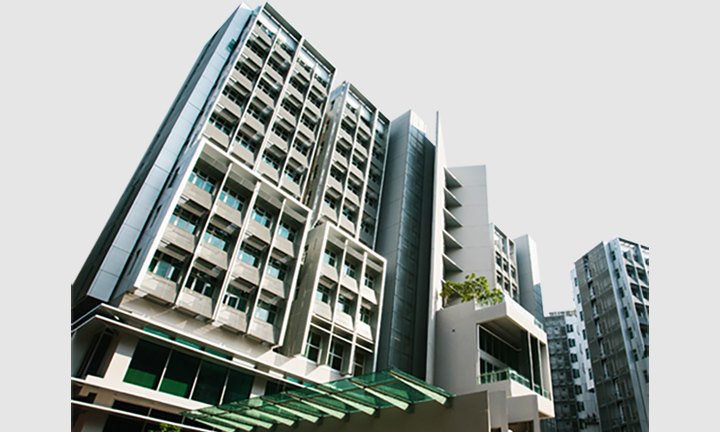
Many buildings have been traditionally built onsite but NTU bucked this trend in 2016. In line with the Singapore Building and Construction Authority’s construction productivity push, the University launched three residential halls in North Hill with rooms assembled elsewhere and later put together on campus.
They were the nation’s first high-rise residences built in a “Lego style” and had entire rooms – complete with fixtures such as lighting, windows and fans – constructed at a factory and then stacked on top of one another like building blocks onsite.
This innovative method, now widely used in Singapore to build public and private apartments, reduced manpower needs by 25% to 40% and shortened construction time by 15% to 20%.
First robot masseuse in Singapore

Ancient Chinese tradition meets modern technological wizardry with EMMA, the nation’s first robot masseuse. EMMA has given tuina, a form of therapeutic acupoint massage, to patients from Raffles Place in Singapore to Minnesota in the United States.
A product of NTU-incubated startup AiTreat, the robot was launched in 2017. Since then, multiple EMMAs have been deployed in Singapore, China and the United States at Traditional Chinese Medicine clinics, physiotherapy centres and hospitals, including the renowned Mayo Clinic.
EMMA uses sensors to measure muscle stiffness and, with AI and cloud computing, customises each massage treatment to help patients with back and knee aches.
First electric taxi for the tropics in the world
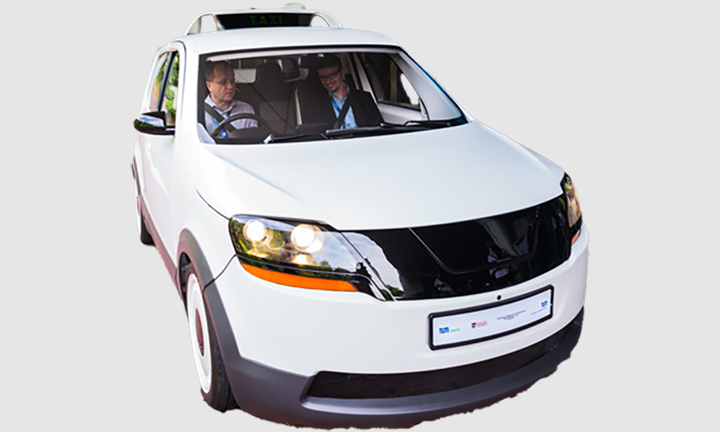
Well before the current wave of electric vehicles, there was EVA, the world’s first electric taxi customised for tropical climates, launched in 2015. One standout feature of EVA is its super-fast charging system – the taxi can cover 200km after just 15 minutes of charging.
NTU and Germany’s Technische Universität München joined forces to build it right here in Singapore, giving the vehicle energy-saving features to keep passengers cool, including ventilated seats with built-in fans that suck away moisture and heat.
First AI-empowered, interdisciplinary ageing research centre in Singapore

To address the challenges of the impending silver tsunami, a pioneering centre at NTU has been developing solutions to help the elderly be active and live independently through AI research that focuses on the needs of people.
Called the Joint NTU-UBC Research Centre of Excellence in Active Living for the Elderly (LILY) and established in 2012 with Canada’s University of British Columbia, it is Singapore’s first AI-empowered and interdisciplinary research centre on ageing.
LILY has created games that help keep the minds of seniors active, as well as detect signs of neurodegenerative conditions like Parkinson’s disease. These games were delivered to the elderly through partners like Tan Tock Seng Hospital and community centres. Other innovations at LILY include a system of sensors that help keep tabs on the movement and behaviour of seniors who live alone.
First tests in Singapore to detect COVID-19 virus strains in wastewater
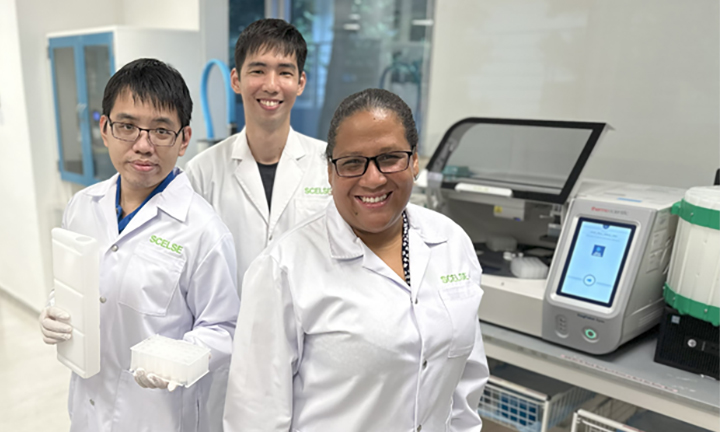 (Photo: SCELSE)
Keeping tabs on the spread of COVID-19 cases in Singapore was a pressing concern during the pandemic. One way to do so was by monitoring wastewater, such as from households. This effort was driven by the National Environment Agency (NEA).
The first tests in Singapore to detect different COVID-19 virus strains in wastewater were done by a team led by NEA and the Singapore Centre for Environmental Life Sciences Engineering at NTU.
The team also contributed to establishing the methods for wastewater surveillance across Singapore. The researchers in NTU have since worked with partners to develop tests for other viruses in wastewater like the Zika virus.
First flexible endoscopy robotic surgery in the world

Gastric tumour surgeries got a major advancement in 2011 with EndoMaster, a flexible endoscope equipped with tiny robotic arms that removed the need for external incisions and reduced operation time from eight hours to as little as an hour.
Teaming up were NTU and the National University Hospital, whose invention was used to successfully perform the world's first flexible endoscopy robotic surgeries on patients with stomach tumours in India.
A surgeon steered EndoMaster through the mouth and into the stomach, where it removed tumours with its robotic arms.
First rapid test that detects coronavirus variants in Singapore
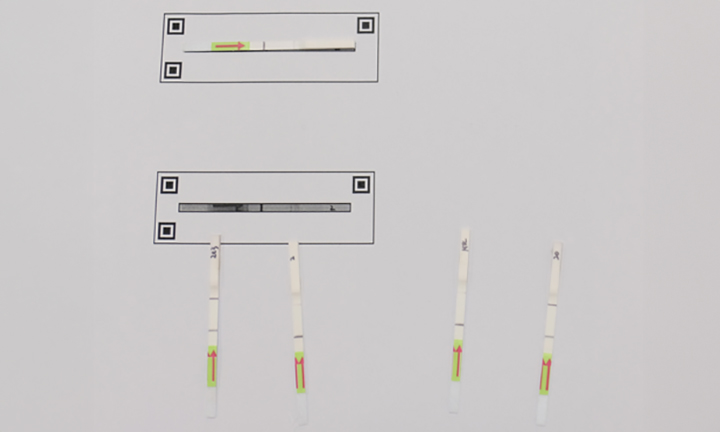
Early in the COVID-19 pandemic, tests could miss new strains of the coronavirus that caused the disease. But in 2021, researchers led by NTU addressed this by developing Singapore’s first portable COVID-19 test capable of detecting different variants of the virus.
Called the VaNGuard test, it uses a specially treated paper strip similar to a pregnancy test, and gives results within 30 minutes, which is slower than standard antigen rapid tests but 10 times more accurate.
This article first appeared in issue 6 of U, the NTU alumni magazine.