
Mathematics Talks
About the Talk
Join us for a journey into the fascinating world of Parrondo's paradox, a counterintuitive phenomenon where combining losing strategies surprisingly leads to a winning outcome. This workshop, titled "Winning by Losing: Unraveling the Mysteries of Parrondo's Paradox," is designed for high school mathematics enthusiasts eager to explore advanced concepts through interactive learning and programming. We'll kick off with an engaging presentation that introduces the paradox, its origins, and its implications in various fields. Students will learn how Parrondo's games challenge conventional wisdom about probability and strategy. If possible, we will get students to roll up their sleeves and dive into coding Parrondo's games themselves. This hands-on exercise will allow students to experiment with the paradox in real-time, encouraging them to modify parameters and observe the outcomes.
About the Speaker
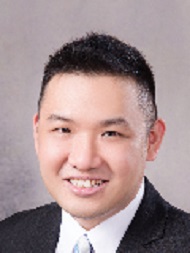
Cheong Kang Hao is a faculty member of the Division of Mathematical Sciences within the School of Physical and Mathematical Sciences at Nanyang Technological University. With over a decade of dedicated research into Parrondo’s paradox, he has made significant contributions to understanding and applying this intriguing phenomenon. His work effectively bridges the paradox with practical modeling problems in various domains, including physical sciences, biological systems, and computational frameworks. Beyond his research, he is passionate about nurturing the next generation of mathematicians. He takes great joy in engaging with high school students, offering them insights into the fascinating world of mathematical research. Through the proposed interactive session and workshop, he hopes to inspire students to explore complex concepts and consider careers in mathematical sciences.
About the Talk
This talk consists of two parts. In the first part, we will introduce the subjects, statistics and machine learning, and their applications. While they both are crucial ingredients of data analysis, their similarities and differences will be discussed. In the second part, we will learn how a statistical analysis guide us on designing a simple machine learning algorithm.
About the Speaker
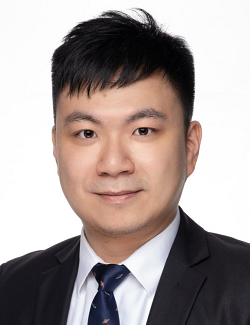
Patrick Pun is currently a tenured Associate Professor, Assistant Chair (MSc Programmes), and the Programme Director of Master of Science in Financial Technology (MSc in FinTech) at School of Physical and Mathematical Sciences, Nanyang Technological University, Singapore. Patrick has strong research interests in Financial / Actuarial Mathematics, Big Data Analytics, and AI applications in Finance, as evidenced by his numerous top-tier publications in these fields. He has received several distinguished grants, namely from MOE, NRF, QEP, DSAIR, and NTU, to further his research work alongside his tertiary teaching responsibilities.
About the Talk
The efficient allocation of resources is essential in the sustainability of a global metropolis such as Singapore. At the core of this lies the branch of Mathematics and Economics known as Transportation Theory, which is the study of optimal transportation and allocation of resources such as material, goods, and energy. The mathematical study of Transportation Theory began as early as the 1920’s, with major advances made during the Second World War by several renowned mathematicians including George B. Dantzig (1914–2005) and Leonid V. Kantorovich (1912–1986).
 About the Speaker
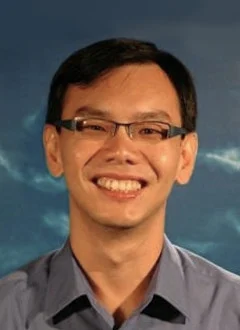
Chua Chek Beng is a faculty member of the School of Physical and Mathematical Sciences in the Nanyang Technological University, Singapore. Before joining NTU, he was a faculty member at the University of Waterloo, Ontario, Canada. He obtained his BSc in Mathematics with First Class Honours from the National University of Singapore, and his PhD in Operations Research from Cornell University, New York, USA. His research interests lie in convex analysis and optimization. During his school days in The Chinese High School and Hwa Chong Junior College (now known as Hwa Chong Institution), he participated in numerous local, regional, and international mathematical competitions. These include representing Singapore in the 32nd and 33rd International Mathematical Olympiad in 1991 and 1992, in which he won the bronze medal in 1992.
About the Talk
This workshop introduces the science of communicating secret codes using mathematics. Beginning with an overview of secret key cryptography, students will learn how to encrypt and decrypt messages using shift and affine ciphers via modulo arithmetic. The workshop includes a cryptology trail around the areas in SPMS where students will decrypt secret messages which will lead to a solution of a puzzle.
About the Speaker
Dr Ku Cheng Yeaw received his PhD in Mathematics from Queen Mary, University of London in 2005. He was a Harry Bateman research instructor at California Institute of Technology before coming to Singapore. His favourite theorem is the Erdos-Ko-Rado theorem concerning the size and the structure of largest intersecting uniform hypergraphs.
About the Talk
Topology is the mathematical study of the possible shapes of space, where we are allowed to stretch and deform a shape as long as we don’t tear it. This is a fascinating, historical investigation, which uses ideas from every part of mathematics, including theoretical physics. In this workshop we will give a taste of this discipline by focussing on a few gems: the classification of surfaces, the fundamental group, knot theory, the Jones polynomial, and how to build and imagine 3-dimensional spaces.
About the Speaker
Andrew Kricker is a researcher in low-dimensional topology, with a particular focus on topological invariants that were discovered in theoretical physics. Indeed his undergraduate degree was in theoretical physics, before doing a PhD in Mathematics at the University of Melbourne. He has worked in many universities around the world, including the Tokyo Institute of Technology, the Hebrew University of Jerusalem, and the University of Toronto, before joining the School of Mathematical and Physical Sciences at NTU for its inaugural semester in 2005. He teaches many subjects, including first year linear algebra as well as advanced courses in geometry and topology.