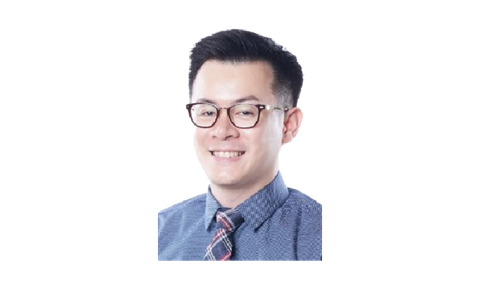
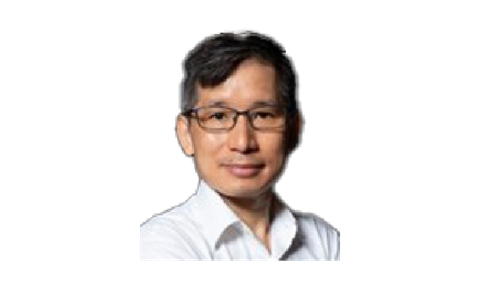
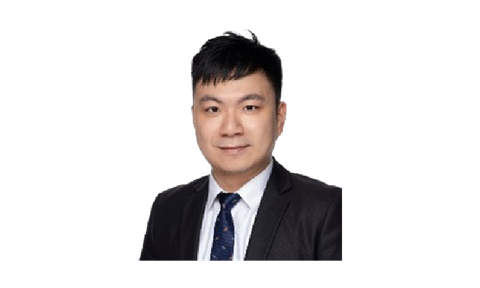
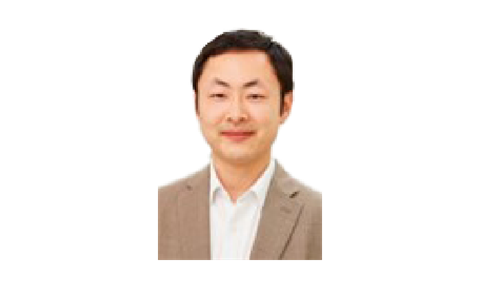
Inspiring NTU: Mastery Beyond Boundaries
Get Future-Ready with NTU’s One-Week “Future Ready” Immersion Programme
📅 Dates: 9–13 February 2026
📍 Venue: Nanyang Technological University, Singapore
Are you a university student or recent graduate looking to stay ahead in the digital economy? Are you ready to future-proof your career?
Join us at Nanyang Technological University, Singapore for an exciting one-week “Future Ready” Immersion — Inspiring NTU: Mastery beyond Boundaries — designed to equip you with the emerging skills and insights needed to thrive in today’s fast-evolving digital economy.
Through a dynamic blend of expert-led seminars with real-world case studies, you’ll be exposed to emerging technologies, digital trends, and future-focused capabilities that are shaping tomorrow’s careers – from artificial intelligence and data literacy to digital business strategies and innovation thinking.
Whether you’re planning your next academic move or preparing to enter the workforce, this programme offers you an exclusive opportunity to gain valuable knowledge, expand your horizon and be future-ready!


Important Dates - We’re Here to Support You
- Thursday, 13 November 2025 at 8pm SGT: Join our Online Information Session, a perfect opportunity to ask questions and feel confident before registering.
- Thursday, 22 January 2026 at 8pm SGT: For confirmed participants, the Online Pre-Programme Briefing will help you get ready for the programme at NTU.
- Gain deeper understanding of the latest global technologies, innovation trends and Singapore’s unique role.
- Exposure to cutting-edge ideas and technologies shaping the future delivered by NTU’s top colleges and schools on topics like AI, data science, digitalisation, robotics, sustainability, healthcare, entrepreneurship, and Industry 4.0.
- Exclusive opportunity to visit NTU state-of-the-art advanced research & lab facilities.
- Experience the first technology-enabled escape room in the world that was built by undergraduate students in a university.
- Gain first-hand knowledge on NTU’s Master’s programmes and discover how further education can elevate your global career prospects.
- Gain valuable advice from NTU career coaches on being future-ready and how to succeed in the digital world.
- Network with NTU faculty, NTU school representatives, NTU students, and fellow participants from different universities.
- A memorable glimpse into life at a world-class university through a guided campus tour led by NTU students.
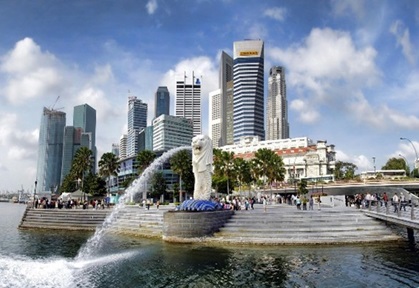
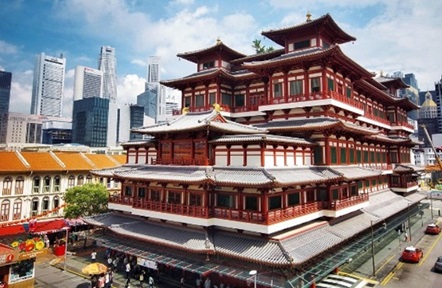
- Free time to explore Singapore’s iconic attractions.
Ambitious university students or graduates who want to:
- Learn from experts about global technologies and digital trends
- Be future-ready for their careers
- Plan their next academic move
- Connect with like-minded peers in a world-class learning environment
Secure your spot and take the first step toward a future-ready you.
👉 Limited slots available. Apply now and immerse yourself in the NTU experience — where mastery begins.
Let NTU be the launchpad for your next big move. 🚀
| Programme | Dates |
|---|---|
| Inspiring NTU: Mastery beyond Boundaries | Programme dates: 19 December 2025 |
Venue: Nanyang Technological University, Singapore. 50 Nanyang Avenue, Singapore 639798
Important Dates - We’re Here to Support You
- Thursday, 13 November 2025 at 8pm SGT: Join our Online Information Session, a perfect opportunity to ask questions and feel confident before registering.
- Thursday, 22 January 2026 at 8pm SGT: For confirmed participants, the Online Pre-Programme Briefing will help you get ready for the programme at NTU.
Registration Type | Registration Deadline | Payment Deadline | Programme Fee |
|---|---|---|---|
Early Bird Registration | 23 November 2025 | 28 November 2025 | SGD 2,834 |
Group Registration | 19 December 2025 | 26 December 2025 | SGD 2,834 |
Standard Registration | 19 December 2025 | 26 December 2025 | SGD 2,943 |
Remarks:
- Programme fee includes 9% Goods and Services Tax.
- This is a self-funded programme; thus, no funding or scholarship is available.
- Applicants will be notified latest by 23 December 2025 if the programme is confirmed to run.
Hotel Accommodation and Local Transportation Fee (Optional)
Types of Room
- Twin-sharing room: SGD 673.62 per pax (Share room with another participant - subject to availability.)
- Single Room: SGD 1,347.24
- Fee is inclusive of 9% Goods & Services Tax
- 6 nights stay in a city hotel – YWCA Fort Canning or equivalent (Inclusive of complimentary breakfast and internet access)
- Check-in date: 8 February 2026, Sunday, after 3pm
- Check-out date: 14 February 2026, Saturday, before 12 noon
- Coach transfer between NTU campus and hotel
- Complimentary one-way airport transfer to hotel on 8 February 2026 (Sunday) at selected timing
- Hotel accommodation is on a first-come, first-served basis and subject to availability.
YWCA Fort Canning
https://www.ywcafortcanning.org.sg/
6 Fort Canning Road, Singapore 179494
![]() | ![]() | ![]() | ![]() |
Walking distance to Orchard Road and Bras Basah Road
- 7-10 minute walk to nearby Dhoby Ghaut Station, a major train interchange station for MRT trains to Boat Quay, Clarke Quay, Chinatown, Suntec Convention Centre, Marina Bay Sands Convention Centre, Gardens By The Bay and The Botanical Gardens
- Opposite Fort Canning Park
- Short walk to the National Museum
What are included in the programme fee:
- Tuition fee
- Welcome pack and NTU T-shirt
- Welcome buffet lunch
- Networking buffet lunch
- Visit to NTU state-of-the art advanced research and lab facilities
- Admissions talk by NTU PACE & school representatives
- Campus tour and student sharing led by NTU student ambassadors
- Certificate of Completion (with minimum 75% attendance)
What are NOT included in the programme fee:
Your accommodation, transportation, own leisure activities, airfares, visas, travel insurance, food and daily expenses are NOT included, unless otherwise stated.
Cancellation policy:
No refund will be issued once payment has been made to confirm your spot.
Payment mode:
Flywire (For more information: https://www.ntu.edu.sg/life-at-ntu/student-life/onestop/payment-services/epayment-flywire)
Payment Deadline:
To be completed by the respective payment deadline as indicated on the website. (Payment instruction will be shared with you separately)
8 Feb 2026 Sunday | 9 Feb 2026 Monday | 10 Feb 2026 Tuesday | 11 Feb 2026 Wednesday | 12 Feb 2026 Thursday | 13 Feb 2026 Friday | 14 Feb 2026 Saturday |
Arrival in Singapore and check-in to City Hotel (after 3pm) (Complimentary Airport Transfer will be provided at selected timing for those who stay at the designated hotel arranged by NTU.) | 9.15am – 9.30am Registration 9.30am – 10.00am Welcome Session & Programme Briefing 10.15 am – 11.45am Seminar by School of Social Sciences: Singapore Economy in a Globalised World By Dr Sng Hui Ying | 9.15am – 10.45am Seminar by College of Computing and Data Science: How does AI work? By Prof Adams Kong 11am – 12.30pm Seminar by Nanyang Business School: Mastering Digitalisation: Analytics Skills for Tomorrow’s Leaders By Prof Ben Choi | 9.15am – 10.45am Seminar by School of Physical & Mathematical Sciences: Financial Data Analytics - Modelling, Simulation, and Generative AI By Prof Patrick Pun 11am – 12.30pm Seminar by School of Civil & Environmental Engineering: Sustainability and Environmental Engineering By Prof Chong Tzyy Haur | 9.15am – 10.45am Seminar by Entrepreneurship Academy: Entrepreneurial Mindset By Dr Xia Zhiqiang 11.00am – 12.30pm Seminar by LKC Medical School: The New Era of Medicine: How AI is Driving the Healthcare Revolution By Prof Fan Xiuyi | 9.15am – 10am Sharing by NTU Graduate Students Council on Life in NTU 10.15am – 12.15pm Sharing Sessions: By NTU PACE & School Representatives on Admission to Master’s Programmes | Check-out from Hotel before 12 noon.
|
11.45am – 1.00pm Welcome Buffet Lunch | 12.30pm – 1.30pm Lunch Break | 12.30pm – 1.30pm Lunch Break | 12.30pm – 1.30pm Lunch Break | 12.15pm – 1.30pm Networking lunch with NTU PACE & School Representatives | ||
1pm – 2pm Ice-Breaking games led by NTU students 2pm – 5pm NTU Campus Tour 6pm – 8.30pm Free time to explore Marina Bay Waterfront Promenade. (At 8pm, immerse in the spectacular “Spectra – A Light & Water Show”. One-way transfer from NTU campus.) | 1.30pm – 3pm Seminar by School of Electrical & Electronic Engineering: Robotics and Embodied AI By Prof Xie Lihua 3.15pm – 4.45pm Xperience@EEE The first technology-enabled escape room in the world that was built by undergraduate students in a university. | 1.30pm – 2.30pm Visit Chem-Analytics Lab & M-Lab 3.30pm – 5.30pm Visit Sustainable Singapore Gallery & Marina Barrage 6.00pm – 8.30pm Free time to explore Gardens by the Bay. (At 7.45pm, be dazzled by the magnificent sight of the Supertrees and let the music and lights entertain you at night!) | 1.30pm – 3pm Seminar by School of Mechanical & Aerospace Engineering: Role of Optics and Lasers in Industry 4.0 By Prof Murukeshan Vadakke Matham 3.15pm – 3.45pm Visit Singapore Centre for 3D Printing 4.30pm – 6.30pm Free time to explore Singapore River, Merlion Park & Esplanade. (One-way transfer from NTU campus.) | 1.30pm – 3pm Workshop by Academy for Professional & Continuing Education: Strategies for Career Success in the Digital world By Mr Justus Teo (Career Coach) 3.15pm – 4.15pm Closing ceremony, Certificate Presentation & Group Photo-Taking
|
*Programme may subject to change
Do I need to bring my laptop to the programme?
It’s optional.
Will the programme be delivered in English?
Yes, all sessions will be delivered in English only.
Will accommodation be provided, or do I need to arrange my own?
We highly encourage you to opt for the hotel accommodation specially arranged by NTU as breakfast will be included in the hotel accommodation fee as well as the daily coach transfer from the hotel to NTU campus. Furthermore, airport transfer at selecting timing is arranged for participants who opt to stay in the designated hotel. This arrangement saves you time and effort. Nevertheless, participants have the flexibility to arrange their own accommodation based on their own preference and budget.
Will meals be provided during the programme?
A welcome lunch and a networking lunch will be provided on 9 February 2026 and 13 February 2026 respectively. For other meals, participants can enjoy their meals at various food courts and eateries on the NTU campus at their own expense. You may explore the full list of available outlets here: https://www.ntu.edu.sg/life-at-ntu/leisure-and-dining/general-directory
Are there food options available for special dietary needs?
Yes, NTU offers a variety of dining options to cater to different dietary preferences, including vegetarian and halal meals. You may explore the full list of available outlets here: https://www.ntu.edu.sg/life-at-ntu/leisure-and-dining/general-directory
What are not included in the programme fee?
Your accommodation, transportation, own leisure activities, airfares, visas, travel insurance, food and daily expenses are NOT included, unless otherwise stated.
What type of visa should I apply?
Please visit Immigration & Checkpoints Authority (ICA) ICA | Entering Singapore to check if you require a visa to enter Singapore.
Will there be funding or scholarship available?
This is a self-funded programme thus no funding or scholarship is available.
Who can I contact for more information after I have submitted my registration?
Please contact our administrator via email: [email protected]
Is my registration confirmed as enrolment upon sign-up?
Please note that your registration is not confirmed upon sign-up. This is an open-enrolment programme which could only proceed to run based on sufficient intake. Applicants will be notified latest by 23 December 2025 if the programme is confirmed to run.
Can I request an Invitation Letter?
Yes, participants may request an e-copy of the Invitation Letter sent via email if he/she is successfully enrolled in this programme.
Can I proceed to purchase air tickets after sign-up?
Please DO NOT purchase air ticket upon sign-up. This is an open-enrolment programme which could only proceed to run based on sufficient intake. Applicants will be notified latest by 23 December 2025 if the programme is confirmed to run.
What will happen if I need to cancel my enrollment?
No refund will be made after you have made payment to confirm your spot.
How do I get to NTU?
Visit https://www.ntu.edu.sg/about-us/visiting-ntu for detailed directions and transportation options.
Can this program help with future university applications?
This programme provides you with an opportunity to find out more about NTU admission requirements and to experience life in NTU. Admission to NTU graduate programmes will still be based on merits and entry requirements.
![]() | Singapore Economy in a Globalized WorldBy Dr Sng Hui Ying (NTU School of Social Sciences)Dr Sng Hui Ying is Senior Lecturer of Economics in the School of Social Sciences at the Nanyang Technological University (NTU), Singapore. She received her PhD (Economics) from NTU. Her research interests include development economics and Singapore economy. She has authored Economic Growth and Transition: Econometric Analysis of Lim’s S-Curve Hypothesis (World Scientific) and is the co-editor of the books Singapore and Asia in a Globalized World: Contemporary Economic Issues and Policies (World Scientific), Singapore and Asia: Impact of the Global Financial Tsunami and other Economic Issues (World Scientific) and Crisis Management and Public Policy: Singapore's Approach to Economic Resilience (World Scientific). She has also published in refereed journals such as Journal of Economic Interaction and Coordination, Singapore Economic Review, World Economics and Journal of Economic Development. |
![]() | Mastering Digitalisation: Analytics Skills for Tomorrow’s LeadersBy Prof Ben Choi (NTU Nanyang Business School)Digitalisation reshapes the way businesses, governments, and societies operate, creating unprecedented opportunities for innovation and growth. At the heart of this transformation lies Business Analytics, the discipline that converts data into insights and insights into actionable outcomes. In this seminar, participants will explore how digitalisation drives change across various industries, including healthcare, finance, retail, and smart cities, and how analytics empowers leaders to harness these changes for real-world impact. Through case studies and live demonstrations, we will explore how data can be leveraged to address pressing challenges, anticipate emerging trends, and generate value in a rapidly evolving digital economy. Designed for aspiring master’s students, this session will provide a glimpse into the high-demand skills of the future, such as data literacy, digital strategy, and analytical thinking, while also highlighting how these capabilities open doors to global opportunities in strategic growth sectors. By the end of the seminar, participants will understand why analytics is the engine of digitalisation, how it fuels career pathways in business and technology, and how they, as future leaders, can have a meaningful impact on the digital age. Ben Choi is an Associate Professor in Information Technology and Operations Management at Nanyang Technological University. He has been named the Best Associate Editor (2024) and Reviewer of the Year at the Journal of the Association for Information Systems (2020) and received the Best Reviewer Award at MIS Quarterly (2016). His research has appeared in premier information systems journals, including Information Systems Research, Journal of Management Information Systems, Journal of the Association for Information Systems, and Production and Operations Management. His work focuses on human–algorithm/robotic interactions, data visualisations, sustainability, and information privacy, using diverse methods such as lab and field experiments, surveys, driving and flight simulations, machine learning, artificial intelligence, and physiological measurements (e.g., voice and respiration analytics, GSR, EEG, fNIRS, and eye-tracking). Ben’s research excellence has been recognised through multiple awards at leading international conferences and workshops. These include the Best Workshop Paper (runner-up) at the 18th China Summer Workshop on Information Management (CSWIM 2025); Best Conference Short Paper at the International Conference on Information Systems (ICIS 2024); Best Workshop Paper Award at the 6th Workshop on the digitalisation of the Individual (DOTI 2024); and two Best Paper in Track Awards at PACIS 2024 (Human–Computer/AI Interaction and Sustainability/Societal Impacts of Digital Technologies). He was also nominated for Best Conference Paper at ICIS 2023 and Best Workshop Paper at the Pre-ICIS Workshop on HCI Research in MIS (2023). With over a decade of teaching experience at both undergraduate and postgraduate levels, Ben has designed and delivered courses in data management, data engineering, and business visualisation. His teaching excellence was recognised with the Nanyang Education Award in 2023.
|
![]() | Robotics and Embodied AIBy Prof Lihua Xie, President’s Chair, NTU (NTU School of Electrical & Electronics Engineering)Robotics has attracted sustained interest over the past decades due to its wide-ranging applications across engineering and non-engineering domains. Recent advancements in sensing, computing, and artificial intelligence (AI) technologies have further accelerated this progress. In particular, AI has generated tremendous interest by enabling robots to learn and adapt to changing environments. Perception and navigation are fundamental capabilities for deploying robotic systems in manufacturing, transportation, surveillance, logistics, and service industries. In this seminar, we will first introduce the traditional pipeline for perception and navigation, with emphasis on multi-modality sensor fusion, continuous-time motion estimation, and semantic as well as visual SLAM in dynamic environments. We will then demonstrate how AI can enhance these capabilities, especially in dynamic and uncertain settings. Following this, we will explore more recent developments in end-to-end networks, highlighting their strengths and limitations. We will also discuss navigation and manipulation powered by large language models. Finally, we will showcase applications of robotic systems in manufacturing, structural inspection, delivery, and the digital economy. Dr Lihua Xie received the Ph.D. degree in electrical engineering from the University of Newcastle, Australia, in 1992. Since 1992, he has been with the School of Electrical and Electronic Engineering, Nanyang Technological University, Singapore, where he is currently President’s Chair in Control Engineering and Director, Center for Advanced Robotics Technology Innovation. He has served as the Head of Division of Control and Instrumentation and Co-Director, Delta-NTU Corporate Lab for Cyber-Physical Systems. Dr Xie’s research interests include system theory and control, networked systems, multi-agent networks, learning-based control, and unmanned systems. He has published 11 books and over 600 journal papers in these areas, and holds more than 30 patents/technical disclosures. He is an Editor-in-Chief for Unmanned Systems and Associate Editor for IEEE Control System Magazine. He has served as Editor for IET Book Series in Control and Associate Editor for a number of journals including IEEE Transactions on Automatic Control, Automatica, IEEE Transactions on Control Systems Technology, etc. He was an IEEE Distinguished Lecturer (Jan 2012 – Dec 2014) and the General Chair of the 62nd IEEE Conference on Decision and Control (CDC 2023). He is currently Vice-President of IEEE Control System Society. Dr Xie is Fellow of Academy of Engineering Singapore, IEEE, IFAC, and CAA. |
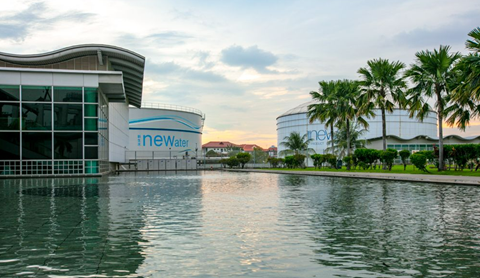
![]() | Sustainability and Environmental EngineeringBy Prof Chong Tzyy Haur (NTU School of Civil and Environmental Engineering)Today’s environmental challenges and problems, such as climate change, resource depletion and pollution, are complex and interconnected. Environmental engineering focuses on developing innovative and practical solutions to environmental issues by applying scientific and engineering principles with a deep understanding of ecological, social, and economic systems to create designs and technologies that promote sustainable development, protect human health and preserve ecosystems. This seminar will explore Singapore's Water Loop, a model for urban water management, detailing the supply of clean water, wastewater treatment and reuse as high-grade reclaimed water or NEWater. This multi-faceted strategy, known as one of the "Four National Taps," includes local catchment, imported water, NEWater, and desalinated water, ensuring a diversified and sustainable water supply for the land-scarce and highly populated nation. This seminar will highlight the advanced water and wastewater treatment technologies to improve treatment efficiency and enhanced sustainability. Dr Chong Tzyy Haur is an Associate Professor at the School of Civil and Environmental Engineering (CEE) and the Programme Director of Singapore Membrane Technology Centre (SMTC), Nanyang Environment & Water Research Institute (NEWRI), at the Nanyang Technological University (NTU), Singapore. He is also the Assistant Chair (Academic), Programme Director of BEng (Environmental Engineering) and MSc Sustainability and Environmental Engineering at the School of CEE. Dr. Chong is the Section Editor of the Journal of Water Processing Engineering, a top 10% journal in the Water Resources domain. He holds or has held the positions of Secretary or Treasurer at the Membrane Society in Singapore (MEMSIS), Aseanian Membrane Society (AMS), and World Association of Membrane Societies (WA-MS). Dr. Chong’s research interests are in Membrane Process Intensification: Engineering for Efficiency and Sustainability include desalination and reclamation, water and wastewater treatment, industrial applications; membrane fouling mechanisms, control strategies and fouling sensors; process intensification, enhanced module and system design; hybrid membrane chemical and bioreactors. He has over 100 SCI tracked journal publications and is the inventor of 11 patents/technology disclosures on membrane technology. Dr. Chong is featured in Stanford University's Top 2% Scientists’ List in 2023 and 2024. The research team led by Dr. Chong is the winner of the Grand Discovery Prize (TRL 1 – 3) in the Global Prize in Innovation in Desalination (GPID 2024) for his groundbreaking innovation “Unveiling the Power of Centrifugal Reverse Osmosis (CRO) for Desalination”. Dr. Chong is the recipient of the School of CEE Research Award in 2020 and Nanyang Education Award (School) 2017. |
![]() | How Does AI Work?By Prof Adams Wai-Kin Kong (NTU College of Computing and Data Science)Dr Adams Wai-Kin Kong received his Ph.D. degree from the University of Waterloo, Canada. Currently, he is an associate professor at the Nanyang Technological University, Singapore and the director of the Master of Science in Artificial Intelligence programme. His research works have been published in major AI conferences and journals. His papers were selected as spotlight papers by IEEE Transactions on Pattern Analysis and Machine Intelligence, ICML and ICRL, an Honorable Mention by Pattern Recognition and CVPR for oral presentation. His PhD students received Best Student Paper Awards in The IEEE Fifth International Conference on Biometrics: Theory, Applications and Systems (BTAS), 2012 and IEEE International Conference on Bioinformatics and Bioengineering, 2013 and other awards such as Google Anita Borg Memorial Scholarship. He served as an associate editor for IEEE Transactions on Information Forensics and Security, area chair for the major AI conferences, including CVPR, ECCV and BMVC and expert consultant for cross-border legal cases. He is listed in Stanford University's Top 2% Scientists’ Study. In 2022 and 2024, Dr. Kong was nominated for the MSc in Business Analytics Teacher of the Year Award and in 2022, he received faculty award from his school. In addition to teaching and academic research, he works closely with industrial partners, including Rolls Royce, Siemens and Procter & Gamble for various R&D projects. His recent research interests include AI safety, deep networks and their applications on, healthcare, drug discovery, computational simulation, and biometrics. |
![]() | Financial Data Analytics: Modelling, Simulation, and Generative AIBy Prof Patrick PUN Chi Seng (NTU School of Physical and Mathematics Sciences)In this seminar, we explore how data-driven modelling and simulation techniques underpin modern financial analytics. Beginning with the intuitive binomial lattice model, we demonstrate how asset prices can be modeled through simple yet powerful discrete-time frameworks. We show how historical market data can be used to calibrate key model parameters and then simulate possible future price paths. These simulations enable us to solve important financial problems such as option pricing, risk quantification, and strategic decision-making under uncertainty. Extending to continuous-time models, we introduce geometric Brownian motion and its role in simulating realistic asset dynamics. Finally, we bridge into the emerging frontier of generative AI, highlighting its conceptual connection with simulation and its growing impact on financial data synthesis, scenario generation, and synthetic market modeling. This seminar offers prospective MSc students a glimpse into the interdisciplinary techniques powering our MSc in Analytics (SPMS), MSc in FinTech (SPMS), MSc in Modelling and Simulation (SPMS), MSc in AI (CCDS), and MSc in Data Science (CCDS) programmes. Dr Patrick PUN Chi Seng is currently a tenured Associate Professor, Assistant Chair (MSc Programmes), and the Programme Director of Master of Science in Financial Technology (MSc in FinTech) at School of Physical and Mathematics Sciences, Nanyang Technological University, Singapore. In 2018, Patrick founded the MSc in FinTech programme to cultivate the FinTech talents. The programme has been well-received in Asia. Prior to NTU, Patrick obtained his Ph.D. in Statistics at the Chinese University of Hong Kong (CUHK) in 2016. His Ph.D. thesis on “Robust Stochastic Control and High-Dimensional Statistics with Applications in Finance” won numerous awards, including Nicola Bruti Liberati Prize 2016 (Best Ph.D. Thesis in Quantitative Finance, worldwide) and the Young Scholars Thesis Award 2016 (Best Ph.D. Thesis from Faculty of Science, CUHK). His research paper on high-dimensional portfolio selection won Best Student Research Paper (First Place) in INFORMS Financial Section in 2015. Patrick also won Best Teaching Assistant Award in 2014. Patrick obtained his M.Phil. in Risk Management Science from CUHK in 2013 and obtained his B.Sc. in Statistics, from Nankai University in 2011. He also passed the Financial Risk Manager (FRM) qualification examinations in 2012. Patrick has strong research interests in Financial/Actuarial Mathematics, Big Data Analytics, and AI applications in Finance, as evidenced by his numerous top-tier publications in these fields. He has received several distinguished grants, namely from MOE, NRF, QEP, DSAIR, and NTU, to further his research work alongside his tertiary teaching responsibilities. |
![]() | The New Era of Medicine: How AI is Driving the Healthcare RevolutionBy Asst Prof Fan Xiuyi (NTU Lee Kong Chian School of Medicine)
Artificial Intelligence is rapidly moving from the realm of science fiction into the heart of clinical practice. This seminar will explore the profound impact AI is having across the entire healthcare landscape, from revolutionising diagnostic imaging and accelerating drug discovery to personalising patient treatment plans. We will discuss the key technologies driving this transformation, showcase real-world examples of AI in action, and examine the ethical considerations we must navigate. Join us to understand why the integration of AI is not just an upgrade, but a fundamental shift towards a more predictive, precise, and personalised era of medicine. Dr Fan Xiuyi is an Assistant Professor at the Lee Kong Chian School of Medicine and the School of Computer Science and Engineering (joint appointment). He obtained his BSc and MSc degrees from the University of Utah in the United States and his PhD degree from Imperial College London in the United Kingdom. Before joining NTU, Dr. Fan worked at the University of Utah, the University of Sydney, Imperial College London, and Swansea University. His current research interest is in Explainable AI (XAI). Dr. Fan has a strong track record in developing XAI theories and applications. Specifically, he has developed explainable decision-making theories and applications and has pioneered work in developing formal semantics for explanations. He has explored ways to introduce argumentation-based explanations to machine learning and developed the first argumentation-based explainable planning framework. He has also studied probabilistic satisfiability for the purpose of developing a probabilistic logic-based explainable machine learning method and its applications. Recently, he has been working on comparing and formally evaluating explainable AI methods, building a generic XAI software toolkit for medical applications, as well as understanding situations in which predictions cannot be trusted using XAI. Dr. Fan has published refereed papers at AI conferences and journals including AAMAS, IJCAI, AAAI, ICRA, ECAI, and AIJ. He was the recipient of the Welsh Crucible Leadership Programme Award, the Best Paper Award at IEEE ICSGAH, the first prize in the Health Innovation Technology Challenge, and the Rector’s Award Scholarship at Imperial College London. While working in the UK, he led projects using Explainable AI to Understand the Impacts of Non-Pharmaceutical Control Measures on COVID-19 Transmission for Evidence-based Policy and Understanding the Impact of COVID-19 on the International Economy via Currency Markets using Explainable AI, both funded by the Welsh Government.
|
![]() | Role of Optics and Lasers in Industry 4.0By Prof Murukeshan Vadakke Matham (NTU school of Mechanical and Aerospace Engineering)Economists and historians predict in the same way that the coming big wave of cyber-physical production will define the fourth industrial revolution — also known as Industry 4.0 or the Industrial Internet of Things (IIoT). From a historical point of view, industrial revolutions have completely changed the way the world works. The first industrial revolution is considered as the development of the steam engine and urban centres. The second was the transition to electricity and with that factory assembly realised, which enabled mass production of products like automobiles and clothing. The third industrial revolution, the Digital Age, was marked by the advent of computing and the internet. The fourth one, the industrial Internet of Things, marked by widespread interconnection of the digital and physical aspects of mass production and beyond, now in its infancy has the potential to disrupt business practices and the job market just like previous industrial revolutions did. In this Industry 4.0, everything produced in factories will be monitored, analysed, quality approved, packaged and shipped by self-sustained, cloud-connected, AI cyber-robots. The question raised in recent times was about the role of optics and photonics in Industry 4.0. In general, Industry 4.0 otherwise known as the smart factory is seen as the immediate innovation phase in manufacturing. Combining data connectivity, sensor technology, speed and artificial intelligence, Industry 4.0’s mission is to create smart, highly efficient factories where autonomous machines will do almost all of the work. It is very clear that lasers and photonics will be pivotal to delivering Industry 4.0 on multiple fronts. The convergence of light-assisted processing and communications underpinning Industry 4.0 is stimulating the ever increasing demand for more integration and novel approaches to manufacturing for applications in individualised manufacturing, precision healthcare and autonomous vehicles. In short, Industry 4.0 would be nowhere without optics and photonics. This seminar in this context, will be covering all the above-mentioned aspects with a special emphasis on lasers and optics for advanced manufacturing and 3D printing underpinning their impact in Industry 4.0. The talk begins with brief historical perspectives followed by analysing the major pillars of I 4.0. The key role played by optical and photonics technologies in this 4th industrial revolution will be discussed in detail. The talk specifically includes cases such as optical technologies for smart manufacturing, imaging and sensing for manufacturing, vision sensors for smart robots, optical NDT for smart manufacturing, precision medicine and medical diagnostics. Application areas discussed will also be covered ranging from zero-labour factory to precision medicine. Dr Murukeshan Vadakke Matham, is the Program Director of MSc Smart Manufacturing at the School of Mechanical and Aerospace Engineering, NTU Singapore. He serves as the Director of the Center for Optical and Laser Engineering (COLE), Deputy Director of The Photonics Institute (TPI), and is an Associate Professor of School of Mechanical and Aerospace Engineering, NTU Singapore. He leads a research group specialising in Biomedical Optics, Nanoscale Optics, Laser-based Micro and Nanoscale Fabrication, and Applied Optics for Metrology. Prof. Murukeshan has an extensive academic profile with over 28 years of professional experience, including 3 years of postdoctoral work and 25 years of teaching. He has published over 215 international journal papers and over 200 international conference proceedings/presentations, co-authored two books, and filed or awarded 26 patents and 16 innovation disclosures. To date, he has supervised 28 PhD students and 30 Master (MEng by research and Master of science in Engineering) students. He is also Associate Editor for Optical Engineering and the International Journal of Optomechatronics (IJO). He serves in international committees related to optics at different capacities. Prof. Murukeshan has received more than 25 prestigious international recognitions or awards. He is a Fellow of SPIE, Fellow of OPTICA (USA), a Fellow of the Institute of Physics (UK), and a Distinguished Fellow of the Optical Society of India. |
![]() | Entrepreneurial MindsetBy Dr Xia Zhiqiang (NTU Entrepreneurship Academy)This seminar discusses the mindset and practical dimensions of entrepreneurship. It illustrates risk, uncertainty, and the value of learning through trial-and-error, with failure being reframed as a source of valuable experience. A core focus is the growth mindset, contrasting fixed versus developable intelligence and highlighting the role of beliefs in motivation, achievement, and well-being. Entrepreneurial thinking is presented as the ability to generate new approaches, persist in problem-solving, think creatively, and above all, create new opportunities. Dr Xia Zhiqiang is the Academic Director at the NTU Entrepreneurship Academy (NTUpreneur). He oversees the Master of Science Technopreneurship and Innovation program (MSc TIP) and provides strategic direction to the management and operation of the undergraduate MiE and SMiE programmes. Dr Xia’s professional expertise in entrepreneurship education spans across training, mentoring, innovation and leadership development in a multicultural context. He has won recognition for developing educational partnership with top international universities and institutions, for programmes or projects including NTU’s pioneering Global Immersion Program for undergraduates’ overseas study and industrial attachment as well as overseas entrepreneurship immersion and international venture competitions. In 2006 he received the NTU’s Nanyang Award for Teamwork. Prior to his two decades of experience in education, he worked in IT and real estate industries with project management experience in ERP outsourcing, knowledge management, asset valuation, and business M&A. Dr Xia actively participates in professional communities and social services. He is an Adjunct Professor of Shenzhen Institute of Advanced Technology, Chinese Academy of Sciences. He served as the President of the International Council for Small Business (Singapore Chapter) from 2015 to 2017. He has been frequently invited to judge for Singapore Prestige Brand Award competitions since 2015. With his extensive network of entrepreneurs, venture capitalists, policy makers, and educators in the entrepreneurship ecosystem in Singapore and internationally, he has helped many entrepreneurs and startups in securing venture funding or strategising business growth or international development. In 2019, he received the Commendation Medal (Education) on Singapore’s National Day, in recognition of his commitment, performance, and efficiency in education.
|
![]() | Strategies for career success in the Digital worldBy Mr Justus Teo (NTU Academy for Professional and Continuing Education)The workshop is intended to help participants develop a holistic, integrated and strategic approach to how they discern career choices, navigate the career marketplace and ensure their career competitiveness in the digital career marketplace. Through a sharing of key concepts, strategies and approaches, participants will be better prepared for career readiness in today’s complex but exciting digital career landscape. Justus Teo
|
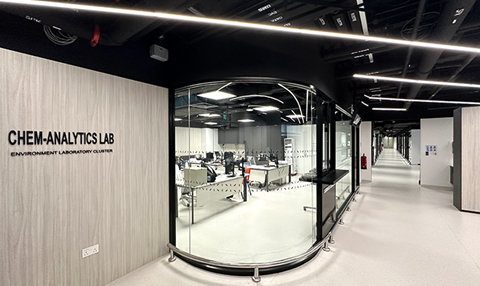
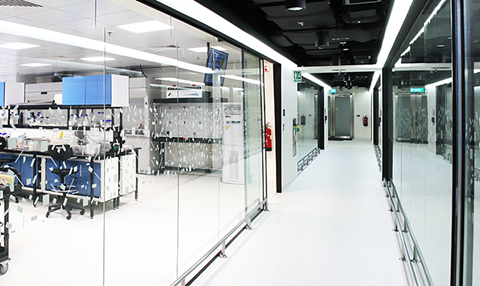
Chem-Analytics Laboratory (CAL)
Equipped with modern lab infrastructure facilities, Chem-Analytics Laboratory (CAL) primarily supports researchers and Final Year Project students.

It houses specialised instruments and tools that play a crucial role for Researchers and Final Year Project students to conduct experiments, investigations, and studies. The laboratory is divided into various areas.
M-Lab

A space for researchers to conduct systematic investigations or experiments to advance their field of study, the M-Lab has specialised infrastructure designed to meet specific environmental and technical requirements, tailored to various needs and specifications of research projects.
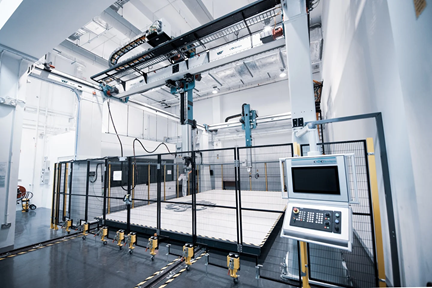
The Singapore Centre for 3D Printing (SC3DP)
The Singapore Centre for 3D Printing (SC3DP) offers a comprehensive suite of advanced technologies spanning various printing methods such as material extrusion, material jetting, and powder bed fusion. These capabilities enable the printing of diverse materials including polymers, ceramics, metals, glass, composites and biological substances.SC3DP serves as a hub for groundbreaking research across multiple sectors. In aerospace additive manufacturing technologies and defence, we focus on lightweight parts fabrication. In construction, the centre is dedicated to sustainable building solutions. SC3DP also explores applications in marine, healthcare and offshore industries, particularly in metal printing and part redesign for enhanced efficiency.
Furthermore, it pioneers materials and techniques in electronics for manufacturing efficiency and sustainability. In biomanufacturing, SC3DP integrates 3D printing with biocompatible materials for tissue engineering and food bioprinting, driving advancements in medical device fabrication and food production. The Centre's facilities include cutting-edge technologies like Direct Energy Deposition hybrid and Portable Laser Deposition System, Projection Micro Stereolithography, Direct Glass Laser Deposition and Volumetric 3D printing enabling precise prototyping capabilities.
Xperience@EEE
.jpg?sfvrsn=730527a8_1)
The first technology-enabled escape room in the world that was built by undergraduate students in a university. Players need to collaboratively work together to escape the room and complete the mission.