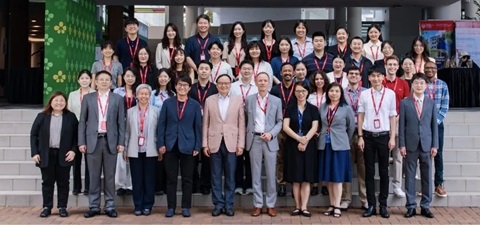
TCTF-NCPA Visiting Professor Lecture on Modernisation to Globalisation in Governance
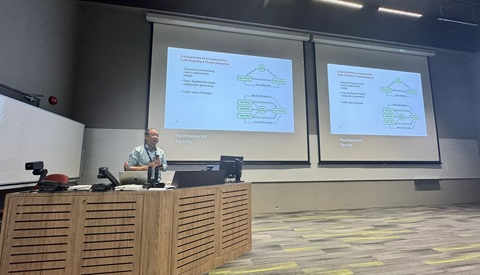
On 19 August 2025, the Nanyang Centre for Public Administration (NCPA) at Nanyang Technological University, Singapore (NTU Singapore), hosted Professor Yan Jirong, Dean of the School of Government, Peking University and Tan Chin Tuan Foundation (TCTF)-NCPA Visiting Professor, for a public lecture on “Modernisation to Globalisation: A Political Analysis on Transformation”.

Moderated by Professor Liu Hong, Associate Vice President and NCPA’s Director (Research & Executive Education), the lecture drew an audience of more than 150 including faculty, graduate students, and NCPA executive training programme participants. Among the attendees were senior university leaders and department heads from a few dozen universities of Jilin and Gansu Provinces in China, reflecting the wide-ranging interest in the speaker’s insights and analysis, tracing the evolution of modernisation across human history and linking each phase to new forms of governance.
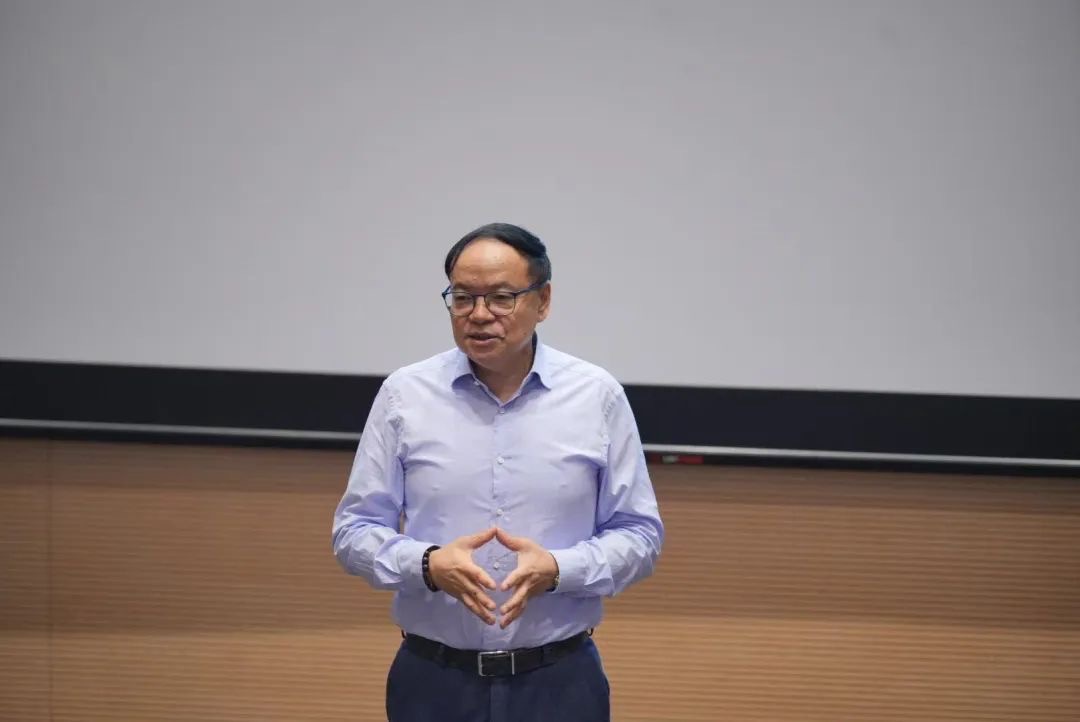
In his opening address, Professor Liu shared about the background of Visiting Professorship Programme, which was initiated by NTU President Ho Teck Hua and launched in 2024, with generous sponsorship from the TCTF. The initiative brings leading scholars from top five universities in China: Peking University, Tsinghua University, Shanghai Jiao Tong University, Fudan University, and Zhejiang University, for short-term exchanges. Since its inception, the TCTF-NCPA Visiting Professors Programme has welcomed five eminent professors, with more to come in the months ahead, deepening NTU’s partnerships and fostering cross-border academic dialogue.
The lecture outlined the importance of building a forward-looking global governance framework in the age of digitisation and evolving technologies, where innovation and disruption are reshaping societies at an unprecedented speed.
Discussing China’s stance on modernisation and globalisation, Professor Yan Jirong noted that China’s development serves as a textbook example of actively embracing and benefiting from globalisation. The steady progress of reform and opening up has generated tremendous momentum for growth, while the 2013 proposal of ‘modernisation of national governance’ marked the beginning of China’s efforts to pursue deeper political modernisation in line with its expanding economic strength.

He highlighted the three major “dividends” driving China’s ongoing progress, explaining them in a way that shows how reform and openness can fuel growth and success. The reform dividend, he noted, comes from breakthroughs in renewable energy such as solar, wind, and hydrogen-new industries that are opening doors to sustainable growth. The innovation dividend is seen in the rise of China’s digital economy, where home grown platforms and enterprises are becoming globally competitive.
Lastly, the opening dividend underscores China’s commitment to pursue high-level openness and deeper integration into global systems, ensuring sustained momentum in an interconnected world by staying open to the world and strengthening its ties with global systems. On the cultural front, Professor Yan emphasised that societies should embrace globalisation with confidence: leveraging modern values to enrich and elevate their traditional culture, ensuring it evolves alongside global progress.
He suggested that embracing reform is the true catalyst for progress, it allows China to unlock its full potential and achieve remarkable benefits to help China adapt, modernise, and seize new opportunities, ensuring that change becomes a powerful driver of national development and global contribution.
The lecture concluded with a lively Q&A session, on topics ranging from university governance and social trust to the development of western regions in China. Professor Yan’s clear and rigorous responses enriched the discussion, providing deeper insights into both national and global governance challenges.
The event concluded with an enthusiastic response from the audience, as many praised Professor Yan’s broad vision, rigorous research insights, and forward-thinking perspective, which provided a clear framework for analysing the connections between modernisation, globalisation, and governance.