Rethinking Asian Growth Models: A Comparative Workshop on Growth Trajectories in Asia
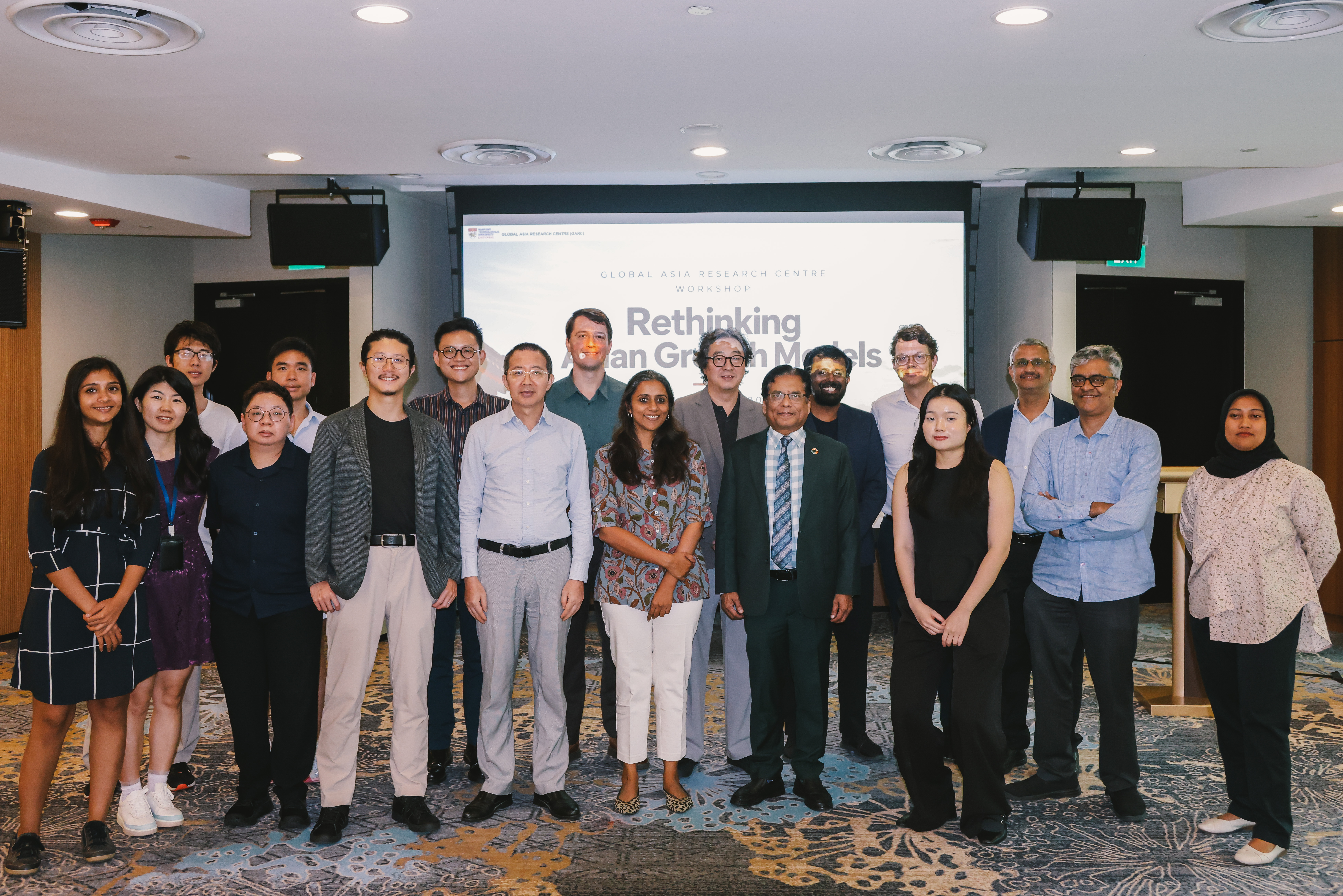
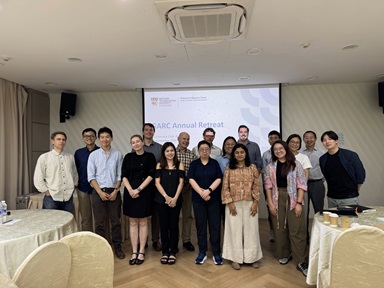
The NTU Global Asia Research Centre (GARC), in collaboration with the New Diplomatic Histories Network and the Asian Association of World Historians, convened a one-day workshop titled Rethinking Asian Growth Models on 12 November 2026 at the Nanyang Executive Centre, Nanyang Technological University (NTU), Singapore.
Convened by Jon Wilson, Tan Kah Kee Professor of History and Dean of NTU's College of Humanities, Arts, and Social Sciences, and Vignesh Rajahmani, Visting Fellow, GARC, the workshop brought together scholars and researchers from across Asia and beyond to examine the diverse growth trajectories of India, South Korea, China's industrialised regions, Indonesia and Bangladesh.
Through comparative discussions, participants explored the factors underpinning sustained economic growth, the conditions that enabled successful development, and the extent to which policy lessons from one context could be adapted to another.
Examining the Foundations of Asian Growth
While Asia has experienced some of the world's fastest sustained growth episodes over the past half-century, the policy lessons drawn from these experiences are not always easily transferable. Some approaches are too broad to offer practical guidance, while others are closely tied to the political, economic and institutional circumstances of individual countries.Against this backdrop, the workshop focused on the mechanisms and institutional arrangements that have shaped economic development across the region. Discussions centered on several key questions: How have governments coordinated with businesses? How have countries built industrial capabilities? What political conditions have enabled economic reforms to take root? And, importantly, what lessons can policymakers elsewhere realistically draw from these experiences?
The selection of cases offered an opportunity to examine different stages of industrialisation, political systems, fiscal capacities and resource endowments. From South Korea's transition into a mature high-income economy to the evolving manufacturing sectors of India and Bangladesh, the workshop sought to understand both the similarities and differences across these development experiences.
Three Thematic Panels
The workshop featured three thematic panels, each bringing together multiple country perspectives to facilitate comparative discussions.The first panel, Labour, Land, and the Social Foundations of Growth, examined the relationship between labour markets, rural industrialisation and economic transformation in India, South Korea and China. Contributions were made by Rosa Abraham (Azim Premji University), Dae-Oup Chang (Sogang University) and Shaohua Zhan (NTU).
The second panel, Still a Ladder? Manufacturing at the Frontier, explored the role of manufacturing in driving economic development, with a focus on India, Indonesia and Vietnam. The discussion featured Suresh Babu (Madras Institute of Development Studies), Vignesh Rajahmani (Visting Fellow, GARC) and Srinivasan Ramani (The Hindu). Vignesh Rajahmani also served as one of the workshop's convenors.
The third panel, Steering Growth: State, Capital, and Trajectory, turned to the interplay between state institutions, capital and structural transformation in Indonesia, China and Bangladesh. Panellists included Nur Komaria (Institute for Development of Economics and Finance), Ziang Liu (King's College London) and Mustafizur Rahman (Centre for Policy Dialogue).
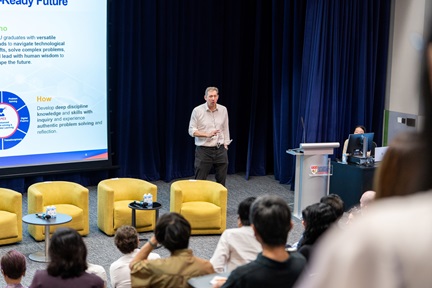
The workshop concluded with a summary session led by both convenors, Jon Wilson and Vignesh Rajahmani, bringing together the discussions and comparative perspectives explored throughout the day.
Towards a More Comparative Understanding of Economic Development
By bringing different country experiences into a shared discussion, Rethinking Asian Growth Models sought to move beyond conventional, country-specific explanations of economic growth. Its comparative approach highlighted the importance of understanding not only the policies associated with successful development, but also the institutional, political and social conditions that shape their implementation.The workshop forms part of a broader effort to identify practical and transferable lessons from Asia's varied development experiences. Its intended outputs include an edited volume bringing together insights from the panels, alongside a concluding synthesis note identifying priority questions for future research.
Through the efforts of its convenors, Jon Wilson and Vignesh Rajahmani, and the contributions of participating scholars, the workshop provided a platform for interdisciplinary exchange and comparative scholarship, fostering deeper conversations on Asia's evolving political, economic and social landscapes.