From lab to grid: Keeping Singapore's power supply reliable
As Singapore's grid grows more complex and its infrastructure ages, a new generation of NTU researchers is developing the tools to keep the lights on, and building careers in the process.
Singapore's electricity network is among the most reliable in the world, but sustaining that performance is becoming more demanding as the energy system evolves. The SP Group Presidential Postdoctoral Fellowship at NTU was established in 2020 to develop the expertise needed to meet these challenges.
A platform built for impact
Established as part of SP Group's research and education partnership with NTU, the fellowship gives early-career researchers the independence and resources to pursue high-impact work in energy and power systems.
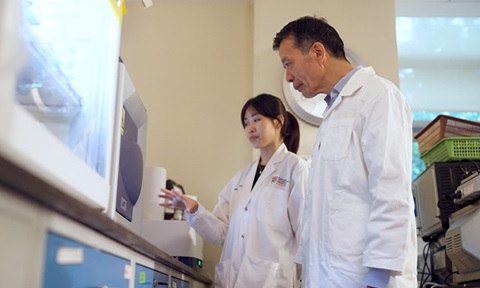
A key initiative under the partnership was the SP Group–NTU Joint Laboratory, which brings together researchers and industry practitioners to address real-world challenges facing the energy sector. Through close collaboration, fellows can develop research that is both academically rigorous and relevant to industry needs.
Among the research initiatives undertaken was the development of condition monitoring technologies for electricity network assets. By combining sensors with advanced analytics, the research explored ways to identify early signs of equipment deterioration, helping asset owners take preventive action before faults occur.
Smarter ways to maintain the grid
For Dr Yan Ziming who held the fellowship from AY2023 to 2024, opportunities to engage with industry practitioners and real-world operational challenges helped shape the practical focus of his research.
His work centred on developing a framework for assessing the health, remaining lifespan, and risk profiles of ageing grid equipment. By combining statistical models of how components wear and fail over time with AI techniques that detect early warning signs of trouble, the framework helps operators identify which parts of the grid need urgent attention. This allows maintenance to be done more efficiently instead of following fixed schedules.
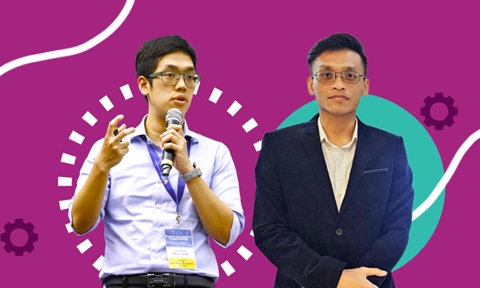
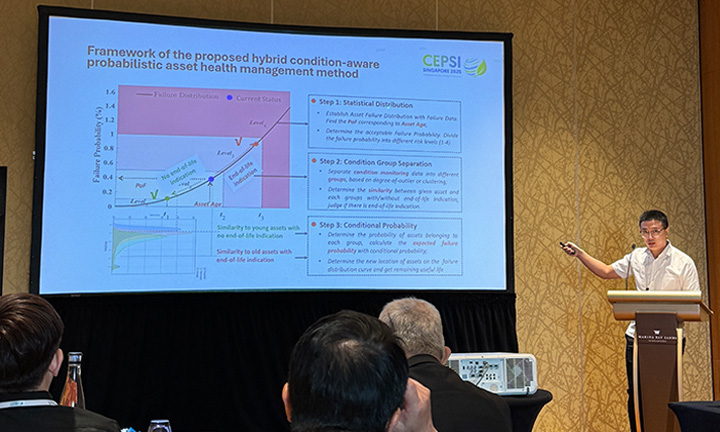 Dr Yan Ziming presenting his research on improving the reliability of ageing power grid equipment at the Conference of Electric Power Supply Industry 2025.
Beyond his research, Dr Yan also taught and supervised NTU students, bringing industry problems into the classroom. "The fellowship has established a strong foundation for my future research and significantly strengthened both my academic and applied research capabilities," he says. His experience in the fellowship later helped him secure a faculty position at Dalian University of Technology, China.
A broader view of resilience
Current fellow Dr Xie Dunjian is studying how problems in one part of the grid can affect the wider power system.
The health of individual pieces of equipment and the behaviour of the wider grid are typically studied in isolation. By combining equipment health data with simulations of grid behaviour, his research helps predict how small faults could lead to larger outages. Recent blackouts in countries such as Cuba, Chile and Spain show how quickly local disruptions can spread.
"A single faulty asset, once it interacts with other stresses on the system, can cascade into outages on a scale that is hard to predict in advance," Dr Xie explains.
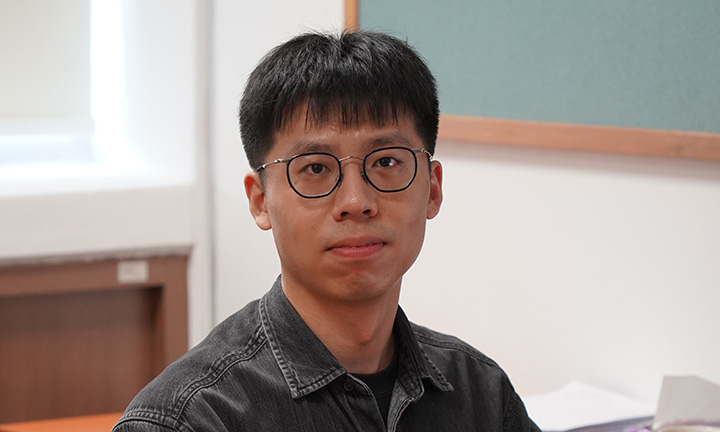 For Dr Xie Dunjian, the SP Group Presidential Postdoctoral Fellowship is "essentially structured training" for becoming a principal investigator.
His research framework is designed to support decisions across different time horizons – from deciding which equipment needs immediate attention, to preparing for extreme weather, and restoring power quickly after a fault. Singapore's tightly integrated grid and clear energy transition goals make it a strong context for this work, allowing research to be tested against real operational requirements.
Part of what enables this kind of longer-horizon thinking, Dr Xie says, is the fellowship's structure. "In a typical postdoctoral role, you contribute to someone else's project. Here, you define your own research direction, build your own industry collaborations, teach, and supervise students. It is essentially structured training for becoming a principal investigator."
The interdisciplinary environment is equally valuable, he says. Fellows work alongside researchers from engineering, urban planning, climate science and the social sciences. "That mix of academic depth and real-world context is exactly what complex problems like urban resilience require."
Building talent for the future
According to Associate Professor Xu Yan, one of the lead collaborators with SP Group, the key value of the programme lies in turning research into practical outcomes. "By embedding intelligence into infrastructure, we are enabling a grid that can anticipate risks rather than react to failures," he says. For the public, this translates into fewer power disruptions and faster recovery when issues occur.
The fellowship has also positioned the lab to attract researchers who are keen to work on problems of real national consequence early in their careers. "We attract those who want to develop deployable AI solutions for critical infrastructure, not just publish academic work," Dr Xu explains.
As Singapore's energy system continues to evolve, maintaining high levels of reliability will depend not only on infrastructure, but also on data, innovation, and people. The SP Group Presidential Postdoctoral Fellowship is helping to build all three – strengthening the grid today while preparing the expertise needed for tomorrow.