Professor Louis Phee’s Unicorn Blueprint
Vice President of Innovation & Entrepreneurship, Prof Louis Phee, discusses NTU’s entrepreneurial support and why engineers are especially primed for successful startups at the 2025 Tan Chin Tuan Centennial Professorship Lecture.
Nanyang Technological University (NTU) is rising fast among the world’s tech innovation hubs.
The university generates around S$800M in research income a year, with 80 spin-offs collectively valued at S$1.3B. And if current Vice President of Innovation & Entrepreneurship and former College of Engineering Dean, Prof Louis Phee, gets his way, a steady pipeline of future high-impact startups is on the way.
At the annual Tan Chin Tuan Centennial Professorship Lecture on October 9, 2025, Phee outlined this vision of transforming NTU into a deep-tech innovation hub. The College of Engineering later sat down with him to learn more about NTU’s entrepreneurial support and why engineers are especially primed for successful startups.
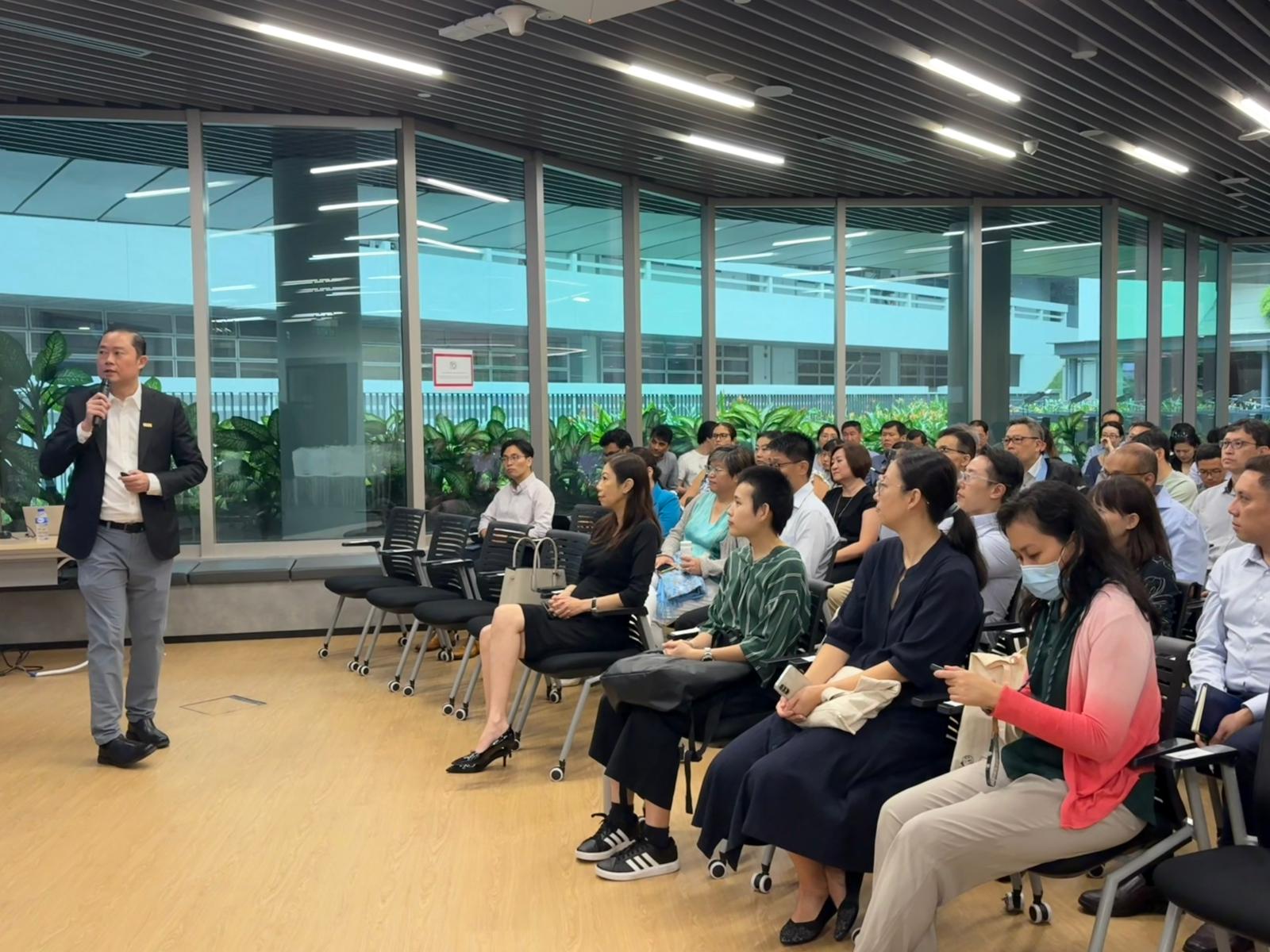 Prof Phee at the
2025 Tan Chin Tuan Centennial Professorship Lecture
Prof Phee at the
2025 Tan Chin Tuan Centennial Professorship Lecture
“NTU is doing well, especially for such a young university. It’s punching above its weight in rankings, which means it has great research output. Faculty is top-notch and happy,” explained Phee. “My job is to push it to the next step toward translation and business entities.”
In 1999, Dr Shi Xu from the School of Electrical and Electronic Engineering spun off the university’s first unicorn, Nanofilm Technologies International (NTI). The company developed ultra-thin protective coatings, used in consumer electronics, optical devices, automotive parts, and more. It went public in 2020 with a valuation at around $1.9 billion.
While Nanofilm’s success is yet to be replicated, many other spin-offs, like ST SATSYS, Kuprion and Shanghai Xinlun, have achieved major milestones such as mergers, acquisitions, and IPOs.
The professor jokingly refers to these spin-offs, not as unicorns, but “soon-corns.”
“Success to me would be having one of these types of events happen every year,” commented Phee. “It would reflect on how much the companies that are coming up from NTU are valued.”
Phee admitted that much of this success depends on serendipity, and that innovation as a process can be chaotic. Still, the university has put in place support structures. There are dedicated mentorship programmes, venture-building initiatives, and even leave-of-absence options for faculty entrepreneurs.
The university also engages in partnerships with local and international institutions to connect researchers with diverse ideas and skills.
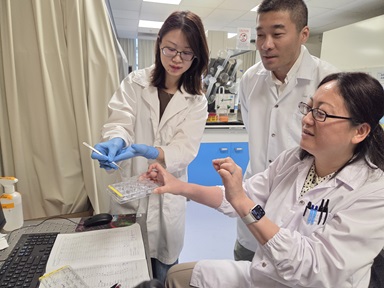
-teams-turn-scientific-research-into-market-ready-solutions.jpg?sfvrsn=fb8f9d12_1) Guided by industry mentors, National Graduate Research Innovation Programme (GRIP) teams turn research into market-ready solutions.
Guided by industry mentors, National Graduate Research Innovation Programme (GRIP) teams turn research into market-ready solutions.
“Singapore is small, but that forces us to be global from day one,” stated Phee. He added that part of NTU’s entrepreneurial superpower lies in its ability to work cross-culturally, bridging Asian and Western research and markets.
And funding? “The risk capital is there if the ideas are correct,” he asserted without hesitation.
According to Phee, today’s support network marks a major improvement from his own days as a startup entrepreneur. The mechanical engineer has founded two medical device–oriented companies, including one that commercialised a surgical robot in 2011.
He credits cultural changes that encourage collaboration and risk-taking at the university level.
“Once upon a time, well before my days, these activities would’ve been actively discouraged and seen as taking away from teaching, but now they are supported and celebrated at every level,” he conceded.
That change in attitude is visible among students and faculty alike. Where past generations sought stability and status, today’s graduates want purpose, creativity, and impact.
“We’ve set up the machinery and everything is in place,” said the professor. “We just need people to take the leap of faith.”
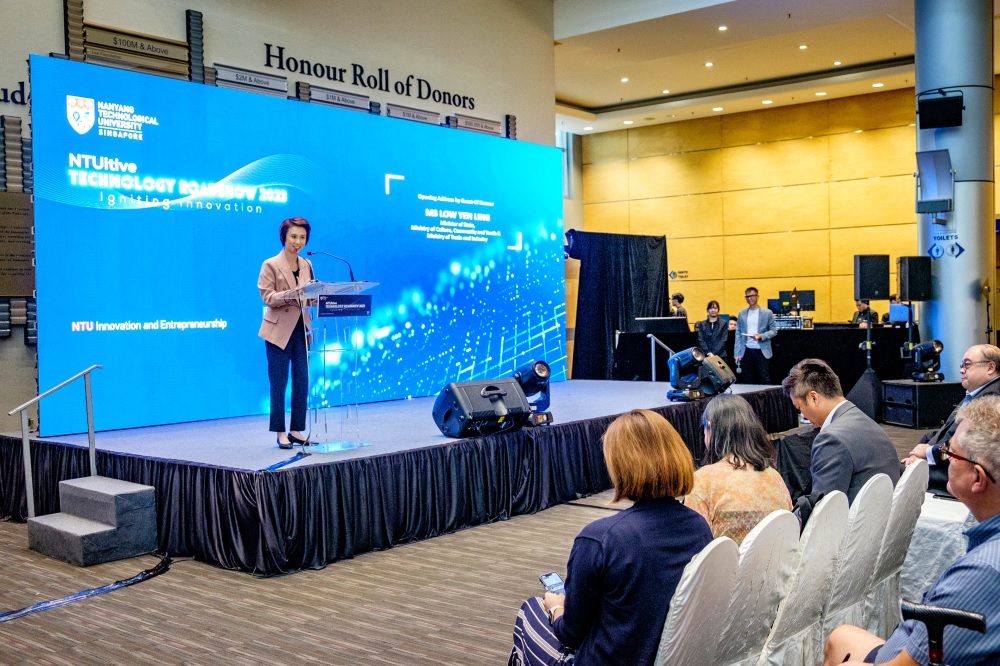 NTU hosts tech roadshows to nurture innovation and accelerate research commercialisation
He believes many of the best candidates for success come from the College of Engineering.
“Engineers are trained to be analytical and solve problem, which are the main ingredients for entrepreneurship,” he added. “Eventually you’ll hit a wall, but if you are a problem solver, you’ll have the skillset to overcome any issue - technical, financial, or other. That’s what gives engineers a heightened chance of success.”
Story by Laura Dobberstein, NTU College of Engineering