Assoc Prof Xiong Jie Wins 2025 SIGMOBILE Rockstar Award, Marking a Standout Moment for Wireless Innovation
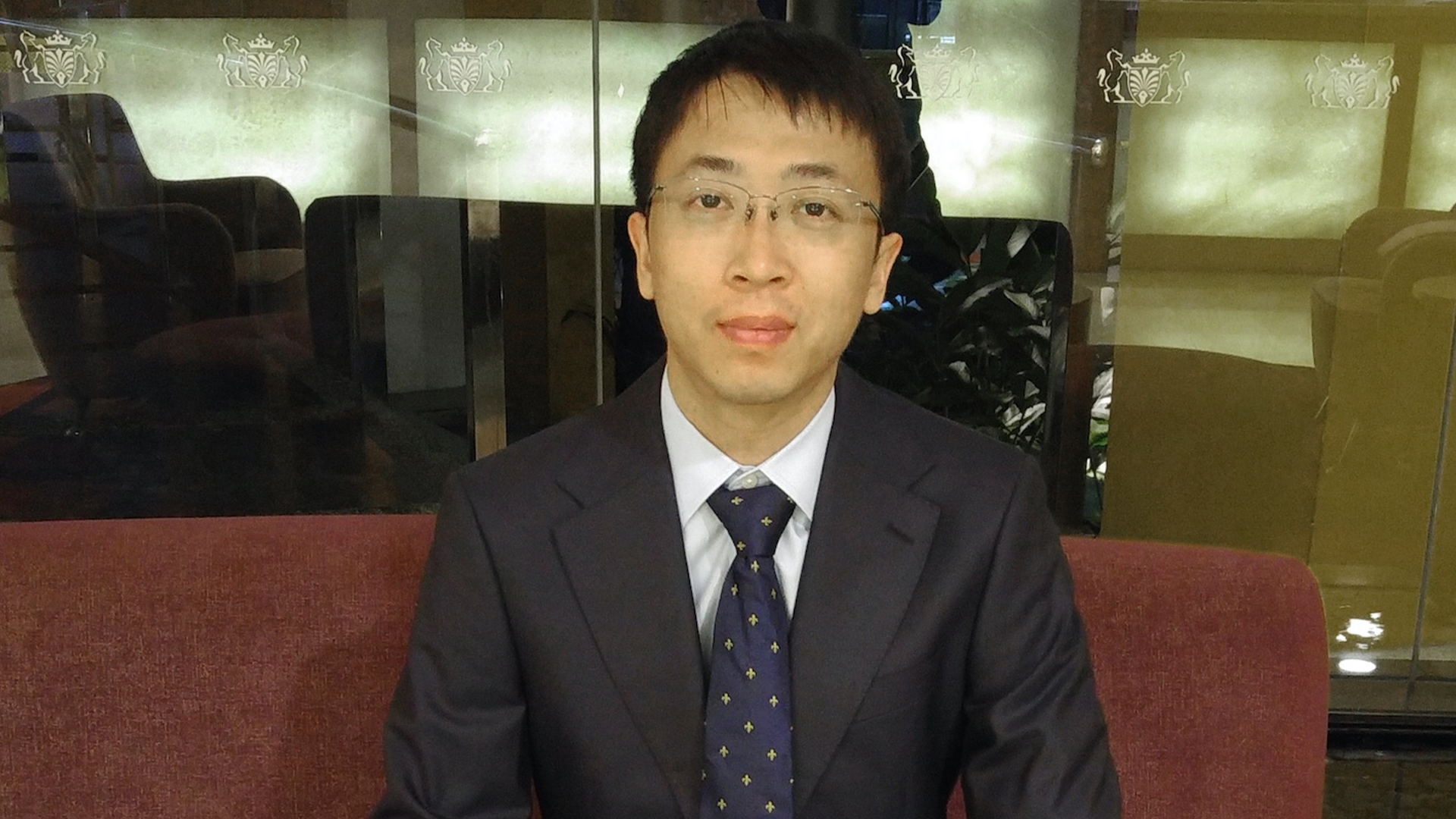
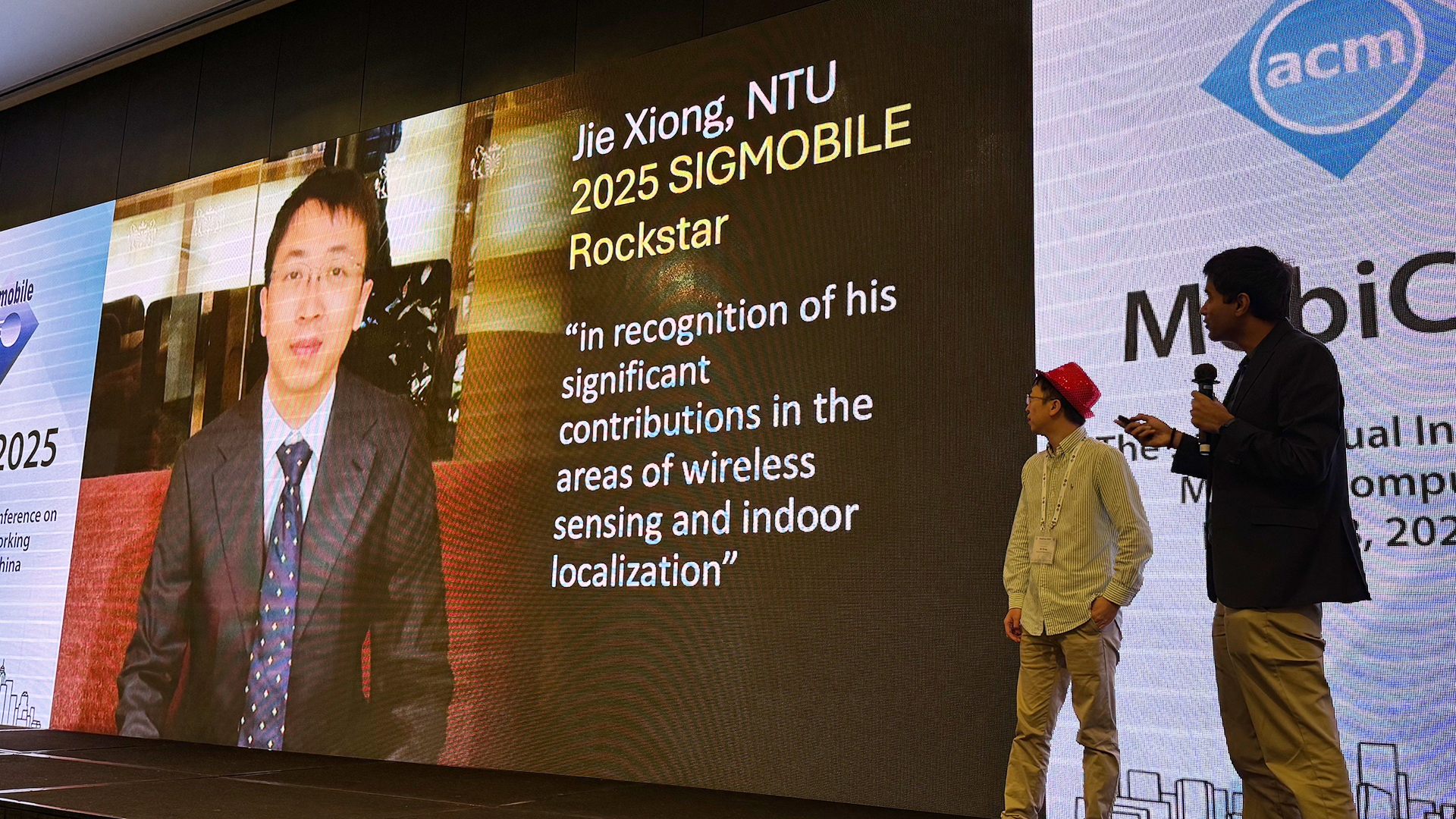
CCDS has a new rockstar. Associate Professor Xiong Jie has clinched the 2025 ACM SIGMOBILE Rockstar Award, a global honour given each year to one early-career researcher whose work is reshaping mobile and wireless computing.
The award is presented by ACM SIGMOBILE, the international community for mobile computing and wireless systems. Their Rockstar Award celebrates early-career researchers whose recent contributions have had significant impact on mobile systems, users, data or computing.
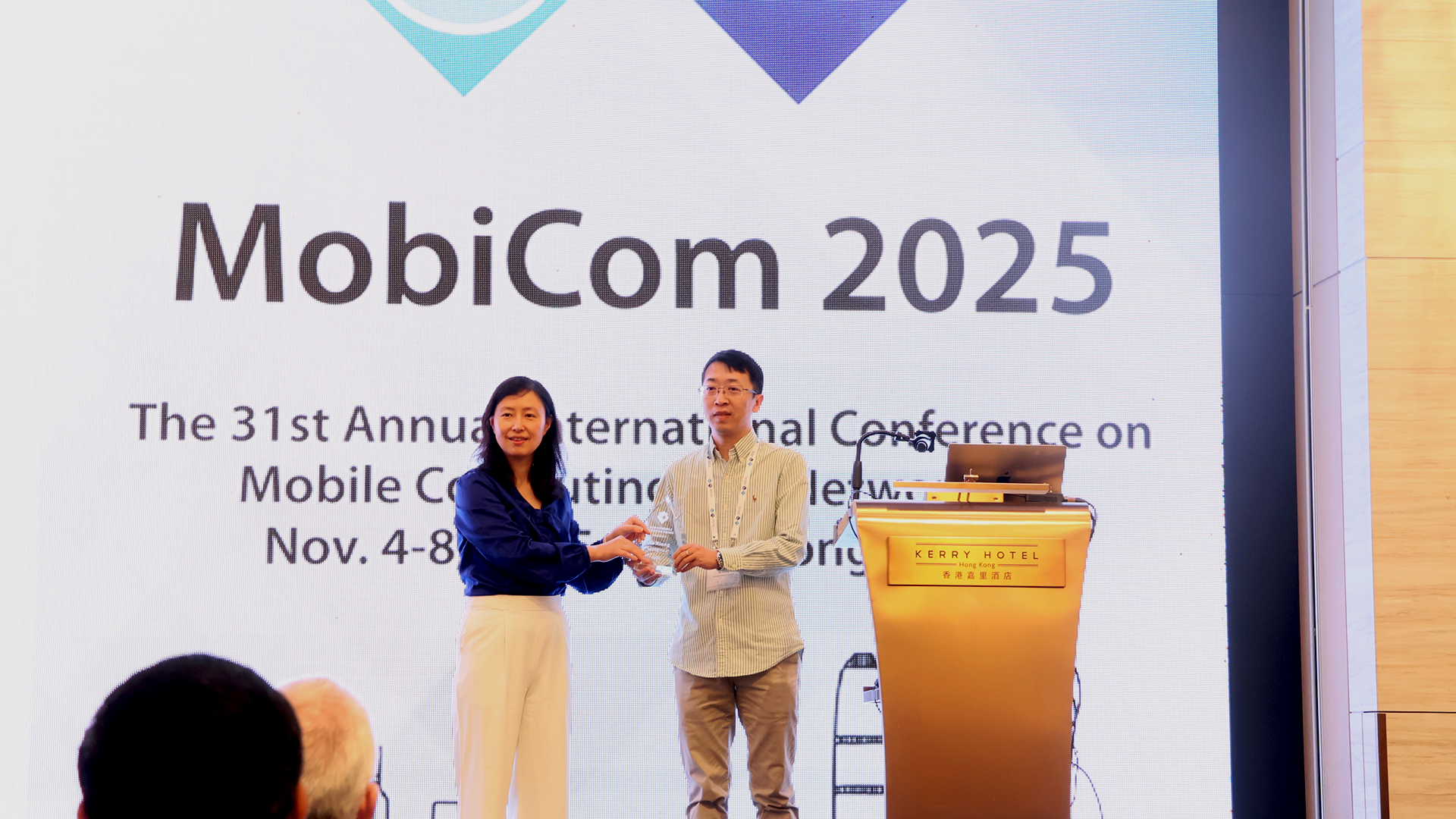
Assoc Prof Xiong Jie’s research stands out for breaking new ground and advancing both theory and deployment. He introduced new research areas such as quantum wireless sensing and developed theoretical models that explain how wireless sensing works and what affects its performance. He also helped move sensing technology from the lab into the real world. His collaborative indoor localisation work with Tencent has been integrated into their platform, which is deployed in hundreds of shopping malls.
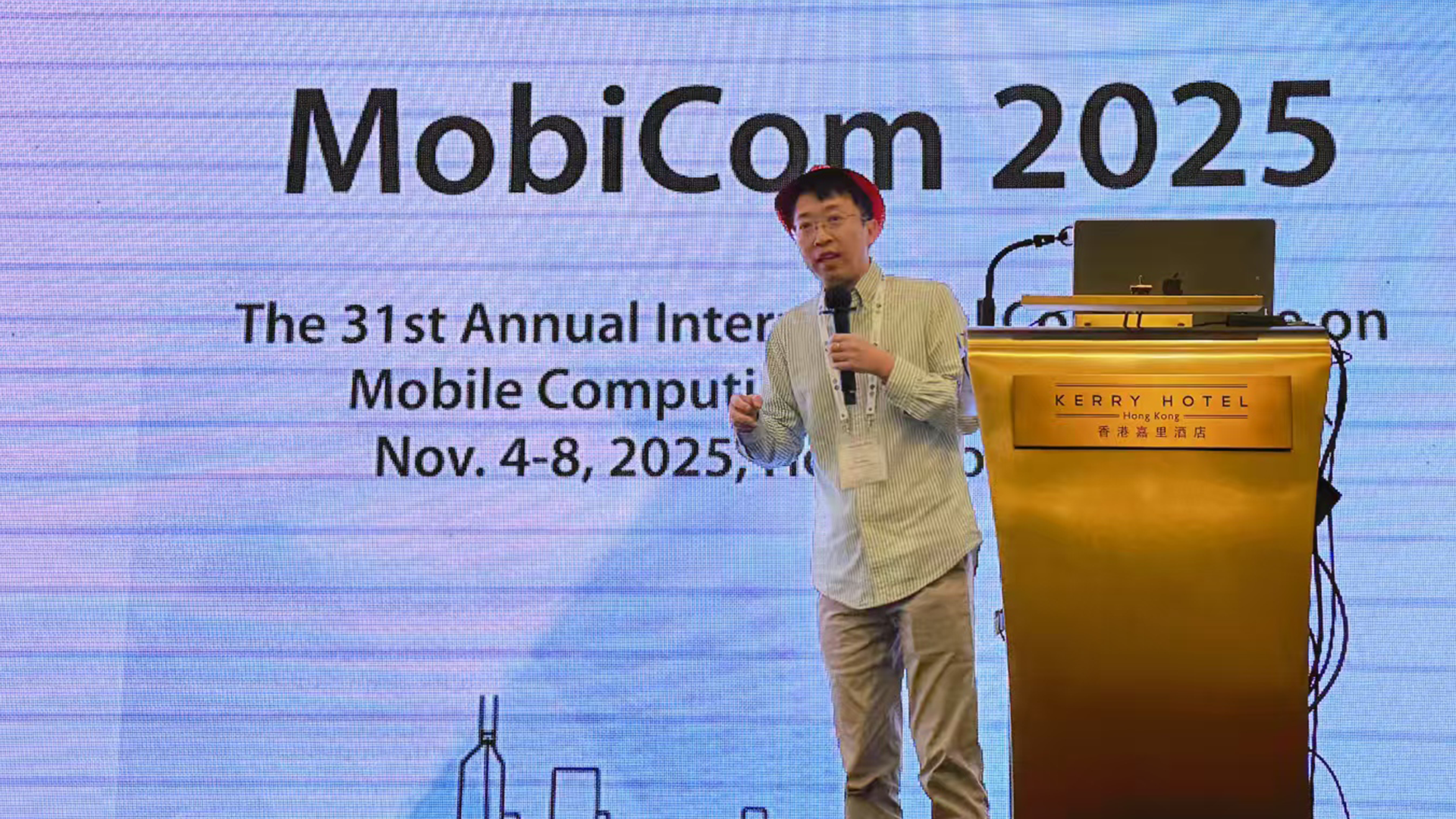
When describing his field, Assoc Prof Xiong Jie keeps it accessible. Wireless sensing uses everyday Wi-Fi signals to understand what is happening in an environment, such as respiration patterns, object characteristics or humidity. Indoor localisation focuses on determining where people or objects are within buildings, since GPS performs poorly indoors. Together, these technologies support smarter homes, contactless health monitoring and more efficient warehouses and retail spaces.
For Assoc Prof Xiong Jie, the award is not only personal.
“This award recognises the collective efforts of my students and collaborators. It will continue to inspire me to explore the frontiers of wireless sensing, to do good research and to do research for good.”
Although he officially joined CCDS only in January 2025, he highlights the strong support he has already received and sees it as important for his continued growth.
Looking ahead, he notes that wireless sensing still needs a single compelling “killer application” to convince major industry players, such as chipset companies, to integrate sensing capabilities directly into their hardware. He also sees promising opportunities in combining wireless sensing with communication systems and AI.
For students and young researchers hoping to follow in his path, his advice is clear and bold.
“Innovation often comes from daring to ask what if we went a different way.”
Assoc Prof Xiong Jie’s Rockstar Award reflects the spirit of CCDS, a place where ambitious ideas take shape, where research connects to real-world impact and where the next generation is encouraged to explore beyond the obvious.