
Evolutionary Intelligence Series

Join us for a full-day deep dive into the latest frontiers of evolutionary computation, featuring three internationally recognised researchers.
Speakers
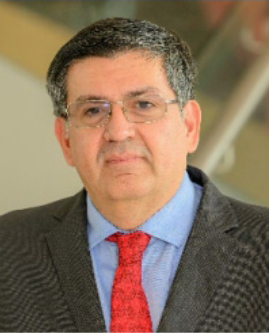
Prof. Carlos Artemio Coello Coello ( Professor with distinction (Investigador Cinvestav 3F) at the Computer Science Department of CINVESTAV-IPN in Mexico City, Mexico.)
Prof. Anna V. Kononova (Assistant Professor at the Leiden Institute of Advanced Computer Science at Leiden University (The Netherlands) )
Dr. Abhishek Gupta (Faculty Fellow at the Indian Institute of Technology (IIT) Goa, India.)
Programme Schedule
| 10:30 am | Some Current and Future Challenges in Evolutionary Multi-Objective Optimisation by Prof. Carlos Artemio Coello Coello |
| 11:30 am | LUNCH |
| 1:30 pm | Efficient Sampling of High-Dimensional Search Spaces for Heuristic Optimisation under Budget Constraints by Prof. Anna V. Kononova |
| 2:30 pm | BREAK |
| 2:50 pm | Generalizing Optimization through Multi-Task Objective and Parametric Spaces by Dr. Abhishek Gupta |
Each speaker will deliver a deep technical session on emerging challenges, methodologies, and breakthroughs shaping the next era of evolutionary computation.
Abstract
The first multi-objective evolutionary algorithm was proposed in 1985 by David Schaffer (in the USA). Since then, this research area has become increasingly popular and has generated an important number of publications and PhD theses.
In this talk, I will provide a quick overview of the development of this field. This aims to motivate the main focus of this talk: some of the current and future challenges in this area.
He currently has more than 600 publications, including more than 200 journal papers and 50 book chapters. His publications currently report over 79,780 citations in Google Scholar (his h-index is 107). He has received several awards, including the National Research Award (in 2007) from the Mexican Academy of Science (in the area of exact sciences), the 2009 Medal to the Scientific Merit from Mexico City's congress and the 2012 National Medal of Science in Physics, Mathematics and Natural Sciences from Mexico's presidency (this is the most important award that a scientist can receive in Mexico).
Additionally, he is the recipient of the 2013 IEEE Kiyo Tomiyasu Award, "for pioneering contributions to single- and multi-objective optimisation techniques using bioinspired metaheuristics", of the 2016 The World Academy of Sciences (TWAS) Award in “Engineering Sciences”, and of the 2021 IEEE Computational Intelligence Society Evolutionary Computation Pioneer Award.

Abstract
Real-world optimisation problems are increasingly formulated in high-dimensional search spaces, yet practical evaluation budgets often range from hundreds to hundreds of thousands of fitness evaluations. Substantial exploration of such spaces is impossible within these limits. No optimiser can achieve true optimality in this setting, but many methods can still deliver high-quality solutions. Researchers often favour particular families of optimisers such as SGD, Adam, L-BFGS, SMAC, CMA-ES variants, EDAs or Bayesian optimisation. All of these methods rely on initial points that are either already of good quality or at least located in promising parts of the domain, so their performance depends strongly on the choice of initial sampling.
Although domain experts can propose candidate starting points based on smaller or simplified variants of the problem, these points rarely transfer well. The topology of the objective landscape can change substantially when additional variables are introduced, and human intuition becomes unreliable in high dimensions. Expert-informed initialisation therefore can guide the search into unproductive regions from the start. A more dependable strategy is to incorporate structural properties of the problem into the design of the initial sampling. There is no universal recipe and effective solutions require careful and creative design. In this talk I will discuss four approaches informed by real-world problems: 1. representation-agnostic sampling with distance-informed perturbations, 2. sampling via domain-specific distance definition for broader, more global exploration, 3. allocation of samples to attraction basins for multimodal problems, 4. hierarchical sampling that partitions the search space using high-level descriptors. These approaches demonstrate how well-designed initial sampling can significantly improve heuristic optimisation when evaluation budgets are tight.
Biography
Anna V. Kononova is an Assistant Professor at the Leiden Institute of Advanced Computer Science at Leiden University (The Netherlands). Since December 2019 she has been Head of the Efficient Heuristic Optimisation (EcHO) group within the Natural Computing cluster, where she also serves on the cluster management team. Her research focuses on achieving order-of-magnitude improvements in the efficiency of solving heuristic optimisation problems, often through the integration of machine learning methods.
She received her MSc in Applied Mathematics from Yaroslavl State University (Russia) in 2004 and her PhD in Computer Science from the University of Leeds (UK) in 2010. Following five years of postdoctoral research at Eindhoven University of Technology (The Netherlands) and Heriot-Watt University (Edinburgh, UK), she spent a further five years in industry working as an engineer and mathematician before returning to academia in 2019.
Dr Kononova has authored more than ninety peer-reviewed publications and contributes actively to the organisation of leading conferences such as PPSN, EMO, FOGA and GECCO.

Abstract
Multitask optimization algorithms typically achieve inter-task information transfer through models defined in a common solution space. This talk explores a different perspective — using alternate spaces as conduits for transfer. In particular, we show how the unification provided by a common objective space in multi-objective optimization can enable transfer between tasks with distinct solution features. Moreover, by leveraging the continuous space of task parameterizations, it becomes possible to generalize multitask optimization from a finite set of tasks to an infinite continuum of tasks. Proof-of-concept demonstrations will be presented in process and design optimization.
Biography
Abhishek Gupta holds a PhD in Engineering Science from the University of Auckland. He is a recipient of the ANRF Ramanujan Fellowship and is currently a Faculty Fellow at the Indian Institute of Technology (IIT) Goa, India. Prior to his current appointment, Abhishek was a Scientist at the Agency for Science, Technology and Research (A*STAR), Singapore, and held a joint appointment at the Nanyang Technological University. His research interests span diverse topics in computational intelligence, including multitask and transfer optimization, surrogate modelling, and scientific machine learning. He is an IEEE Senior Member, an Associate Editor of the IEEE Transactions on Evolutionary Computation, and serves on the editorial boards of other notable journals and book series. He has received two IEEE Transactions Outstanding Paper Awards (2019, 2023) and is included in the Stanford/Elsevier list of the World’s Top 2% Scientists (2023–2025).