
Building on the growth and international engagement of previous editions, this year’s conference continues in a full conference format with a Call for Papers (CFP) to attract high-quality research contributions. NBC’26 reflects our commitment to advancing the field by providing a structured platform for academic and industry dialogue, rigorous peer-reviewed research, and technically focused presentations. The conference focuses on technical innovations in the blockchain ecosystem and brings together researchers and practitioners working in this space. The conference brings together researchers and practitioners working across blockchain protocols, cryptography, distributed systems, secure computing, cryptoeconomics, and related AI-enabled technologies. We aim to foster collaboration among these diverse communities to accelerate innovation and deepen the scientific foundations of next-generation decentralized systems.
Past Highlights
Details
Organizer: NTU Centre in Computational Technologies for Finance (NTU-CCTF)
Period: Aug 21-22, 2026
Venue: Pioneer Port Event Space, The Arc-Learning Hub North (LHN), Level B1, LHN-B1-01A, 63 Nanyang Drive, Singapore 636922 [MAP]
Attendance: In-person
| Day 1, Friday, 21 Aug 2026 | |
|---|---|
| 0830-0900 | Registration |
| 0900-0910 | Welcome remarks: Prof. Phee Soo Jay, Louis (Nanyang Technological University, Singapore) |
| 0910-1010 | Keynote Lecture: Prof. Muriel Medard (Optimum, USA) Creating and Monetizing Speed in Blockchain |
| 1010-1015 | Trophy Presentation (keynote) |
| 1015-1045 | Tea Break (30mins) |
| Session 1 (Invited Talk): Security and Trusted Systems (Chair: Prof. Dusit Niyato, Nanyang Technological University) | |
| 1045-1115 | Prof. Wenjing Lou (Virginia Tech, USA) From Verifiable Credentials to Pseudonym Self-Provisioning in Vehicular PKI |
| 1115-1145 | Assoc. Prof. Min Suk Kang (KAIST, South Korea) Emerging Ways to Front-Run and Launder Cryptocurrency Transactions |
| 1145-1150 | Trophy Presentation (speaker) |
| 1150-1300 | Lunch (70 mins) |
| Session 2: Cryptography and Security (Chair: Asst. Prof. Wei Dong, Nanyang Technological University) | |
| 1300-1315 | Ester Gracia (GaneshaIT), Andersen (GaneshaIT), Alika Cynthia Clarissa (GaneshaIT), John (Jong) Choi (MarkAny) Deploying a Municipal Trust Anchor: Dual-Blockchain Architecture for Decentralized Identity in Semarang (#10) |
| 1315-1330 | Xiuling Zhang (ChangChun Finance College) Lattice-Based Data Integrity Auditing with Blockchain for Edge Computing (#11) |
| 1330-1345 | Adeline Wen (University of Washington), Chunyang Li (University of Washington), Shutong Qu (University of Washington), Leon Leng (University of Washington), Wei Cai (University of Washington) HasciDB: A Database for Identifying Crypto Sybil Airdrop Hunters (#38) |
| 1345-1400 | Haoyong Lu (National University of Singapore), Longqin Zhang (National University of Singapore), Ryan Zhao (National University of Singapore), Mac Ren (Agnos Labs), Hanzhang Qin (National University of Singapore) Delphi: Iterative Discovery and Exploit Synthesis for Smart Contract Security (#43) |
| 1400-1415 | Hanze Guo (University College London), Stefanos Chaliasos (University College London), Yebo Feng (Nanyang Technological University), Jiahua Xu (University College London) The Anonymity Gap: Understanding Real Privacy in Shielded UTXO-Based Protocols for DeFi (#49) |
| 1415-1425 | Short Break (10mins) |
| Session 3: Interoperability and Consensus (Chair: Prof. Junghee Lee, Korea University) | |
| 1425-1440 | Vijak Sethaput (University of the Thai Chamber of Commerce), Supachate Innet (University of the Thai Chamber of Commerce) A Notary-Based PvP Reference Architecture for Multi-CBDC Corridors: Design, Implementation, and a Path to Trust Minimization (#9) |
| 1440-1455 | Yiyue Cao (The Hong Kong University of Science and Technology (Guangzhou)), Mingzhe Zheng (The Hong Kong University of Science and Technology (Guangzhou)), Lin William Cong (Nanyang Technological University), Siguang Li (The Hong Kong University of Science and Technology (Guangzhou)), Xuechao Wang (The Hong Kong University of Science and Technology (Guangzhou)) The Price of Interoperability: Exploring Cross-Chain Bridges and Their Economic Consequences (#19) |
| 1455-1510 | Zeta Avarikioti (TU Wien and Common Prefix), Eleftherios Kokoris Kogias (Mysten Labs), Ray Neiheiser (ISTA), Christos Stefo (TU Wien) CoBRA: A Universal Strategyproof Confirmation Protocol for Quorum-Based Proof-of-Stake Blockchains (#31) |
| 1510-1540 | Tea Break (30min) |
| Session 4 (Invited Talk): Blockchain Systems and Ecosystems (Chair: Assoc. Prof. Yi Li, Nanyang Technological University) | |
| 1540-1610 | Prof. Rajiv Ranjan (Newcastle University, UK) Building Trustworthy and Interoperable Blockchain Data Ecosystems |
| 1610-1640 | Prof. Raymond Choo (The University of Texas at San Antonio, USA) Distributed Ledger Technologies: Research and Practice |
| 1640-1645 | Trophy Presentation (speaker) |
| 1645-1715 | Panel discussion 1: Digital Money in Transition: Markets, Institutions, and the Future of Finance Moderator: Dr. Ernie Teo, Nanyang Technological UniversityProf. Huy Pham, Mr. Gavin Wang, Mr. Alvin Yu, Mr. JingYi Phuang, Mr. David A. Katz |
| 1715-1720 | Trophy Presentation (Sponsors & Panelists) |
| End of Day 1 | |
| Day 2, Saturday, 22 Aug 2026 | |
|---|---|
| 0830-0900 | Registration |
| 0900-1000 | Keynote Lecture: Prof. Peter Bossaerts (University of Cambridge, UK) Experimenting with Financial Markets |
| 1000-1005 | Trophy Presentation (Keynote) |
| 1005-1030 | Tea Break (30 mins) |
| Session 5 (Invited Talk): Crypto Finance and Market Design (Chair: Assoc. Prof. Te Bao, Nanyang Technological University) | |
| 1030-1100 | Asst. Prof. Leo Bao (Monash University, Australia) Blockchain Solutions to Information Sharing Dilemmas: Theory and Experiment |
| 1100-1130 | Assoc. Prof. Huy Pham (RMIT University Vietnam, Vietnam) Scarcity as a Systematic Risk Factor in Cryptocurrency Markets: Evidence from a Four-Factor Asset Pricing Model |
| 1130-1200 | Assoc. Prof. Jiahua Xu (University College London, UK) The Making of Dominant Currencies: Evidence in DeFi |
| 1200-1205 | Trophy Presentation (speaker) |
| 1205-1300 | Lunch (55 mins) |
| Session 6: DeFi Markets (Chair: Prof. Rui Tan, Nanyang Technological University) | |
| 1300-1315 | Nitish Kumar (Timeswap / Hourglass Technologies Ltd.), Sindhu Shirigoudar (Accenture) Dynamic Graph Rewiring in Decentralized Exchange Networks: Testing the MEV Fragmentation Hypothesis with On-Chain Data (#2) |
| 1315-1330 | Yihan Guo (Nanyang Technological University), Yuan Zhang (Bitstein Pte. Ltd.) From Passive Yield to Active Utility: A Quantitative Analysis of USDC Velocity and DeFi Capital Migration under the GENIUS Act (#23) |
| 1330-1345 | Ruizhe Jia (Stanford University), Shihao Yu (Singapore Management University) Optimal Trading Speed on Blockchain (#29) |
| 1345-1400 | Himanshu Shankar (Nanyang Technological University), Vaibhav Jindal (Independent Researcher), Anshal Shukla (Independent Researcher) Profit Sharing Automated Market Makers (#37) |
| 1400-1415 | Zehe Xiao (UNSW Sydney), Qin Wang (CSIRO Data61), Yuekang Li (University of New South Wales), Shiping Chen (CSIRO Data61) EPIC: Economic Profit Chain Inference via Graph-Augmented Code Analysis (#32) |
| 1415-1425 | Short Break (10mins) |
| Session 7: AI & Governance (Chair: Asst. Prof. Yong Wang, Nanyang Technological University) | |
| 1425-1440 | Jiashun Wang (Shanghai University of International Business and Economics), Zhi Yang (Shanghai University of Finance and Economics), Guangyan Gan (Nanyang Technological University), Hanzhang Qin (National University of Singapore), Liwen Zhang (Shanghai University of Finance and Economics), Lin William Cong (Nanyang Technological University) OnChainAgent: LLM-Powered Multi-Agent Systems for Autonomous Operations on the Ethereum Mainnet (#51) |
| 1440-1455 | Shaoyu Li (Virginia Tech), Chaoyu Zhang (Virginia Tech), Hexuan Yu (Virginia Tech), Y. Thomas Hou (Virginia Tech), Wenjing Lou (Virginia Tech) ClawCoin: An Agentic AI-Native Cryptocurrency for Decentralized Agent Economies (#36) |
| 1455-1510 | Walter Hernandez Cruz (University College London and Exponential Science), Peter Devine (University of Edinburgh), Nikhil Vadgama (University College London and Exponential Science), Paolo Tasca (University College London and Exponential Science), Jiahua Xu (University College London and Exponential Science) DLT-Corpus: A Large-Scale Text Collection for the Distributed Ledger Technology Domain (#46) |
| 1510-1525 | Yichen Luo (University College London), Jiahua Xu (University College London), Qiaozhi Ye (Shanghai University of Finance and Economics), Kathy Yuan (London School of Economics) Do Small Shareholders Have a Voice? Deliberation, Delegation, and Value in DAO Governance (#50) |
| 1525-1555 | Tea Break (30min) |
| Session 8: IEEE TEMS Award Talk (Chair: Assoc. Prof. Tianwei Zhang, Nanyang Technological University) | |
| 1555-1610 | Prof. Shiping Chen (UNSW & UTS, Australia) Cross-Chain Interoperability: A Decade of Innovation and the Road Ahead |
| 1610-1625 | Prof. Vincent Gramoli (The University of Sydney, Australia) Redbelly: A Blockchain for the Real World |
| 1625-1640 | Asst. Prof. Liyi Zhou (The University of Sydney, Australia) Seven Years in Blockchain Security: Bitter Lessons from MEV to AI |
| 1640-1655 | Dr. Yuanzhe Zhang (The University of Sydney, Australia) Breaking the Cross-Shard Bottleneck: Dynamic Transaction Allocation for Scalable Sharded Blockchains |
| 1655-1725 | Panel discussion 2: Decentralized Intelligence: Autonomy, Accountability, and Trust Moderator: Asst. Prof. Wei Cai, University of Washington |
| 1725-1730 | Trophy Presentation (panelists) |
| 1730-1740 | Closing remarks: Prof. Yonggang Wen (Director of CCTF, Nanyang Technological University, Singapore) |
| End of conference | |
General Chairs
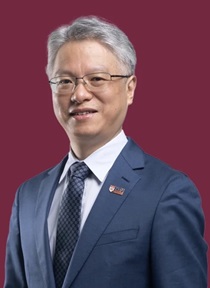
Prof. Yonggang Wen
Nanyang Technological University, Singapore

Prof. Wai Fong Boh
Nanyang Technological University, Singapore
TPC Chairs
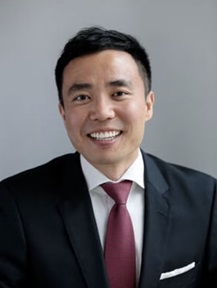
Prof. Lin William Cong
Nanayang Technological University, Singapore

Prof. Claudio J. Tessone
University of Zurich, Switzerland

Asst. Prof. Simon Trimborn
University of Amsterdam, Netherlands

Assoc. Prof. Jiangshan Yu
The University of Sydney, Australia
Panel Chairs

Dr. Ernie Teo
Nanayang Technological University, Singapore

Asst. Prof. Wei Cai
University of Washington, USA
International Liaison Chairs
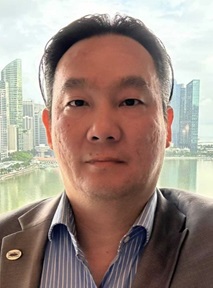
Prof. Raymond Choo
University of Texas at San Antonio, USA

Prof. Zhu Liehuang
Beijing Institute of Technology, China

Mr. Xiao Wu
ChainIDE, UAE
Publicity Chairs

Assoc. Prof. Te Bao
Nanyang Technological University, Singapore

Asst. Prof. Bingyi Wu
California Polytechnic State University, USA

Prof. Yuan Zhou
Tianjin University, China

Dr. Shengnan Li
University of Zurich, Switzerland
Local Chairs

Assoc. Prof. Tianwei Zhang
Nanyang Technological University, Singapore

Assoc. Prof. Yi Li
Nanyang Technological University, Singapore

Dr. Xiaodong Qi
Nanyang Technological University, Singapore
Keynote

Prof. Muriel Médard
Optimum, USA
Muriel Médard is co-founder and CEO of Optimum, a project developed to optimize decentralized latency and bandwidth in blockchain networks. The company is a spin-out of over two decades of research and development from her group at MIT, the Network Coding and Reliable Communications Group in the Research Laboratory for Electronics, which she leads as holder of the NEC Chair of Software Science and Engineering in the School of Engineering at MIT and as Professor in EECS. Muriel obtained three Bachelors degrees, her M.S. and Sc.D, all from MIT. She is a Member of the US National Academy of Engineering, the Royal Academy of Engineering, the German National Academy of Sciences, the American Academy of Arts and Sciences, a Fellow of the US National Academy of Inventors and Institute of Electrical and Electronics Engineers. She holds Honorary Doctorates from the Technical University of Munich, the University of Aalborg, and the Budapest University of Technology and Economics. She is the 2026 recipient of the IEEE Richard W. Hamming Medal.

Prof. Peter Bossaerts
University of Cambridge, United Kingdom
Professor Peter Bossaerts is the Leverhulme International Professor of Neuroeconomics in the Faculty of Economics at the University of Cambridge. His research focuses on the intersection of economics, finance, neuroscience, computer science, and psychology, with emphasis on decision-making under uncertainty and financial market behavior.
He is recognized for pioneering the use of controlled experiments to study financial markets and for integrating decision and game theory with cognitive neuroscience, helping establish neuroeconomics and decision neuroscience. Prof. Bossaerts received his PhD from the University of California, Los Angeles, and spent much of his career at the California Institute of Technology. He is a Fellow of the Econometric Society.
Speakers
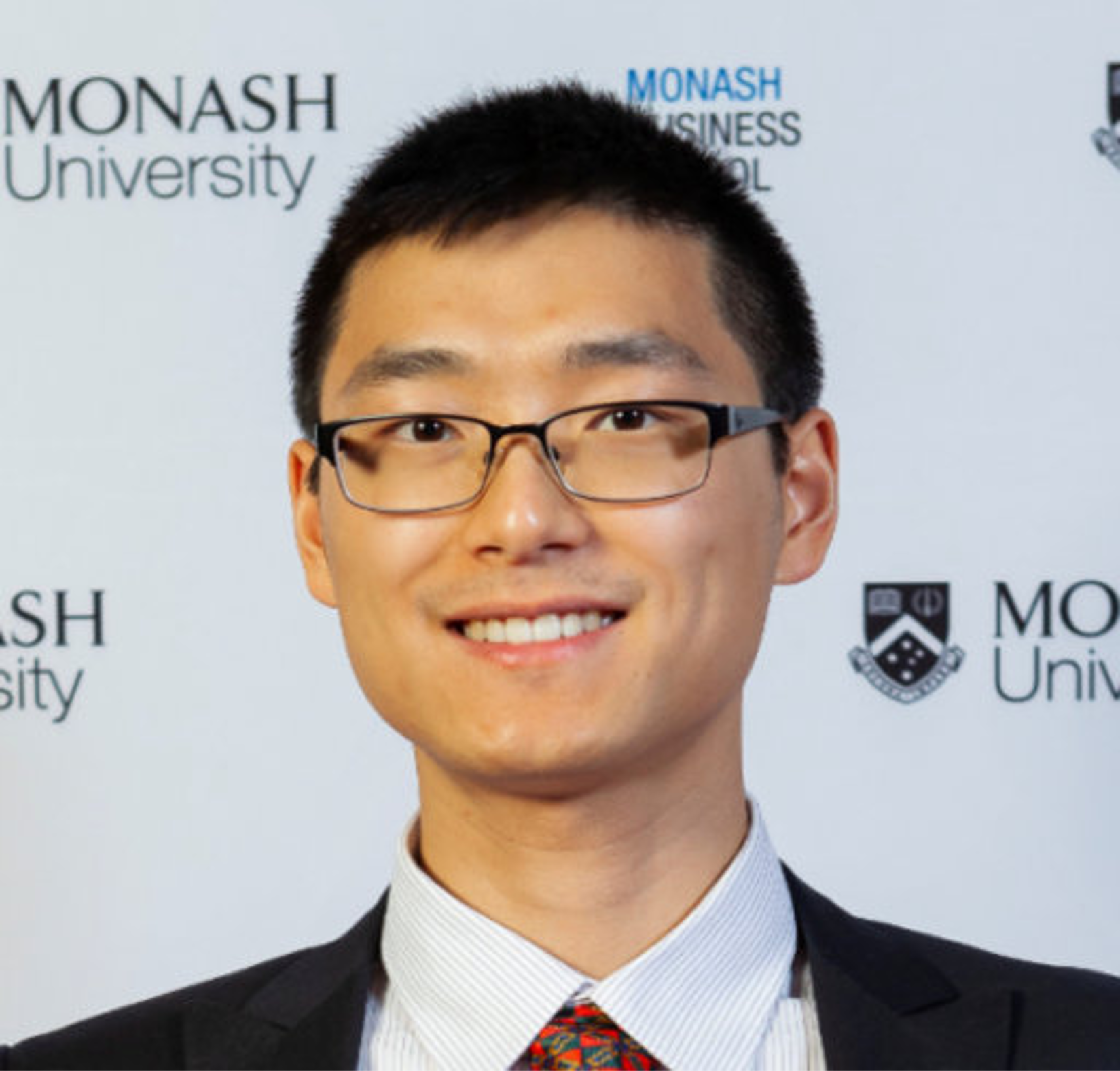
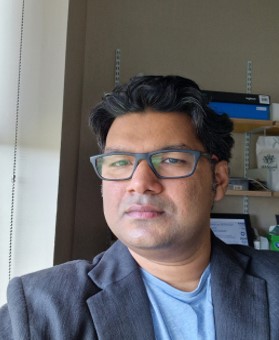


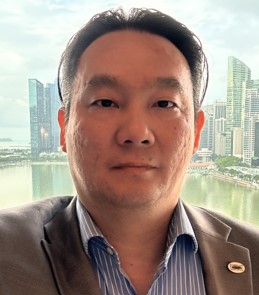


Award Talk




1. Dynamic Graph Rewiring in Decentralized Exchange Networks: Testing the MEV Fragmentation Hypothesis with On-Chain Data
Nitish Kumar (Timeswap (Hourglass Technologies Ltd.), United Kingdom), Sindhu Shirigoudar (Accenture, India)
2. A Notary-Based PvP Reference Architecture for Multi-CBDC Corridors: Design, Implementation, and a Path to Trust Minimization
Vijak Sethaput (University of the Thai Chamber of Commerce, Thailand), Supachate Innet (University of the Thai Chamber of Commerce, Thailand)
3. Deploying a Municipal Trust Anchor: Dual-Blockchain Architecture for Decentralized Identity in Semarang
Ester Gracia (GaneshaIT, Indonesia), Alika Cynthia Clarissa (GaneshaIT, Indonesia), Andersen (GaneshaIT, Indonesia), John (Jong) Choi (MarkAny, South Korea)
4. Lattice-Based Data Integrity Auditing with Blockchain for Edge Computing
Xiuling Zhang (ChangChun Finance College, China)
5. The Price of Interoperability: Exploring Cross-Chain Bridges and Their Economic Consequences
Yiyue Cao (The Hong Kong University of Science and Technology (Guangzhou), China), Mingzhe Zheng (The Hong Kong University of Science and Technology (Guangzhou), China), Lin William Cong (Nanyang Technological University, Singapore), Siguang Li (The Hong Kong University of Science and Technology (Guangzhou), China), Xuechao Wang (The Hong Kong University of Science and Technology (Guangzhou), China)
6. From Passive Yield to Active Utility: A Quantitative Analysis of USDC Velocity and DeFi Capital Migration under the GENIUS Act
Yihan Guo (Nanyang Technological University, Singapore), Yuan Zhang (BITSTEIN PTE. LTD., Singapore)
7. When Staking Rewards Compound: Measuring the Impact of Ethereum’s Pectra Upgrade
Mohammed Benseddik (University of Zurich, Switzerland), Benjamin Kraner (University of Zurich, Switzerland), Claudio J. Tessone (University of Zurich, Switzerland)
8. Optimal Trading Speed on Blockchain
Ruizhe Jia (Stanford University, USA), Shihao Yu (Singapore Management University, Singapore)
9. Smart Contract Vulnerability Detection: A Survey from Static Analysis to Large Language Models
Zehe Xiao (UNSW Sydney, Australia), Qin Wang (CSIRO Data61, Australia), Yuekang Li (University of New South Wales, Australia), Shiping Chen (CSIRO Data61, Australia)
10. CoBRA: A Universal Strategyproof Confirmation Protocol for Quorum-Based Proof-of-Stake Blockchains
Zeta Avarikioti (TU Wien, Austria), Zeta Avarikioti (Common Prefix, Austria), Eleftherios Kokoris Kogias (Mysten Labs, USA), Ray Neiheiser (ISTA, Austria), Christos Stefo (TU Wien, Austria)
11. EPIC: Economic Profit Chain Inference via Graph-Augmented Code Analysis
Zehe Xiao (UNSW Sydney, Australia), Qin Wang (CSIRO Data61, Australia), Yuekang Li (University of New South Wales, Australia), Shiping Chen (CSIRO Data61, Australia)
12. ClawCoin: An Agentic AI-Native Cryptocurrency for Decentralized Agent Economies
Shaoyu Li (Virginia Tech, USA), Chaoyu Zhang (Virginia Tech, USA), Hexuan Yu (Virginia Tech, USA), Y. Thomas Hou (Virginia Tech, USA), Wenjing Lou (Virginia Tech, USA)
13. Profit Sharing Automated Market Makers
Himanshu Shankar (Nanyang Technological University, Singapore), Vaibhav Jindal (Independent Researcher), Anshal Shukla (Independent Researcher)
14. HasciDB: A Database for Identifying Crypto Sybil Airdrop Hunters
Adeline Wen (University of Washington, USA), Chunyang Li (University of Washington, USA), Shutong Qu (University of Washington, USA), Leon Leng (University of Washington, USA), Wei Cai (University of Washington, USA)
15. Delphi: Iterative Discovery and Exploit Synthesis for Smart Contract Security
Haoyong Lu (National University of Singapore, Singapore), Longqin Zhang (National University of Singapore, Singapore), Ryan Zhao (National University of Singapore, Singapore), Mac Ren (Agnos Labs, Singapore), Hanzhang Qin (National University of Singapore, Singapore)
16. DLT-Corpus: A Large-Scale Text Collection for the Distributed Ledger Technology Domain
Walter Hernandez (University College London, United Kingdom), Walter Hernandez (Exponential Science, United Kingdom), Peter Devine (University of Edinburgh, United Kingdom), Nikhil Vadgama (University College London, United Kingdom), Nikhil Vadgama (Exponential Science, United Kingdom), Paolo Tasca (University College London, United Kingdom), Paolo Tasca (Exponential Science, United Kingdom), Jiahua Xu (University College London, United Kingdom), Jiahua Xu (Exponential Science, United Kingdom)
17. The Anonymity Gap: Understanding Real Privacy in Shielded UTXO-Based Protocols for DeFi
Hanze Guo (University College London, United Kingdom), Stefanos Chaliasos (University College London, United Kingdom), Yebo Feng (Nanyang Technological University, Singapore), Jiahua Xu (University College London, United Kingdom)
18. Do Small Shareholders Have a Voice? Deliberation, Delegation, and Value in DAO Governance
Yichen Luo (University College London, United Kingdom), Jiahua Xu (University College London, United Kingdom), Qiaozhi Ye (Shanghai University of Finance and Economics, China), Kathy Yuan (London School of Economics, United Kingdom)
19. OnChainAgent: LLM-Powered Multi-Agent Systems for Autonomous Operations on the Ethereum Mainnet
Jiashun Wang (Shanghai University of International Business and Economics, China), Zhi Yang (Shanghai University of Finance and Economics, China), Guangyan Gan (Nanyang Technological University, Singapore), Hanzhang Qin (National University of Singapore, Singapore), Liwen Zhang (Shanghai University of Finance and Economics, China), Lin William Cong (Nanyang Technological University, Singapore)
We welcome high-quality submissions in the field of blockchain that present innovative ideas, explore emerging challenges, consolidate existing knowledge, or demonstrate early-stage but impactful directions.
Submission site
Topics of Interest
Topics of interest include, but are not limited to, the following:
- Blockchain Protocols and Consensus
- Design and analysis of consensus mechanisms
- Byzantine fault tolerance and distributed coordination
- Network performance scalability latency and throughput
- Cryptoeconomics and System Design
- Tokenomics staking and incentive mechanisms
- MEV mitigation and protocol sustainability
- Decentralized governance
- Cryptography and Security Foundations
- Cryptographic primitives for blockchain systems
- Zero knowledge proofs and privacy preserving techniques
- Formal security models and provable guarantees
- Smart Contracts Programming and Formal Methods
- Languages and frameworks for smart contracts
- Formal verification and program correctness
- Static dynamic analysis and runtime monitoring
- Scalability Infrastructure and Storage
- Layer 1 and Layer 2 scaling architectures
- State storage data availability and snapshotting
- Cross chain bridges and decentralized oracle networks
- Privacy Security and Trusted Computing
- Confidential transactions and privacy preserving protocols
- Compliance aware privacy and data protection frameworks
- Security vulnerabilities and attack vectors in blockchain systems
- Threat modeling auditing and formal analysis of protocol security
- Blockchain and AI
- Decentralized and federated AI computation
- Verifiable and privacy preserving machine learning
- Tokenized models AI driven governance and data integrity
- Blockchain Based Applications
- Decentralized finance DeFi and real world asset tokenization
- Supply chain identity and data provenance systems
- Web3 infrastructure and decentralized service platforms
Submission Types
Submissions must be of one of the following types, and the recommended page length is in parenthesis:
- Original research papers (between 8 and 25 pages): These submissions present original and unpublished research results. Papers should make novel technical contributions and be supported by theoretical analysis, system design, or experimental evaluation. Submissions will be peer-reviewed based on originality, significance, technical quality, and clarity.
- Practitioner reports or case studies (up to 8 pages): These papers describe real-world implementations, deployment experiences, or engineering insights from blockchain projects. Submissions should focus on practical challenges, design trade-offs, performance outcomes, and lessons learned. This track is ideal for developers, system builders, and industry practitioners.
- Literature review / survey papers (up to 25 pages): Survey papers provide a comprehensive overview of a specific area within blockchain and related fields. Submissions should systematically analyze existing literature, categorize research trends, identify challenges, and propose future directions. Surveys must be well-structured and insightful, going beyond simple aggregation of prior work.
Note: Submissions focused on cryptocurrency price trends, investment strategies, or legal/regulatory issues are outside the scope of the conference. All papers should emphasize technical or scientific contributions, such as blockchain protocols, cryptography, distributed systems, secure computing, and crypto-economics.
Publication
NBC is a non-archival conference and does not publish formal proceedings. However, selected papers will be invited for publication in a special issue of ACM Distributed Ledger Technologies. Further details regarding this opportunity, including submission guidelines and timelines, will be provided after the acceptance notifications.
Important Dates
- Paper submission deadline:
April 20, 2026, 11:59pm AoE
(Extend to Apr 30, 2026, 11:59 pm AoE)
- Final acceptance notification: May 30, 2026
- Conference: Aug. 21-22, 2026
Submission Guidelines
- Please submit your paper via https://nbc26.hotcrp.com in Portable Document Format (.pdf).
- All submissions must be written in English and formatted using the ACM standard templates (for Microsoft Word or LaTeX), available at: http://www.acm.org/publications/authors/submissions.
- Authors must select the appropriate submission type during the submission process. The expected page limits for each category are:
- Original research papers (between 8 and 25 pages)
- Practitioner reports or case studies (up to 8 pages)
- Literature review / survey papers (up to 25 pages)
- Authors are encouraged to include a link to code or data (e.g., GitHub) in the submission form. While optional, such materials may positively impact the review.
- This conference does not require anonymized submissions. Author names, affiliations, and acknowledgments may be included in the submitted manuscript.
Co-Organizers

The Academy of Engineering, Singapore (SAEng), established in 2011, serves as the leading institution for engineering excellence in Singapore. As the national academy, SAEng unites the nation's most esteemed engineers across all sectors to champion the highest standards in the engineering practice. Our mission is to enhance Singapore's engineering capabilities and knowledge, thereby supporting the nation's sustained development and global competitiveness.
Knowledge Partner
IEEE Blockchain Technical Community (BCTC)
The IEEE Blockchain Technical Community (BCTC) serves as a global collaboration hub for advancing technology, promoting education, publishing research, sharing knowledge, and developing standards across the multidisciplinary communities interested in blockchain, distributed ledgers, and related technologies.

HashKey Capital is a global digital asset and blockchain leader helping institutions, founders and talents advance the blockchain industry. As one of the largest crypto fund managers and the earliest corporate investor in Ethereum, HashKey Capital has managed over US$1 billion in client assets since its inception. Leveraging its unparalleled expertise, HashKey Capital's venture investments team oversees a diversified portfolio of over 600 pioneering projects across institutional services, infrastructure, data, AI, consumer services/ technology and more. On the liquid funds front, HashKey Capital manages a suite of digital asset products, including an actively managed fund and the Bosera HashKey Bitcoin (3008.HK) and Ether (3009.HK) spot ETFs, which are listed on the Hong Kong Stock Exchange (HKEX). With our deep knowledge across the blockchain ecosystem, HashKey Capital has built a robust network connecting founders, investors, developers, and regulators.

Drawing on its long-standing industry experience and its Singapore and Asia-Pacific network, Yield Royal has developed strong capabilities in industry insight, through-cycle investment judgment and cross-border resource connectivity. Guided by the integration of industry and finance, a global perspective and a long-term orientation,the company seeks to partner with high-quality companies and support their growth through long-term capital.

SNZ is a crypto-native, research-driven investment company with over 200 portfolios.Active since 2014, the SNZ team has not only focused on investment but also been dedicated to community building and incubation.Notably, as one of the earliest backers of Ethereum in Asia, and the strategic partner for multiple Western projects, such as Chainlink, to expand in Asia, SNZ is an engaging and proactive investor that grows with our portfolios.

Established in 2013, Canaan Inc. (NASDAQ:CAN) is a technology company focusing on ASIC high-performance computing chip design, chip research and development, computing equipment production, and software services. Canaan has extensive experience in chip design and streamlined production in the ASIC field, having invented the world’s first ASIC-powered bitcoin mining machine in 2013 and recognised as industry’s first company to deliver commercial edge AI chips based on the RISC-V architecture in 2018. The company has been listed on the Nasdaq since 2019.
In 2022, Canaan moved its headquarters and set up its major R&D center in Singapore.
Company vision: Transforming Tomorrow, Smarter Efficiency, Better Lives.