Leading the Energy Transition: NBS’ First Alumni Leaders’ Dialogue in NYC
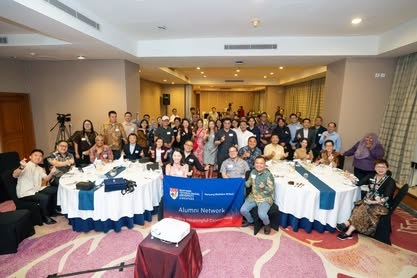
In partnership with the Singapore Global Network (SGN) and NYU Tandon School of Engineering, the NBS Alumni Relations Office hosted the debut alumni dialogue session in New York, held on 30 October 2025.
The collaborative event featured a panel discussion bringing together alumni speakers from both NBS and NYU, each playing a transformative role in driving energy transition across regions. Ms. Shi Min Tan (NTU B.ACC), Managing Director, Head of Policy, Standards and Regulatory Affairs, Global Carbon Market Utility (GCMU) and Ms. Mel Peh (NTU B.BUS), Consultant, United Nations Environment Programme Finance Initiative (UNEP FI) were joined by NYU alumni Mr. Nikolai Wolfe, Senior Attorney, Interconnections Program Manager, ConEd. The discussion was moderated by Mr. Darren Lee (NTU B.ACC & BUS), Regional Director, East US & Canada, Enterprise Singapore.
Valuable insights on the role of innovation, finance and leadership on advancing sustainability agendas, navigating complex challenges as well as unlocking opportunities in energy transition were shared.
Dean of NBS, Prof Jun Yang, who hosted the event, emphasised: ‘Here in New York, alongside our partners and alumni worldwide, we are advancing the conversation on energy transition through collaboration and sharing perspectives on global sustainability challenges.”
Innovation
Rapid technological change is reshaping the global energy transition and innovation will continue to play an extraordinary role.
Scaling green energy
Globally, nine out of 10 new power installations are now renewable, with rapid innovation in solar and wind leading the shift.
Finance
Finance is both an enabler and a bottleneck for the energy transition. Meeting global climate targets will require well-structured capital flows across the green economy. It remains a niche and evolving space, with limited investment due to high project and reputational risks including fraud, greenwashing, and methodology uncertainties.
Unlocking the carbon market
Investors can buy and sell carbon credits to offset emissions or generate returns. Recognition within formal compliance regimes such as those in Singapore, the EU and the UK, along with forward pricing and industry-leading corporate buyers like Microsoft and Google, is helping reduce risk. These developments lay the groundwork for future growth and emphasise long-term value beyond immediate profitability.
Advancing transition credits
An example is the Transition Credits Coalition (TRACTION) launched by the Monetary Authority of Singapore (MAS), aimed to advance energy transition credits as a credible financing mechanism to accelerate the transition from coal to clean energy.
This is devised to incentivise coal plant owners to retire the profitable coal plants early through compensation offered by transition credits. The funds generated can then be channelled into renewable energy investments.
Resolving cost allocation
Leadership
The energy transition and carbon market demand leaders who understand political incentives and navigate competing policy priorities.
Driving collaboration
Click here for Event Photos .

-(1).tmb-listing.png?sfvrsn=58da16d6_1)