Building Trusted Business Ecosystems in Indonesia and Beyond
NBS Alumni Connect explores what it takes to progress from growth to scale in Southeast Asia’s largest economy
The event “From Growth to Scale: Building Trusted Business Ecosystems in Indonesia and beyond” was held successfully in Jakarta on 8 May 2026. Jointly organised by the NBS Alumni Relations Office and UOB Bank, it brought together alumni leaders and industry experts to discuss how businesses can translate growth into sustainable scale in Indonesia and beyond.
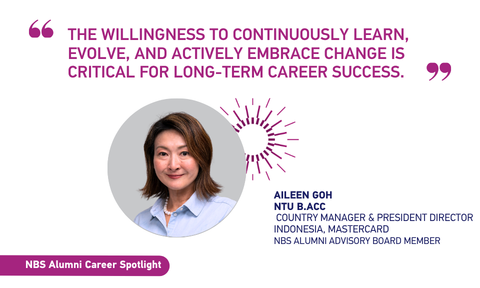
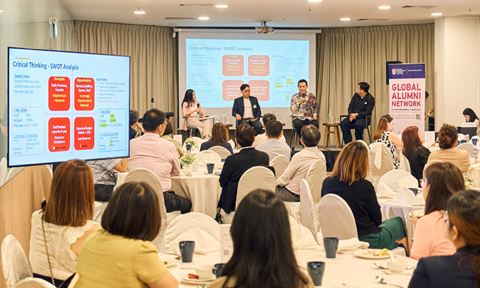
Following a welcome address by Professor Simba, Associate Dean (Research) of Nanyang Business School, the session featured a presentation on Indonesia’s current economic climate by Vincentius Ming Sheng, Economist at UOB Indonesia. This was followed by a panel discussion with Samuel Houten, UOB Country Lead, FDI Advisory at UOB Indonesia, alongside alumni leaders Aileen Goh, Country Manager & President Director at Mastercard Indonesia, and Johnny Widodo, Chief Operating Officer at FIT HUB.
The discussion and Q&A segment highlighted how Indonesia’s large and dynamic market offers significant opportunities, while underscoring that successful expansion depends on trust, alignment, and strong ecosystem partnerships. Panellists shared practical perspectives on navigating Indonesia’s evolving business landscape, building high-impact collaborations, and leveraging trusted networks to enable cross-border growth. Panellists shared practical perspectives on navigating Indonesia’s evolving business landscape, building high-impact collaborations, and leveraging trusted networks to enable cross-border growth.
Indonesia's current economic climate:
Heightened global uncertainty
The unprecedented level of uncertainty facing the global economy was highlighted. Ongoing geopolitical tensions, particularly in the Middle East involving the United States, Iran and Israel, have pushed uncertainty levels above those experienced during the COVID-19 pandemic. Such developments continue to create volatility across global markets, disrupt trade flows and investment decisions.
Indonesia remains resilient
Despite heightened global risks, Indonesia has remained resilient, supported by a strong trade surplus and continued economic growth. However, Mr Vincentius noted that the broader impact could still be felt through higher inflation and slower GDP growth. While Indonesia is not directly reliant on Iranian oil, its dependence on refined fuel imports from Singapore leaves it indirectly exposed.
Government spending underpins economic growth
Government expenditure has been a key driver of Indonesia’s recent economic performance, supporting household consumption. However, spending continues to outpace revenue growth, resulting in fiscal deficits despite higher tax collection efforts.
Growing and scaling in the Indonesian market:
Local partnerships are essential
The panel explored why many companies successfully enter Indonesia but struggle to scale. Mr Houten emphasised that Indonesia’s business environment requires patience, adaptability and a strong understanding of local dynamics. Businesses that succeed are often those that invest in trusted local partnerships and build long-term relationships with stakeholders, regulators and ecosystem partners.
Mrs Goh echoed this view, noting that many multinational companies underestimate the complexity of Indonesia’s market and incorrectly assume that strategies successful elsewhere can be replicated without adjustment. Sustainable growth requires a strong understanding of local needs to adapt to market realities, alongside addressing challenges such as transparency, access to technology and talent.
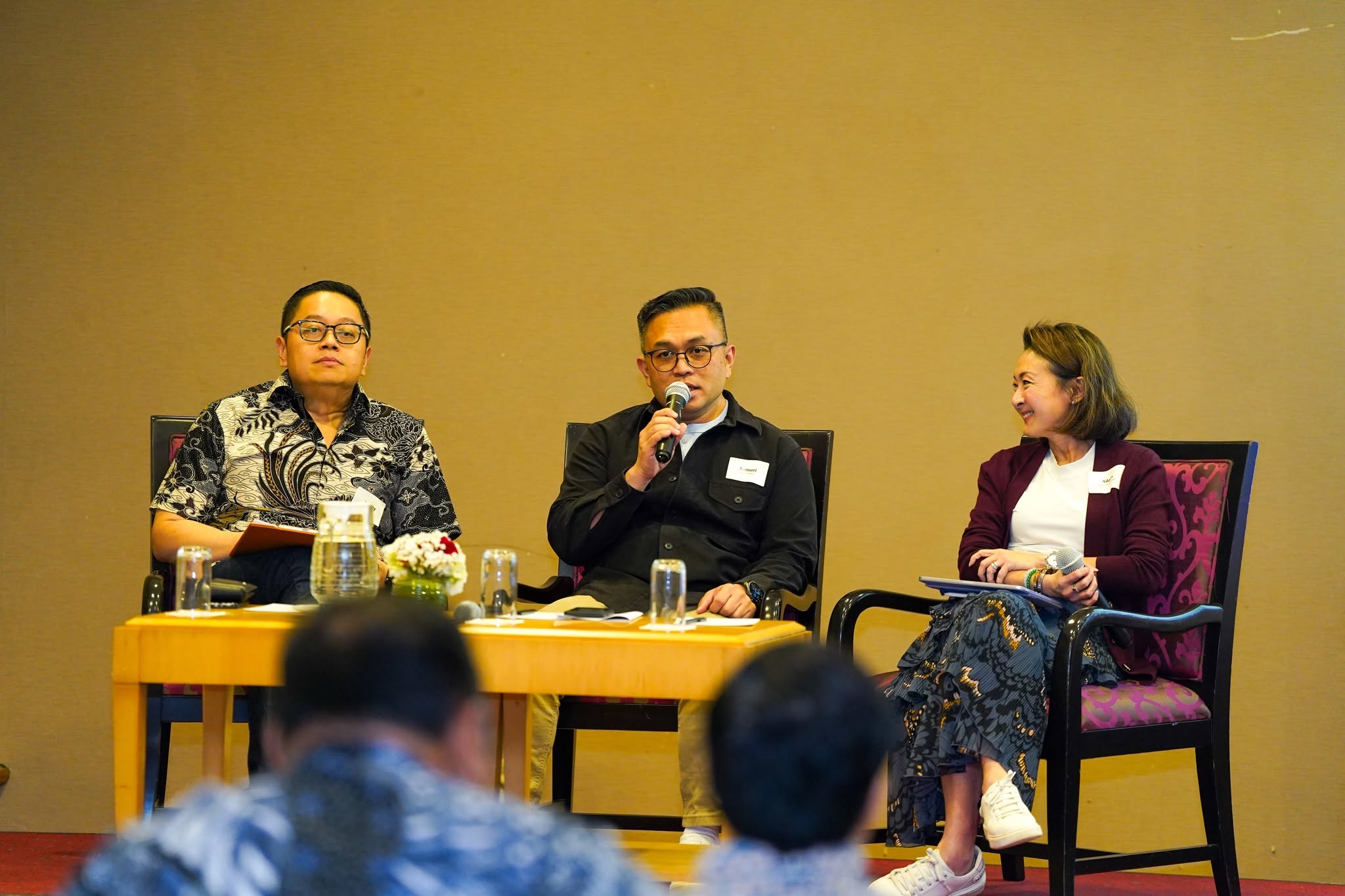
From left to right: Mr Johnny Widodo, Chief Operating Officer at FIT HUB, Samuel Houten, UOB Country Lead, FDI Advisory at UOB Indonesia and Mrs
Digital trust is key
As Indonesia continues to accelerate its digital transformation, Mrs Goh highlighted the importance of building trust in digital commerce and financial inclusion. With businesses and consumers increasingly relying on digital platforms, confidence in cybersecurity, fraud prevention, and digital transactions is becoming critical.
The panel agreed that digitalisation creates significant opportunities for economic growth, but these can only be fully realised when businesses, consumers, and institutions trust the systems that support them, with local partnerships playing a key role in building that trust by helping to overcome barriers such as contractual opacity and regulatory uncertainty.
Facilitating cross border growth
The discussion also touched on opportunities for both foreign companies entering Indonesia and Indonesian businesses expanding abroad.
Mrs Goh shared that MNCs seeking growth in Indonesia must clearly define their playing field by understanding regulatory and ownership constraints and aligning expectations with local realities. She emphasised the importance of a long-term investment horizon, noting that success depends on managing expectations and establishing appropriate scorecards beyond financial reporting.
Mr Houten noted that while global FDI is declining, inflows into Southeast Asia remain positive, creating opportunities for companies to expand regionally. He advised firms to conduct feasibility studies before entering new markets. Partners can be engaged to understand local conditions, and alumni can leverage on the NBS International Alumni Network to build an ecosystem of support. He also highlighted the advisory role of banks, noting that UOB’s FDI Advisory network helps businesses connect with partners and better understand new markets across Southeast Asia.
Q&A highlights
Mineral Downstreaming
When asked how Indonesia can strengthen its export competitiveness compared to countries such as Vietnam, the speakers highlighted the government's downstreaming strategy, particularly in nickel and mineral processing, as a key driver of higher-value exports and investments.
Oil and Gas
Responding to a question on the outlook for investment in upstream oil and gas, the speakers noted that Indonesia’s resource potential, refinery expansion plans and long-term energy development strategy continue to make the sector attractive despite regulatory and operational complexities.
The informative session closed with the perspective that Indonesia remains a highly promising emerging market with many opportunities for businesses to grow and scale
Click here for event photos
-(1).tmb-listing.png?sfvrsn=58da16d6_1)