Finance Meets Sustainability: NBS Alumni Global Masterclass Series in Mumbai
As sustainable finance moves from aspiration to implementation, Nanyang Business School’s (NBS) Alumni Global Masterclass Series brought the conversation to Mumbai for its next global stop.
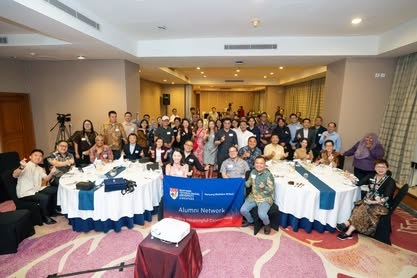
Held on 31 January 2026 at The St. Regis Mumbai, the programme convened NBS and NTU alumni, incoming graduate students, and prospective students for an evening focused on sustainable finance. The session featured a masterclass by Associate Professor Matthew Louis Dearth, followed by a panel discussion with alumni.
Guest of Honour Mr Cheong Ming Foong, Consul General (Mumbai), Republic of Singapore, opened the programme by reflecting on stronger Singapore-India ties alongside India’s economic growth. He noted 2025 marked 60 years of diplomatic relations and highlighted a roadmap for a Comprehensive Strategic Partnership, spanning skills development, green and digital links, payments connectivity, and education exchanges.
Masterclass
In the masterclass, Associate Professor Dearth drew on his experience in banking, investing, and consulting, and shared how his work at NBS focuses on sustainable finance, impact investing, and the NBS Global Leaders Programme. He framed sustainable finance as a “three-legged stool” supported by companies, investors, and government. Companies decide why sustainability matters to their models. Investors evaluate how it affects returns through revenue, costs, and risk. Regulators set guardrails and clarify what qualifies as “green” through standards and taxonomies.
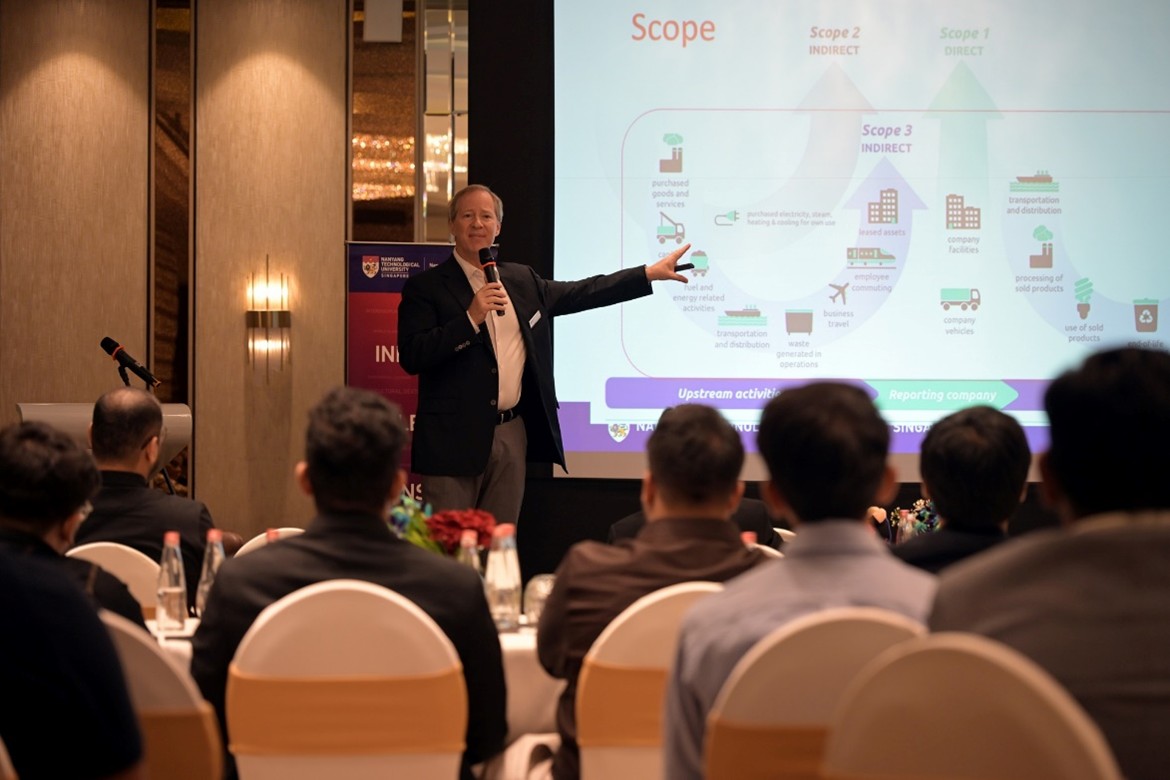
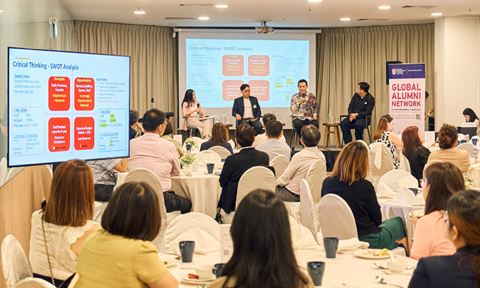
Associate Professor Matthew Louis Dearth is giving his masterclass on Sustainable Finance
He emphasised that progress starts with measurement and disclosure. Without a baseline, firms cannot plan credible transitions or access external capital on competitive terms, even as reporting frameworks remain complex. Using Scope 1, 2 and 3 emissions, he explained that Scope 1 covers direct operational emissions, Scope 2 relates to purchased electricity, and Scope 3 extends across the value chain. Scope 3 is drawing growing attention, as supplier engagement, product design, sourcing and end-of-life decisions can drive significant reductions.
He then turned to financing. Companies can fund change internally through cash flows, or externally through capital markets and bank financing. He outlined two categories. The first is ‘use-of-proceeds’ financing, such as green, social and sustainability bonds, where funds are ring-fenced for defined projects and tracked through ongoing disclosure. The second is ‘sustainability-linked’ financing, where proceeds are flexible but pricing can step up or down based on KPI performance. He cautioned that labels alone do not guarantee impact and encouraged closer scrutiny of targets and incentives.
He concluded by revisiting the role of
regulation, particularly carbon pricing, and introduced the En-ROADS climate
simulation model to illustrate how climate outcomes depend on multiple policy
and market levers acting in concert.
Panel Discussion
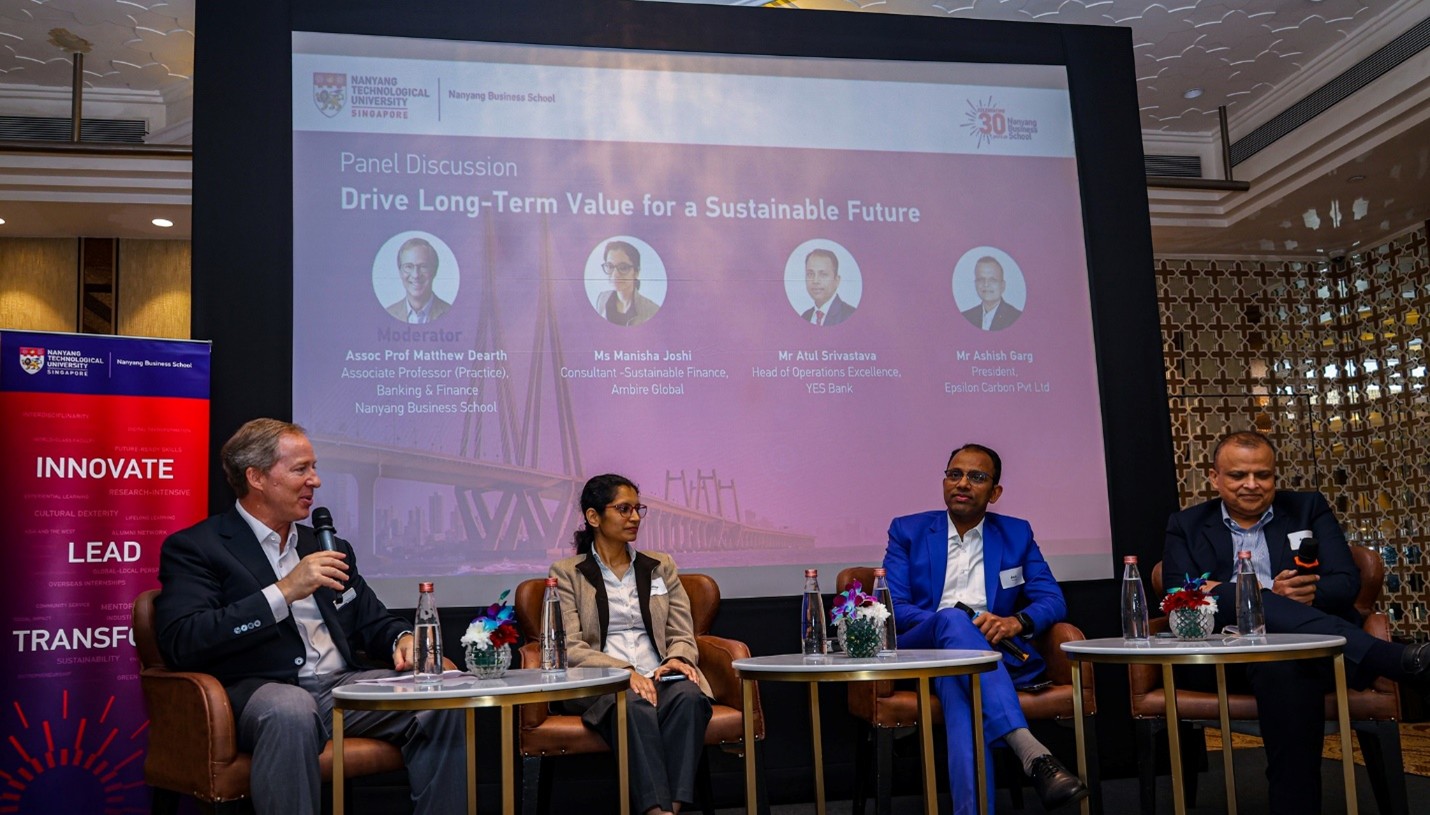
From left to right: Associate Professor Matthew Louis Dearth, Ms Manisha Joshi, Mr Atul Srivastava and Mr Ashish Garg
After the masterclass, the panel brought perspectives from across the sustainable finance ecosystem, linking standards and disclosure with lending decisions and operational realities.
Ms Manisha Joshi, Sustainable Finance Consultant at Ambire Global, explained why ESG reporting is increasingly used to assess long-term corporate health, comparing it to financial reporting built on consistent, comparable information. She described taxonomies as classification systems that channel capital towards sustainable activities through technical screening criteria and safeguards to reduce greenwashing. She added that interoperability across jurisdictions can support cross-border financing.
Mr Atul Srivastava, Head of Operations Excellence at YES Bank, shared how sustainability is increasingly reflected in credit decisions through regulatory, compliance, and litigation risk. He said adoption varies across banks, highlighted the role of education within banks and among customers, and suggested sustainability-linked lending could evolve over time in a way similar to priority sector lending.
Mr Ashish Garg, President of Epsilon
Carbon Pvt Ltd, spoke from a manufacturing lens. He said many gains come from
efficiency and local constraints, cited process optimisation and water
recovery, and questioned whether financing incentives are large enough to shift
behaviour without supportive policy. He also pointed to cases where
sustainability and returns align, including water reuse schemes and electric
trucks, while flagging end-of-life issues for batteries.
Q&A Segment
In the Q&A segment, the conversation shifted from concepts to constraints. One audience member questioned electric vehicles in markets where grids still rely heavily on thermal power. Mr Garg said the mix is shifting as solar and wind scale, with thermal plants increasingly used to balance supply through the day. EV charging may still draw from thermal sources for now, but the proportion is changing.
Ms Joshi addressed life cycle concerns, explaining that taxonomies may focus on climate mitigation, but include safeguards across other objectives, including circular economy, supported by life cycle assessment and design for reuse and recycling.
The session closed with a prospective student’s question on why CFOs would issue KPI-linked bonds if missing targets raises financing costs. An audience member who works in capital markets pointed to deals where accountability helped secure sharper pricing than a conventional green bond. Associate Professor Dearth agreed, and highlighted that outcomes are market-specific, and credibility of targets and incentives is key.
Click here
for event photos
Watch the masterclass here:
-(1).tmb-listing.png?sfvrsn=58da16d6_1)