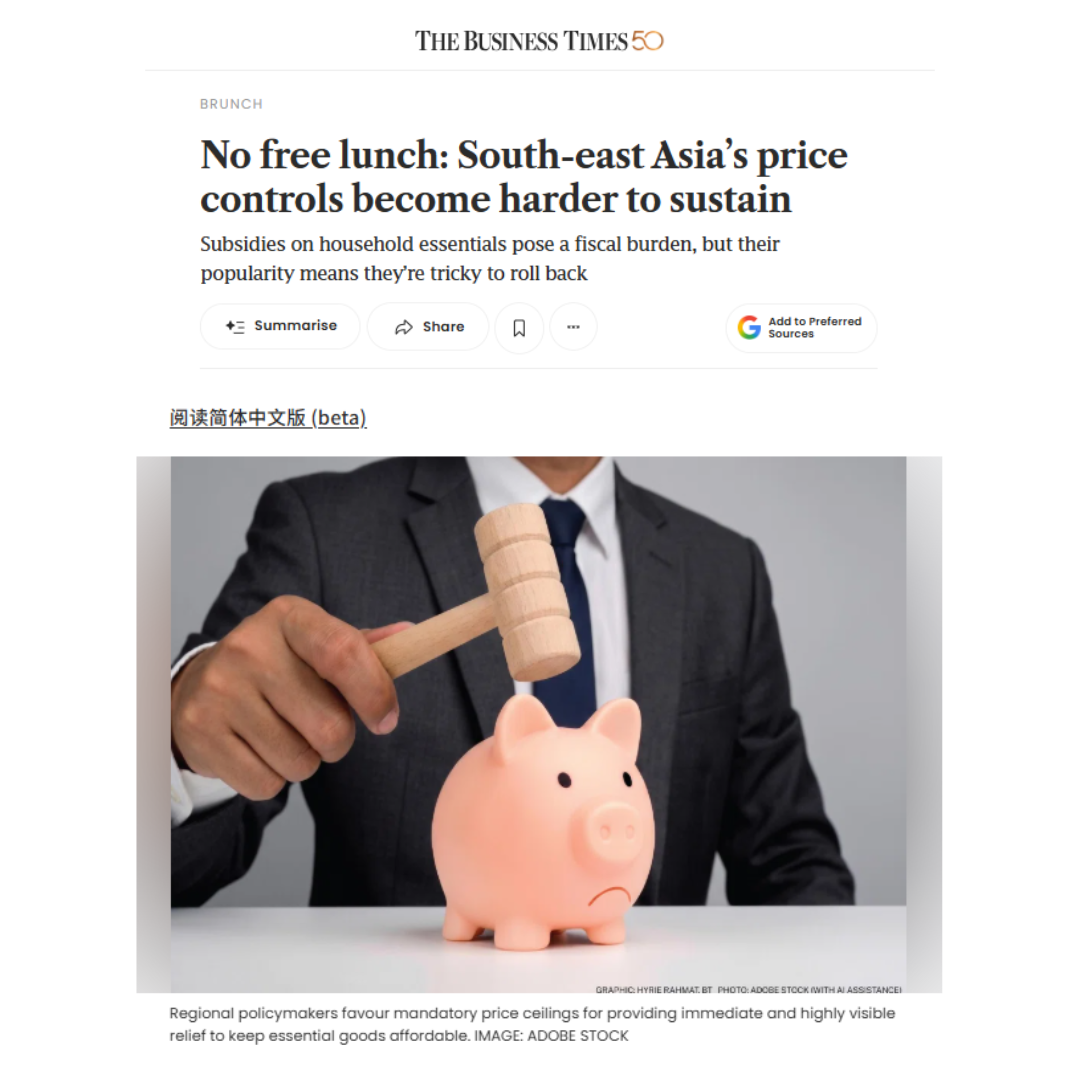
No free lunch: South-East Asia's price controls become harder to sustain
Higher food production costs are reaching consumers in Southeast Asia, raising the question of whether governments can afford to keep shielding households. Costlier fertiliser and El Niño-related weather have hurt agricultural production and crop yields, but these costs haven’t passed uniformly to shop prices, partly because some governments have capped prices or offered subsidies. Dr Chua Yeow Hwee, assistant professor of economics at NTU said the National Trades Union Congress-affiliated FairPrice Group (FPG) "may be able to negotiate with suppliers for lower prices or absorb some of the higher costs by accepting lower margins". On a separate topic related to cheap sugar creating tension with public health objectives in Malaysia, Dr Chua also noted that "Malaysia's fuel subsidy bill is projected to approach RM40 billion in 2026, more than double the amount originally budgeted.”
Click here to read the article.