International Workshop on Asian Perspectives on Good Governance 2025 Concludes Successfully in Singapore
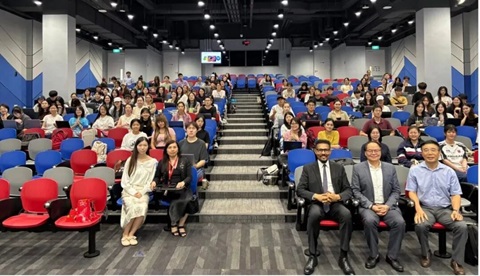
The International Workshop on Asian Perspectives on Good Governance 2025, organised by the Nanyang Centre for Public Administration (NCPA) brought together scholars and practitioners from Asia, Europe, Africa, and the Middle East in Singapore on 30-31 October 2025. This workshop is a preparatory event for the book "Asian Perspectives on Good Governance." It aims to gather experts in public administration, governance, and related fields to develop a comprehensive understanding of public administration systems, institutional arrangements, and governance mechanisms across East, Southeast, and South Asia.
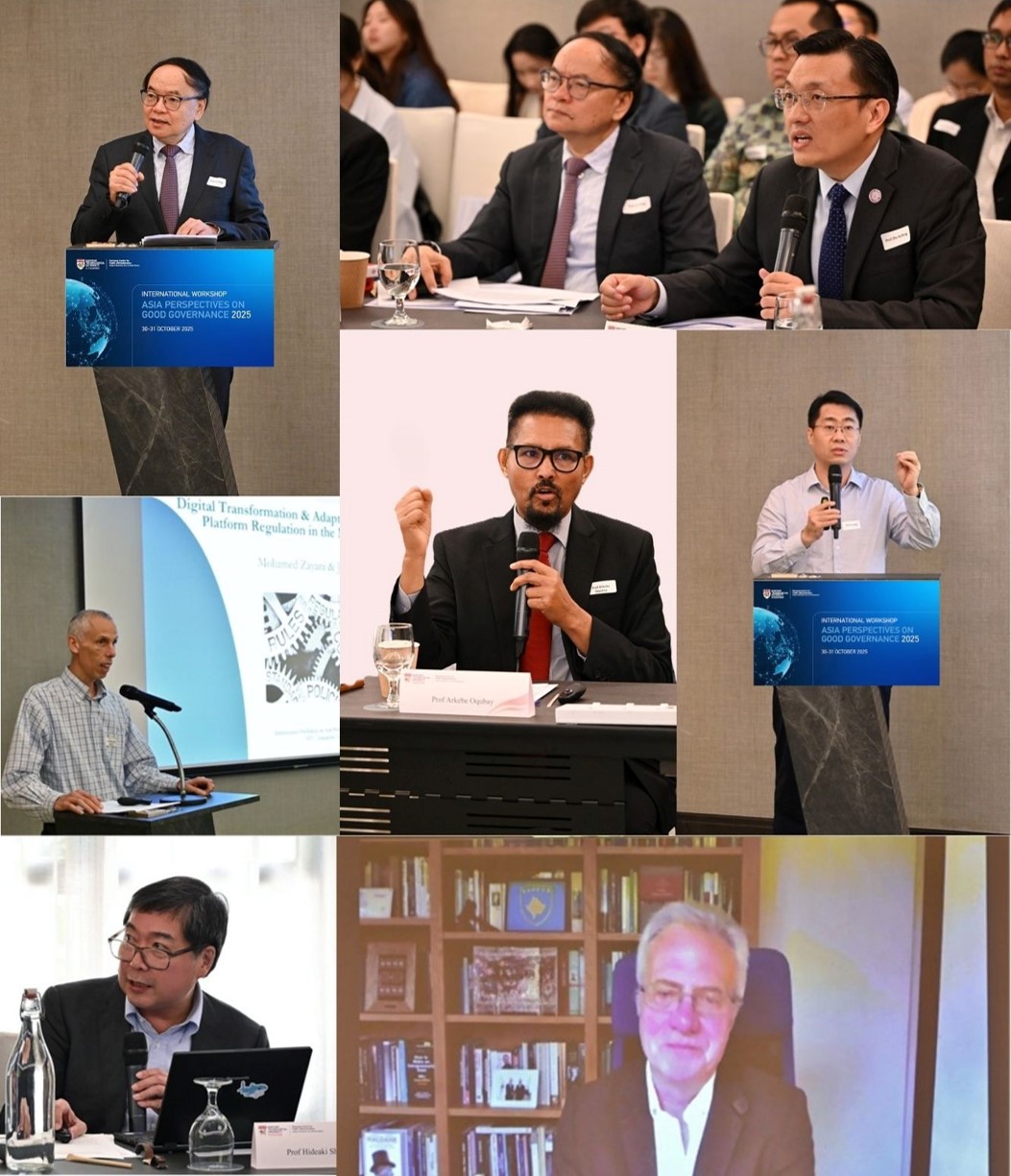
The workshop opened with remarks by Professor Liu Hong, Associate Vice President and NCPA’s Director (Research & Executive Education), who called for moving beyond Western-centric theories to view public administration through a “Global Asia” lens. Drawing on NCPA’s long-standing work with governments across the region, he highlighted that Asian states have accumulated rich experience in industrial policy, social collaboration and digital governance, and are increasingly shifting from policy “learners” to “theory-builders” in global knowledge production.
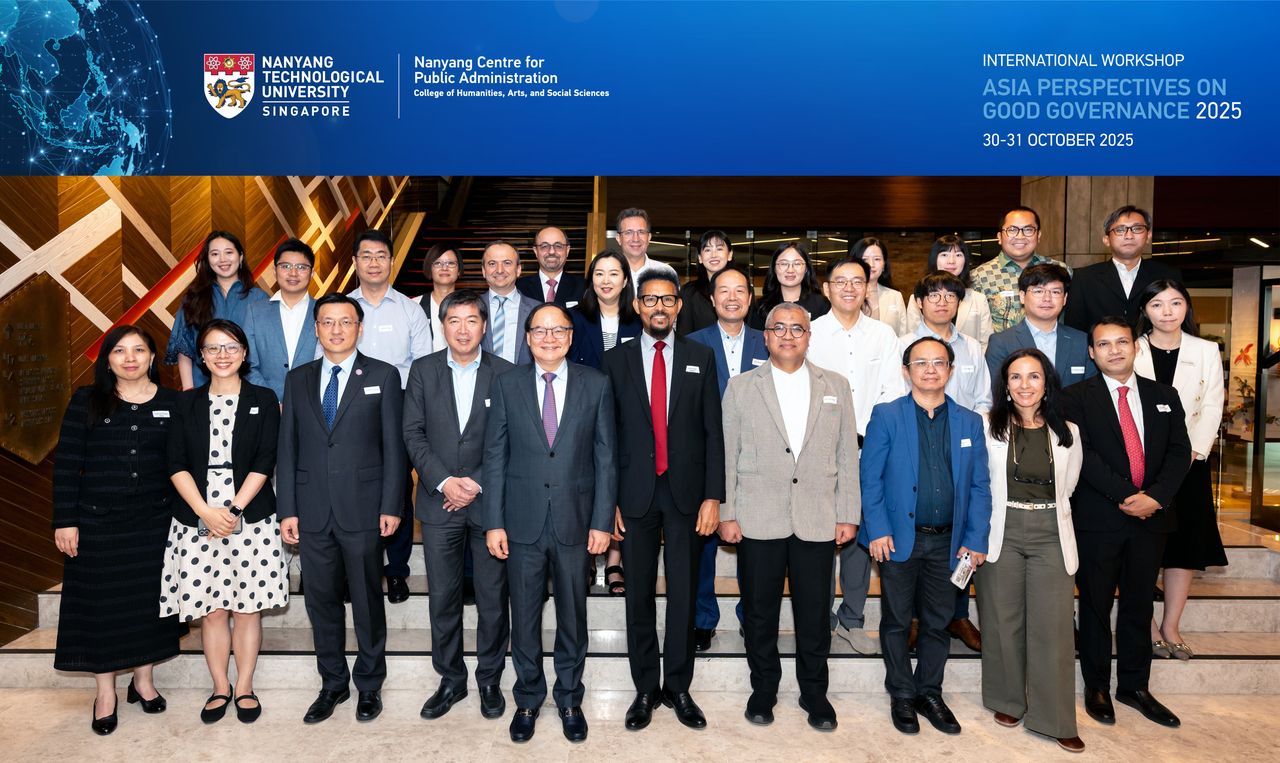 The two-day workshop showcased distinguished scholars from across the globe – including Bangladesh, Canada, China, Ethiopia, Indonesia, India, Japan, Malaysia, Morocco, Philippines, Qatar, Singapore, South Korea, Thailand, Turkey, United Kingdom and United States presenting physically and online, covering a wide range of topics from broader Global Good Governance model perspective to regional integration to empirical examples in different country, cultural context exploring institutional reforms, policy innovation, public engagements, urban sustainability, holistic development and regulatory mechanisms.
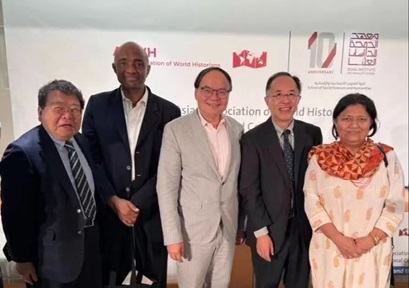
Featured speakers include Professor Arkebe Oqubay, Former Senior Minister and Special Advisor to the Prime Minister of Ethiopia and British Academy Global Professor, from SOAS, University of London, who highlighted how neoliberal benchmarks of good governance have long dominated development discourse, yet Asian trajectories show that governance models must be adapted to specific developmental stages, political cultures and institutional capacities.
Professor Zhu Xufeng, Dean and Professor from School of Public Policy and Management, Tsinghua University, China traced China’s digital governance trajectory from early informatisation to today’s contemporary government paradigm. He underscored the need for adaptive regulation, arguing that balancing data security, platform power, and cross-border data flows is central to effective governance in the digital era with the interventions linking conceptual reconstruction with concrete institutional reforms in Asia.
Professor Liu Yang, Professor, College of Computing and Data Science, NTU Singapore, examined the ethical and institutional challenges posed by open-source ecosystems and artificial intelligence. He advocated for governance frameworks that do not sacrifice openness for security — frameworks that can simultaneously safeguard innovation and trust.
Professor Naim Kapucu, Pegasus Professor of Public Administration and Policy at the University of Central Florida, called for a solution-oriented model of public administration, rooted not in rigid procedural compliance but in cross-sector collaboration and pragmatic problem-solving. His reflections helped the workshop attendees appreciate that technology governance must be sensitive to local political cultures, and not merely a transplanted toolkit.
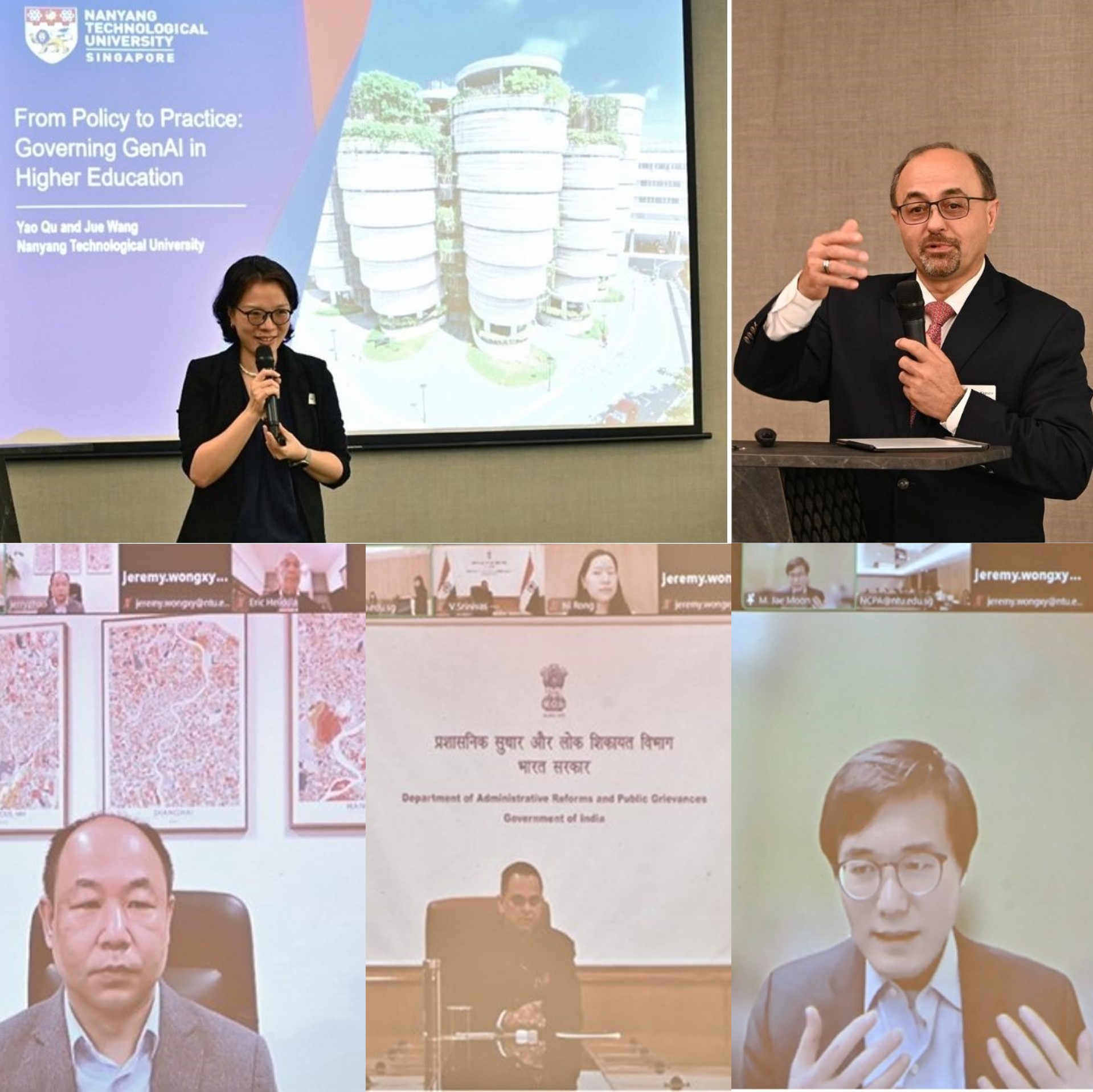 From a Korean perspective, Professor M. Jae Moon, Underwood Distinguished Professor, Department of Public Policy and Management, Yonsei University, offered empirical evidence that AI interventions both shape, and are shaped by administrative capacity and social values. His data-driven approach highlighted (especially in Singapore’s context), how legitimacy and efficiency can evolve hand in hand through iterative reform.
Professor Zhao Zhirong (Jerry), Dean and Yangtze Chair Professor, Department of Urban Development & Management, Zhejiang University, described how China’s evolving eco-system has moved from penalising pollution to actively incentivising ecological protection, weaving Confucian–Daoist ethical traditions into modern fiscal instruments.
Professor Hideaki Shiroyama, Professor, Graduate School of Public Policy and the Graduate School for Law and Politics, The University of Tokyo, underscored the vital role of Japanese local governments as laboratories of reform: arenas where national-level initiatives are translated into lived policy, and where trust is built through concrete implementation.
Next, Professor Wang Jue, NCPA’s Director, shared comparative research from universities worldwide on the governance of generative AI in higher education, focusing on multi-layered regulatory arrangements to balance regulation with trust-building among institutions, enabling innovation without compromising accountability.
Mr Srinivas Voruganti, Secretary of India’s Department of Administrative Reform and Head of the International Institute of Administrative Sciences, presented India’s “saturation” approach. He described how digital grievance redress mechanisms and data-driven monitoring have enhanced the responsiveness of government, underpinned by the principle of “Maximum Governance, Minimum Government.”
Expanding the geographic and conceptual scope, Professor Mohamed Zayani, School of Foreign Service, Georgetown University in Qatar introduced the workshop to the notion of adaptive governance in Middle Eastern platform regulation, a reminder that Asia’s governance experiments resonate well beyond its borders.
The two-day workshop closed with a forward-looking discussion led by Professor Andrew Massey, Emeritus Professor of Government, Kings College London, who suggested that the diverse Asian experiences showcased are converging into distinctive, hybrid governance logics. Rather than simply adopting Western public-administration norms, Asian societies are forging new, regionally rooted frameworks of good governance — models that are resilient, culturally grounded, and globally relevant.
In sum, the workshop offered rich, comparative perspectives, underpinned by empirical analysis and institutional insight on how Asia is not just importing governance ideas but generating its own innovative public-sector paradigms, which are already feeding back into international debates on regulation, sustainability, and digital transformation.
Article contributed by Ms Cai Yuqing, Research Associate, NCPA