Demonstrating the value of innovation
Professor Shirley Meng, NTU’s new Vice President (Industry), on the evidence that gives an invention a future and the people who help it get there.
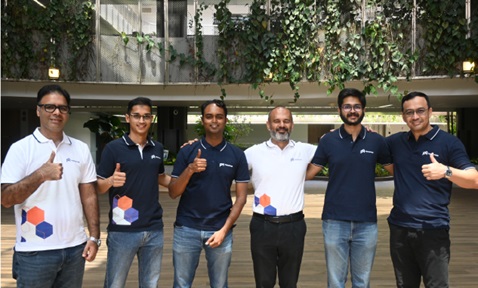
The team behind sodium-ion battery startup UNIGRID still thanks Professor Shirley Meng for introducing them to a particular material during their PhDs. Sodium chromium oxide was easy to make and produced the same results, experiment after experiment. In the uncertain business of turning research into a product, that reproducibility is key.
Prof Meng took up her role as NTU’s Vice President (Industry) on 1 July 2026. She is also a Distinguished University Professor and Professor at the School of Materials Science and Engineering. She brings a scientist’s insistence on evidence to a question that reaches beyond the laboratory: how does a university know its innovations are making a difference?
Her answer starts with the people who translate research into the real world. During her earlier work in the United States, students and postdoctoral researchers in her group founded companies to pursue technologies that established businesses considered too risky. While a patent gave an idea protection, it is their willingness to further develop it that gave it a chance to become useful.
Two valleys to cross
Through co-founding UNIGRID and ExPost Technology, a battery recycling and upcycling company, Prof Meng has learned how easily scientific promise can run ahead of commercial reality.
A technology must first survive the move from laboratory experiments to manufacturing. Reproducible results are essential, but a working device still needs a way to be made at scale. Then comes another hurdle: seeking a market ready to receive it.
ExPost brought the importance of timing home to her. Batteries that last longer are good news for their owners. Those longer lives also influence when used batteries become available to a recycling business. The technology and the market can mature at different speeds.
Prof Meng describes two valleys of death, one in scaling and another in market readiness. Crossing the first can leave an entrepreneur facing the second.
Evidence helps founders judge where they stand. In UNIGRID’s early pitches, investors needed convincing that sodium-ion batteries offered an advantage over established lithium-ion technology. A claim about safety needed test results behind it. “You actually have to use real data to convince people,” Prof Meng says.
She applies a similarly practical test to commercial progress: what has a company delivered with the capital it raised? She favours growth supported by revenue. In July 2026, UNIGRID reported that its first residential storage systems had been installed in European homes. Those installations open the next chapter in the evidence: how reliably the systems work over time and what difference they make to household energy costs.
Putting partnerships to work
These questions belong near the beginning of a research partnership. Prof Meng urges researchers and their partners to keep the wider problem in view while establishing that a device can deliver repeatable results. A collaboration can then help test its promise against the conditions in which it would have to work.
Her new remit includes building partnerships with global companies and institutions and establishing joint research institutes worldwide. She sees particular value in the relationships NTU’s corporate and joint laboratories already hold with senior business leaders.
“I am particularly looking forward to collaborating with NTU’s Innovation and Entrepreneurship leadership to connect young founders directly with these executives through pitches and mentorship,” adds Prof Meng. “Experienced leaders could help founders examine unfamiliar commercial decisions, and the founders, in turn, could offer ideas that challenge established ways of thinking.”
Documenting the value of those exchanges means following their consequences. Industry feedback might reshape a product or lead to a trial that exposes a weakness. Recording how that evidence changed the work would give both partners a more useful account of progress, including a clearer view of who contributed what.
The value of setbacks
Importantly, an unsuccessful venture can still leave something worth passing on. Prof Meng regards the lessons from entrepreneurial setbacks as “intangible assets” that Singapore could do more to recognise and share.
A founder who explains why an assumption failed gives others a better starting point. That experience can inform the next venture or help an industry partner avoid a costly mistake. Capturing these lessons would reveal a contribution that a tally of surviving companies could easily miss.
This wider view of impact returns to the people at the heart of a university. Their ability to judge an opportunity and act on what they have learned can continue to develop after a venture ends. Prof Meng believes universities should support students and postdoctoral researchers willing to take the risks involved in carrying fundamental knowledge into practical use. “We must provide such a platform to empower them,” she says.
Read the full newsletter or subscribe to NTU I&E for the latest updates, events and programmes.